5 SaaS Content Marketing Mistakes That Stall Growth (and How to Fix Them)
There is hardly any other business model where content marketing is as important as in SaaS. It’s where content reveals its true potential, and underestimating its role can be extremely dangerous to one’s business success.

If you are in this business and are considering starting SaaS content marketing, or have already done so but the coveted results are not there yet, this article explains where things go wrong and how to fix them.
And believe us, you are not a pioneer, as many other companies have already started leveraging content for SaaS, and they’ve faced numerous challenges. It’s fascinating how the more powerful the tool (in our case, content marketing), the more skill and caution it requires of those who use it.
So, buckle up! This will be an insightful, energetic, informational deep dive that leaves you fully prepared to launch your first successful content marketing campaign for your SaaS business.
Contents
What Makes SaaS Content Marketing Different From Traditional B2B
The difficulty with content marketing in the SaaS (software as a service) sector is that it is more complex and nuanced. In fact, companies operating within this business model struggle and often make mistakes in applying the best content practices from other industries.
This is because SaaS content marketing stands alone from traditional B2B marketing in several ways, and understanding them is critical for your success.
Product Experience Is Part of the Content
In content marketing in the software sector, you are not simply telling the users what your product (software) can do in your own words; you are literally showing them. This happens through virtual tours, demonstrations, trials, and other digital means. This way, product experience becomes an indispensable part of the content strategy.
In traditional B2B, content often supports a buying decision handled by sales. In SaaS, users make that decision by using the product. For instance, with a trial subscription, which often comes free.
Every step in the SaaS journey either reinforces your message or weakens it. A well-written guide can build excitement, but a confusing interface can undo that trust in minutes. So, when they say content is the king of marketing, that expression was likely born in the SaaS industry.
However, this content is not always as explicit as a free demo or a user guide. Much more often, it exists as “hidden content”, living inside the product environment:
- Signup and onboarding sequences.
- Feature discovery flows.
- Product tours and interactive demos.
- Embedded help and documentation.
- Notifications, tips, and alerts.
The key to implementing these elements in your product workflows is moderation. Include too many of them, and users will feel overwhelmed and might bounce off. But when allocated thoughtfully and designed well, they accelerate learning, reduce hesitation, and speed up decision-making.
Treating product experience as part of the content strategy forces better alignment across business units. Marketing clarifies expectations, the product delivers on them, and content bridges the gap between promise and reality. Content should be part of the user journey from ground zero.
The most important argument is that users don’t separate the above-mentioned experiences — they evaluate them as one. And your SaaS business will benefit from the perfect sync between the promise you make and the experience you deliver.
The Buyer Journey Doesn’t End at Conversion
Unlike with traditional products, particularly physical ones, software continues to keep buyers actively involved, generating income and prolonging engagement. It becomes a part of the entire buyer journey and doesn’t end at the conversion stage.
Phases like onboarding, retention, and even exit are all influenced by content marketing. In particular, in SaaS, content helps users with the following:
- Educates users after sign-up.
- Helps them activate features.
- Reduces churn and supports retention.
In this business model, growth comes from retention. As users continue using the service, they prolong their subscriptions, discover new features, and even add other, adjacent products.
Retention, in this case, matters more than clicks. Marketers who optimize content for retention enjoy increased revenues from product expansions and upgrades. In other words, content value grows with time, as the product evolves and customers continue to stay loyal to your services.
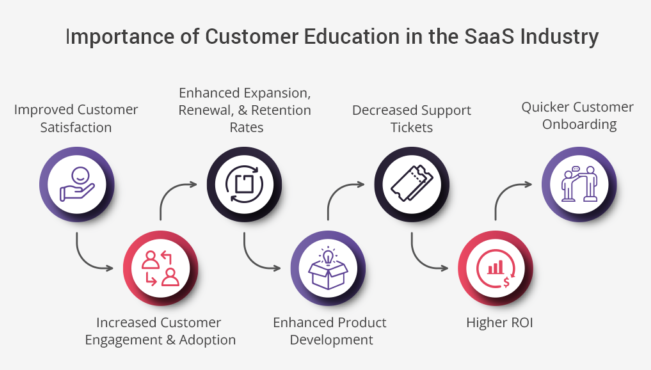
Education As the Real Driver of SaaS Activation
One of the key roles that the content plays in SaaS is education. Unlike many physical products that are familiar and intuitively easy to understand, software often has a much steeper adoption and learning curve. Simply because it has more features, which vary greatly from version to version and from product to product.
SaaS customers rarely “get it” instantly; they need teaching, showcasing, and to actually try using a service to fully understand and appreciate its capabilities.
Therefore, companies that develop and sell software must ensure their content performs the following three key functions:
- Teaches problems and solutions.
- Explains workflows and outcomes.
- Shows how the product fits into daily work.
Approached this way, content fuels activation and speeds up adoption. Customers feel more comfortable to start using the product, and they become addicted to it faster and more often.
Source: CXcherry
Trust and Proof Matter More Than Brand Messaging
In the digital space and with digital products, attention is scarce, and the initial skepticism towards products is high. Customers are spoiled with the abundance of alternative offers and the ease with which they can switch to another product (a few clicks away).
These circumstances make trust and proof the biggest success factors in SaaS marketing. Content that builds trust and provides proof wins over the one that just educates or showcases the product features.
You often see this kind of trust-building content in the form of:
- Customer narratives that include setbacks.
- Screenshots taken from real accounts.
- Metrics explained in context, not isolation.
- Comparisons that admit compromises.
- Clear guidance on ideal use cases.
SaaS decisions are essentially practical decisions. Software products sit inside workflows, touch data, and influence how teams work every day. That alone makes buyers cautious.
By comparison, in B2B, this caution is amplified by internal accountability. Someone has to justify the decision later. When things go wrong, “the website sounded convincing” isn’t a great defense.
That’s exactly why in the SaaS business world, brand messaging, no matter how strong and agile, alone won’t cut it. Even if it is highly effective, and delivers the same tone and consistency across channels. You need to back everything up with reliable proof that builds trust.
Content Marketing Mistakes That Stall SaaS Growth
Let’s now review some of the most frequent and unfortunate mistakes that companies commit when embarking on their content marketing. Unfortunate, because they all can be avoided, but even if already committed, they can be fixed.
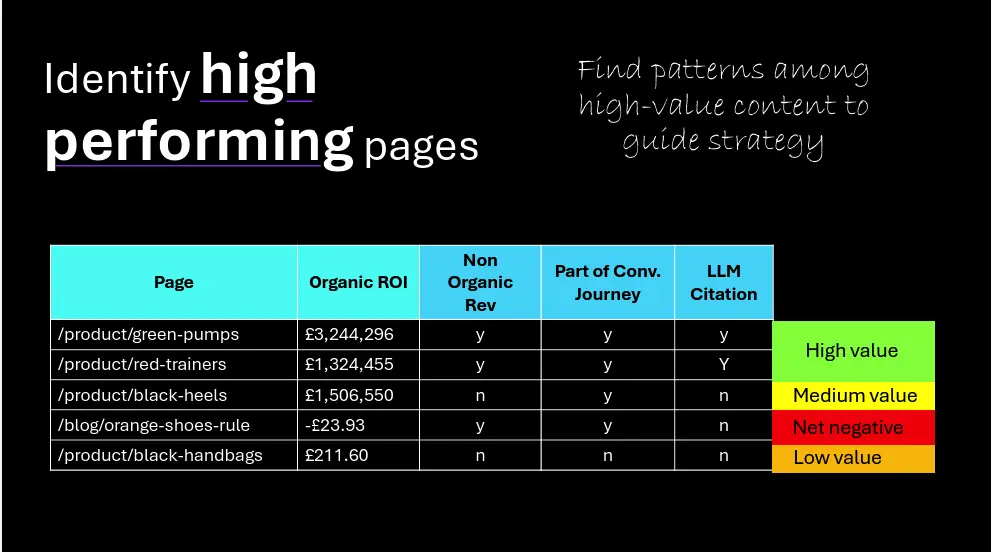
1. Creating Content Without Clear Revenue Attribution
Oftentimes, this mistake stays hidden for a long time until it’s too late to fix it without significant time and financial losses. Your team creates and publishes great content. You scale this process, hire new outreach specialists, copywriters, and editors.
On paper, things really look great. Your pages rank high in Google, traffic flows to your website, and users click. But what’s the goal? At some point, someone just asks: Why are we doing all this? What’s the business objective?
That’s usually when the problem of revenue attribution starts to surface.
Why it hurts SaaS growth
Without revenue attribution, content lives in its own bubble. It’s busy, visible, and oddly disconnected from outcomes.
Your content creation is fine, even perfect, but it doesn’t address real business objectives. It’s an activity for the sake of activity. You generate traffic, but it’s not that useful.
That usually leads to:
- Topics chosen because they “should work” or “are interesting”.
- No understanding of the desired visitor/customer profile.
- No clarity on which content supports which funnel stage.
- Arguments about content value.
Creating and distributing quality content can be very costly, and it can hurt one’s SaaS revenues, especially when budgets tighten.
How to fix it
Source: Moz
Fixing this starts with strategic planning, goal setting, and involving all teams in this process. The objective is to cascade the corporate goals into operational goals of the content marketing department, so that content work will have a clear financial purpose.
What works in practice:
- Launch a series of strategic planning sessions with the top management.
- Identify the high-level objectives for revenues.
- Cascade the goals to your marketing teams, involving the content team.
- Decide what outcomes content should support.
- Connect content reviews to growth metrics.
- Measure and analyze results to adjust strategy based on live trends.
When content is anchored to revenue, it stops being busy but purposeless work. The content team and each individual member know how their work contributes to the company’s financial results.
2. Targeting Keywords Instead of Real Buyer Problems
The times when keyword stuffing was a winning SEO strategy have already passed. Nevertheless, many content teams continue to prioritize keywords over content value.
Search engines learned to look at and appreciate how the content helps real users. Instead of scanning for keywords, their algorithms analyze intent match — how a particular piece of content matches relevant user intent and what they ask for in their queries.
But the content teams live in their informational bubble. Real buyer problems get ignored, while articles, blogs, product pages, and listings get stuffed with keywords that no one is searching for.
Why it hurts SaaS growth
SaaS content model is highly sensitive to trust — potential buyers need to see plenty of trust signals, such as:
- Understanding their problems and needs.
- Real solutions to their problems.
- Convincing case studies.
- Happy customers’ reviews and feedback.
- Expert opinions, benchmarks, etc.
When content prioritizes keywords instead of generating those trust signals, a potential buyer will remain skeptical and hesitant. SaaS growth, in whatever metrics you define it, is hardly possible under these circumstances.
How to fix it
Here is what works the best in practice, a mini step-by-step guide:
- Interview sales, support, and success teams.
- Identify recurring questions and objections.
- Map content topics to real usage concerns.
- Validate and approve keywords only after defining the real customer problems.
Source: Surveysparrow
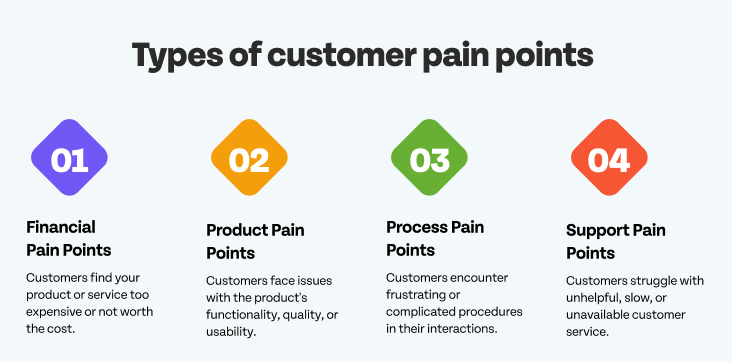
When content speaks to customer pain points, rankings start supporting growth — not replacing it. Keywords must still be the backbone for your SEO, but they can never replace content optimization with customer problems in mind.
3. Isolating Link-Building From Content Strategy
Link-builders can get very busy. But just like doing content marketing without revenue attribution, link-building without a clear aim is a waste of resources. If not all, then at least most, or a significant part. In other words, the efficiency of link building will suffer.
Connecting content strategy with link acquisition is what makes every link work towards common goals, bringing traffic and value that is aligned with overarching marketing ambitions.
Why it hurts SaaS growth
Misaligned content strategy and link-building hurt SaaS growth when:
- Links drive traffic that doesn’t match your buyer profile. There is an ideal buyer for each business type and business model. SaaS is no exception. When your links attract traffic that doesn’t convert and bring revenue, maybe you should review your link strategy?
- Authority increases without improving product discovery. The SaaS model relies on informational and educational product discovery techniques. Buyers need to be educated and understand what your product does, how it positively differs from competitors’ offers, etc.
- Resources are spent amplifying low-value or outdated content. This leads to links connecting with pages that have no real value or are outdated.
- It becomes harder to evaluate link-building ROI. Disconnected link-building goals become harder to measure financially. They may bring traffic and increase visibility, but don’t support content strategy KPIs shared by the marketing team.
How to fix it
Fixing it comes down to a few simple steps:
- Discuss and decide which content assets deserve links. Identify the type of links and the resources where you’ll place them.
- Prioritize building links to resources that support acquisition, activation, or conversion.
- Align linking activities with content planning cycles. This is impossible to do without tightening collaboration and organizing the combined project-based workforce among content and link-building teams.
- Abandon all link-building activities that no longer support content priorities.
4. Ignoring Product-Led and Use-Case-Driven Content
This is a very common mistake. Often, teams get too carried away by their successful content marketing that they start to lose focus. Blogs get written and published, prospects read them, and they may even like what they learn (or how they are entertained), but that doesn’t do much for your SaaS business.
What happens is that readers learn about the market, trends, and best practices, yet never clearly understand how your SaaS actually helps them in their day-to-day work.
Why it hurts SaaS growth
When content ignores real use cases, users struggle to connect theory with practice. They see brand claims, sound theories, and they may even agree with them, but they’ll struggle to make a choice and decide to buy your SaaS product.
In SaaS, it’s important to give users early access to your products. They really get it from the first glance, as it often happens in a typical B2B or a B2C business model.
Users learn your SaaS products and become addicted to them in the process. Even after conversion, the content marketing shouldn’t stop.
When your product fails to actively involve users, you’re unlikely to get their attention and trust. This will have immediate negative implications for your sales and revenues.
Source: Medium
How to fix it
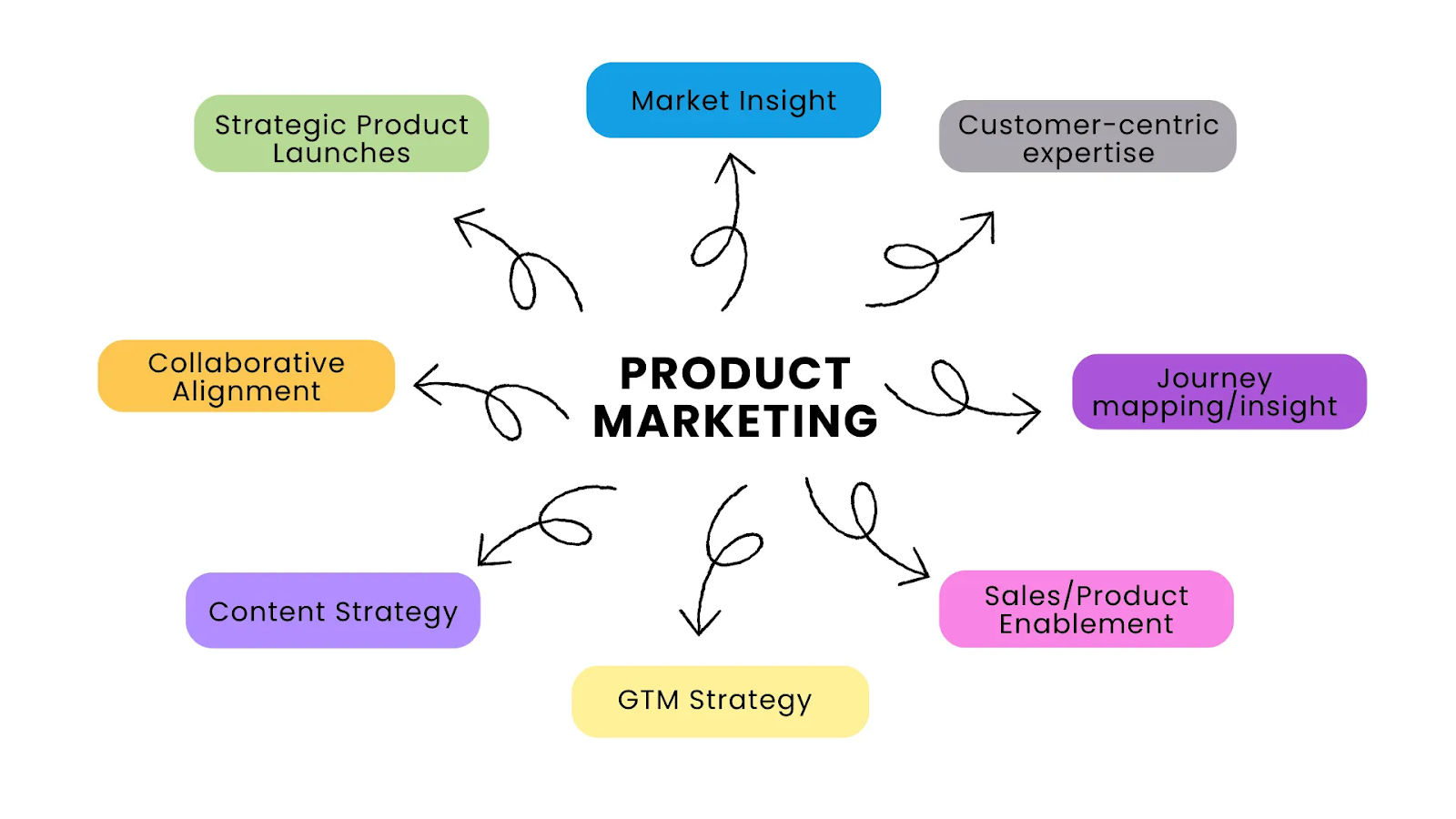
Fixing this happens once you realize your content gaps and bring the product back into the center of your storytelling.
That said, your SaaS content should be built around real product use scenarios:
- How other clients use your product.
- What challenges did they have before using it, and how did your product help to solve them?
- What measurable results were achieved (provide concrete numbers, e.g., efficiency grew by 15%, productivity improved by 30%, employee satisfaction boosted by 60%, etc.).
It’s important to give actual use cases, not faked or idealized ones. SaaS customers are smart; they study the products before buying and compare them with market alternatives. So, be natural and honest with your customers, and your content must reflect that.
5. Failing to Align Content With the SaaS Funnel Stages
This type of mistake almost always surfaces when content is created in isolation. A content team that works in a silo, detached from the plans and processes of the rest of the marketing department, often finds itself developing and launching content that doesn’t fit into the nascent customer interests. Early-stage visitors, trial users, and paying customers all see the same messages, written in the same tone, with the same intent.
Why it hurts SaaS growth
When content is not aligned with SaaS funnel stages, all sorts of collisions happen:
- Awareness content is shown to trial users.
- Long-term customers are shown educational, entry-level content that only confuses them.
- And product details are pushed to people who are still figuring out whether the problem is real.
Even the best content ideas will fail and may hurt your marketing efficiency if launched at the wrong time and place. Prospects will not get any closer to the purchase decision, and loyal customers will not get the incentives to continue using the product.
How to fix it
Every content marketer needs to be a strategist in a sense, i.e., anticipate and plan for content production that goes live, and start acting at the right time.
If you already face a problem of content alignment with the customer funnel stages, a good starting point is a thorough content audit. It will enable you to identify the mismatch and work out actions that will help you fix the problem.
Ideally, your SaaS content should be planned around the following stages: discovery, evaluation, activation, and expansion. Each stage needs a different level of detail, tone, and call to action. Optimize your content around those stages, and your customer will move on from stage to stage quicker and with less friction.
Conclusion
SaaS content marketing is demanding and impactful, and partially because of that, it’s prone to all sorts of mistakes.
Today, we have reviewed the most common mistakes and explained how to avoid them. Armed with this knowledge and these insights, anyone can take a big leap forward in implementing content marketing in this challenging business.
One key aspect that’s worth reiterating is trust. Proof and trust matter in SaaS more than in any other business model, and it can only be built through clarity, evidence, and content that serve real business goals.
A flexible, client-oriented content strategy that emphasizes product-led, use-case-driven campaigns can effectively build trust and help customers move seamlessly through the SaaS funnel stages.
What you should do is to focus on real buyer problems, make link-building a part of your content strategy, and you’ll see improved visibility, higher traffic, and an inevitable boost in the revenue metrics.
Related Posts

Published May 27, 2025

Published Aug 26, 2025

Published Jun 24, 2025

Published Dec 9, 2025
Last updated Jul 17, 2025 | Published Jul 8, 2025
Published Oct 7, 2025
Enter URL & See What We Can Do Submit the form to get a detailed report, based on the comprehensive seo analysis.