What is Authoritative Content & How to Use It in Marketing?
Authoritative content has become nothing short of a buzzword. Many see it as a Secret Grail of content marketing and SEO, and crave to make all their content authoritative. However, what actually fuels this fixation on authority in content marketing? In other words, what, beyond the buzzword, actually gives authority its weight in search and marketing?
Today, we’ll look under the hood of high-authority content and explore the most critical steps for creating it. Buckle up, this will be an informative and energetic reverse-engineering dive into the topic.
Contents
- What is Authoritative Content?
- The Importance of High Authority Content for SEO
- How to Create Authority Content?
What is Authoritative Content?
Authoritative content tends to get treated like a property you can manufacture on demand. Plan and research carefully, write with passion, cite enough sources, polish the tone — done.
When readers encounter material that shows a deep understanding of a subject, they don’t think this is content with high authority. Instead, they keep reading. They don’t argue internally. They don’t open five other tabs to double-check basic claims. That is where content credibility starts to show itself.
Authority, in this sense, isn’t confidence or assertiveness. It’s the absence of content consuming hiccups. Terms are used correctly. Claims don’t contradict each other halfway down the page. The explanations line up with what people already know, while still extending that knowledge in useful directions. Nothing feels inflated to impress or overly commercial.
The following are the typical markers of authoritative content:
- Original ideas and a deep understanding of the topic.
- Demonstrated use of the industry-related terminology (not too much, though).
- Claims grounded in verifiable sources.
- Clear logical flow without forced transitions and clichés.
- Stable perspective throughout the text.
The demonstration of the knowledge of the subject matters the most. According to recent research, expert-led information is trusted over twice as much as brand-led messaging when people evaluate reliability.
When information feels solid, readers don’t experience tension. They don’t question motives. They don’t feel as if they are being sold something. Instead, they absorb. This reaction is the practical expression of content credibility.
The Importance of High Authority Content for SEO
Search engines don’t look at pages once and move on. They remember. They revisit, re-evaluate, and compare. That long memory is the real reason conversations about authority never go away.
When people ask why build authoritative content, they’re usually reacting to instability. Pages rank, drop, come back, disappear again. Authority reduces that volatility. It gives search engines a formal reason to rank pages with quality content higher in SERPs.
That’s how authoritative content alters the SEO game. It gives Google’s crawlers plenty of signals that demonstrate originality, coherence, popularity (given enough credible references/links), and utility of the information provided.
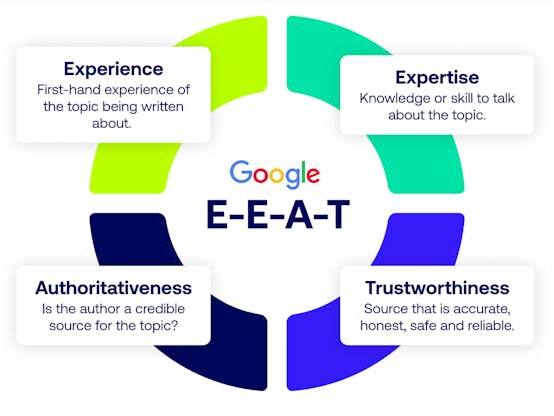
Google’s E-E-A-T guidelines (Experience, Expertise, Authoritativeness, Trustworthiness) explicitly praise authoritative content to help readers enjoy the best content possible. These guidelines emphasize the importance for content creators to demonstrate:
- Firsthand knowledge.
- Deep understanding of the subject.
- And provide helpful and reliable information.
Source: Digitalmarketinginstitute
Authority also changes how search algorithms conduct content reassessment. Pages aren’t judged in isolation but against their own history and topical footprint. Consistency, clarity, and thematic alignment add up — and the result is noticeably stronger SEO stability.
Tellingly, authority doesn’t eliminate competition. It just changes the starting position — and that difference compounds faster than most tactics ever could.
How to Create Authority Content?
To create content and build authority one must realize that it’s not a one-time act, but more like a continuous process. Starting with the keyword research and competitor analysis, authority requires dedication and persistence, even patience, as positive SEO results may not come instantly.
1. Conduct Keyword Research
Not all searches are equal, and keyword research makes that painfully obvious. Some queries are exploratory. Others are evaluative. Some sound almost defensive, like the searcher has already been disappointed before.
Authority-oriented pages succeed when they recognize those differences instead of flattening them. Keyword research helps separate curiosity from skepticism, and interest from intent.
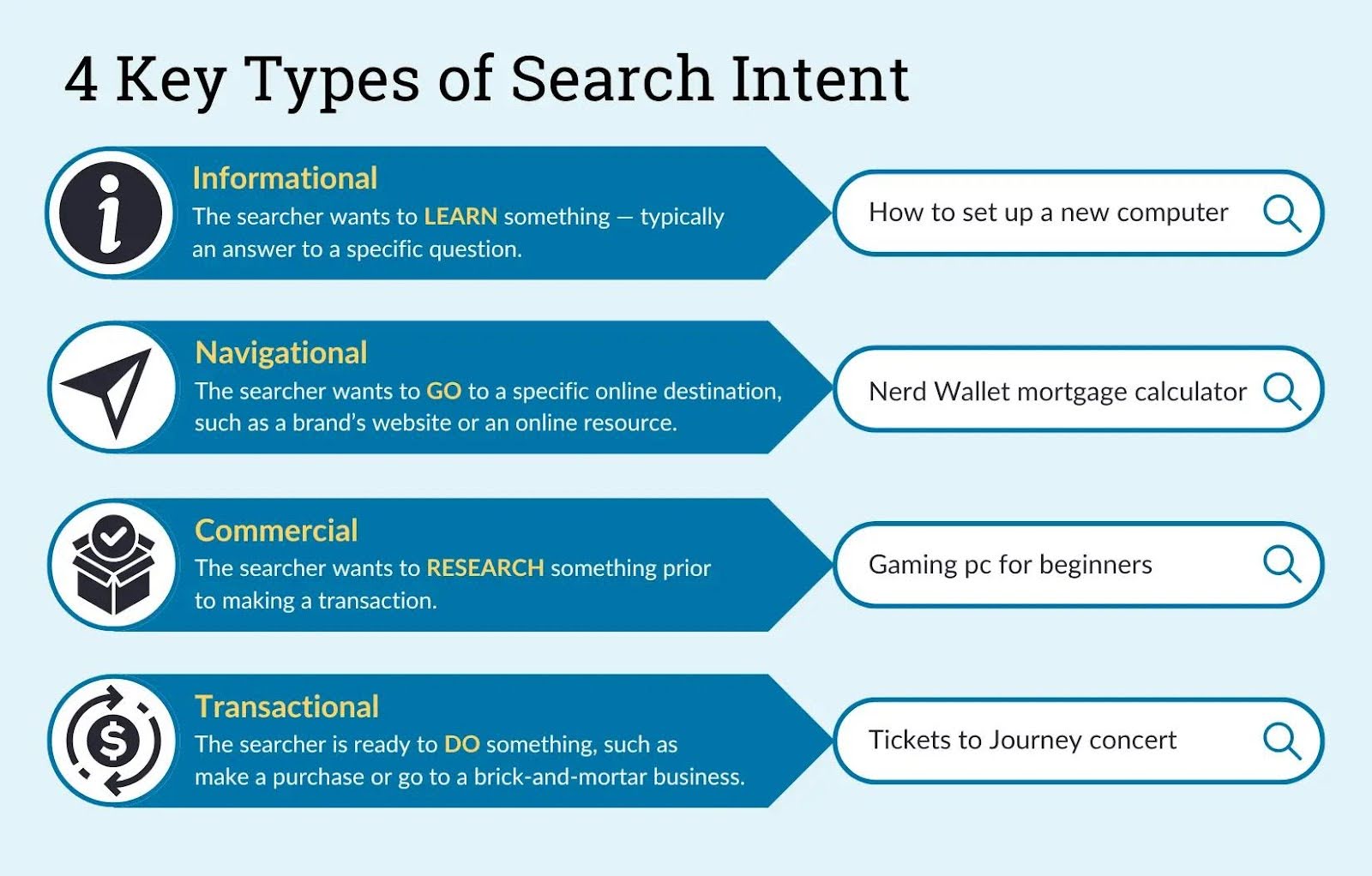
For content to be perceived by users and search engines as authoritative, it must meet users’ search intent. At the stage of keyword research, it helps to look for words that match the following four types of intent (depending on the nature of your content):
- Informational — the request for guidance and knowledge.
- Transactional — the intent to complete an action, such as a purchase or signup.
- Navigational — the need to locate a specific brand, platform, or resource.
- Commercial — reflecting the need to assess value, compare options, and buy.
Source: Moz
In marketing, failing to recognize that difference leads to misfires. You either oversimplify something that needs nuance or overcomplicate something that needs clarity.
The keyword research stage shows how crowded a topic is, how refined the language has become, and what level of understanding search engines already associate with it. Some topics are still exploratory. Others are saturated with surface-level explanations and clearly demand depth.
What the keyword stage helps establish:
- Expected terminology and phrasing.
- Dominant questions versus fringe ones.
- Competitive framing in search results.
- Where originality actually matters.
- How trust is currently earned.
Rather than dictating what to write, keyword research frames how information should be presented. That framing influences tone, structure, and scope later on.
📌 The bottom line: Authority doesn’t come from sounding impressive. It comes from sounding right. Finding the most important keywords is where that calibration begins — long before headlines, outlines, or conclusions are drafted.
2. Check Top Websites in the SERPs
Any serious research starts with looking at what already exists. In this case, that means opening the search results and paying attention to what people are actually consuming around the topic.
Source: Enterpriseworld
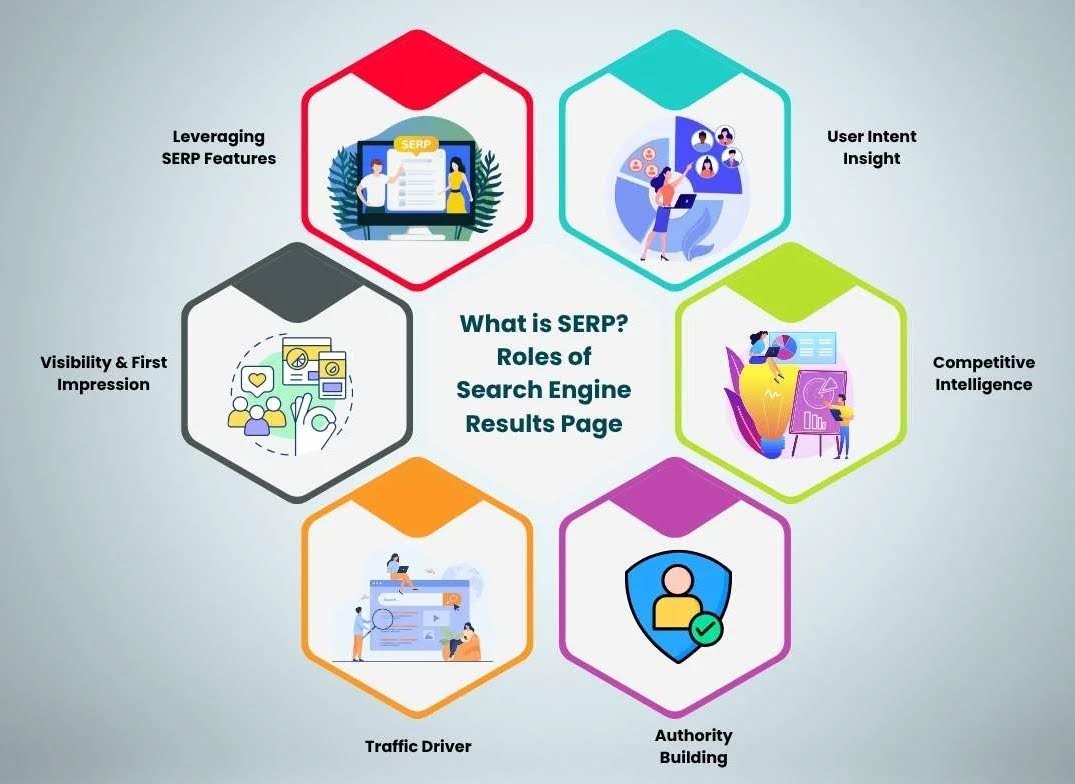
The SERPs reveal more than rankings. They show how users expect information to be delivered. Are they clicking long-form guides? Step-by-step instructions? Opinion pieces or interviews?
In certain themes, like psychology and science, long guides dominate. They provide the required depth of information and many nuances about the topic.
Other themes, like education and management, require a more fragmented approach — tutorials here, case studies and interviews there. While sometimes, video results clearly outperform written pages.
You will find most answers to your questions just by researching the first positions in Google’s SERPs. It takes time, but the result should be well worth the effort, building the foundation for your authoritative content.
When you review SERPs, pay attention to the following:
- What users expect to see first.
- Which formats dominate the topic (text, video, or their mix).
- Gaps in existing explanations (your experience is the best guide here).
- Typical depth and length (count words, not pages).
Checking top-performing sites in SERPs saves you from expensive mistakes. The time lost pursuing unworthy goals is most precious here. However, with this research stage as a routine practice, the final output will match real demand rather than internal assumptions. Content authority is at stake here.
3. Content Writing With SEO in Mind
Once writing starts, there’s nowhere to hide. Research either turns into clarity — or into noise.
Pages that hold up over time are almost always written by people who do the work themselves. Sometimes it amazes even experienced SEO specialists how certain content goes viral because of a single important and original statistic, or a well-placed and properly timed quote. Others cite it, and republish multiple times.
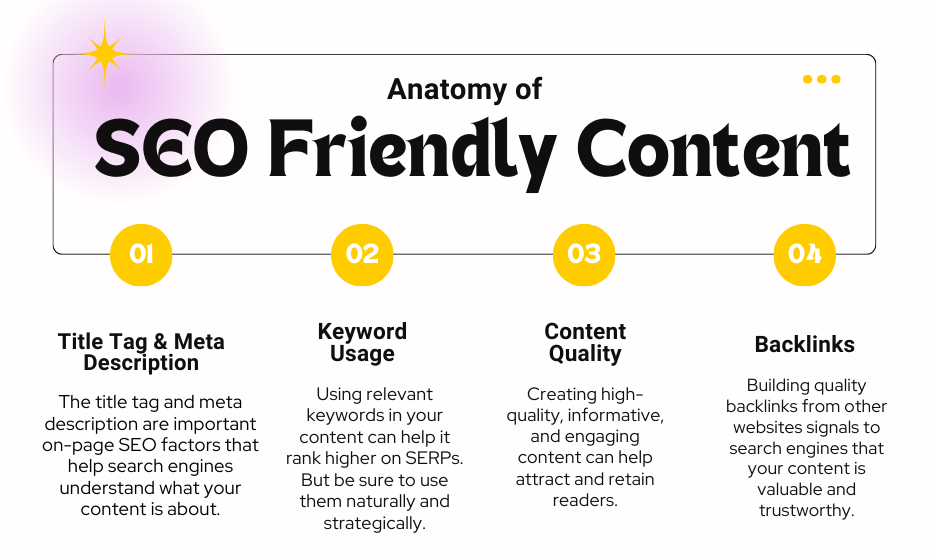
Structure matters too, but not for decoration. Clear H1s and H2s help people orient themselves. Lists reduce cognitive load. Visuals help explain what text alone makes heavy. Internal links aren’t filler — they give context and show that ideas don’t live in isolation.
Strong SEO-aware writing usually contains:
- Clear expert authorship (a photo and a short author bio must be included).
- Up-to-date, primary sources of information for the key arguments and claims.
- Visible fact-checking discipline, as even a single unfortunate inaccuracy may prevent an authority from building up.
- Logical heading hierarchy (usually, H1 to H3 is enough).
- Visual communication like graphs and infographics tied to explanation.
- Sparring internal links that expand context; not litter.
Practical insights tie everything together. They show that the writer is knowledgeable in the topic and has hands-on experience. This is where authority building marketing stops being a concept and starts feeling earned.
Source: LinkedIn
📌 The bottom line: Good content marketing doesn’t sound impressive. It sounds accurate, structured, and hard to argue with.
4. On-Page Optimization for Higher Visibility
There’s a common misconception that great writing “finds its way” to the top. It doesn’t. Search engines don’t discover meaning intuitively — they interpret structure.
Keywords play a central role in that process, but only when they’re placed strategically. The time when keyword stuffing brought the best results is long over. Today, smart search algorithms assess strategic and rational keyword location, and even a slight spamming can ruin otherwise great content.
Places where keyword signals matter the most:
- Title tag (primary relevance cue).
- H1 and section headers.
- Descriptive image attributes, utilizing natural, plain language.
- Introductory paragraphs, provided they are light, and not too “wordy”.
- Diversified internal links pointing to the page with the content.
Ignoring these signals won’t save you much time, but what it will surely do is simply undermine your content’s ranking potential. Just think of it — using solid research and original findings just to produce another mediocre piece of content because keywords are not allocated optimally.
This is why optimization is inseparable from visibility. You can have expert insight, clean structure, and useful explanations — and still miss the top results if relevance isn’t clearly signaled.
📌 The bottom line: On-page work doesn’t replace expertise. It makes expertise legible. Without that step, even a strong brand authority stays buried, not because it lacks value, but because it lacks clarity.
5. Monitor the Success of Your Contenty
Once a page goes live, it flows into the open waters. The online environment is like a living organism, complex, constantly changing, and, therefore, highly unpredictable.
Search results shift. Competitors update their pages. User expectations evolve. Ignoring that movement is how even strong pages quickly lose relevance.
Monitoring performance is how you stay aware of what’s happening after publication:
- Rankings tell you how search engines currently evaluate the page.
- Traffic shows whether that visibility still brings real engagement.
When positions drop, it doesn’t always mean something is broken. Sometimes the topic changed. Sometimes the SERP format changed. And sometimes expectations change. Monitoring gives context and an understanding of what needs to be changed to keep the content performance at its peak.
Then there’s accuracy that also plays a role in authority content SEO. Topics don’t freeze in time. New tools appear. Old assumptions stop being true. When the niche changes, the page has to change with it — otherwise credibility starts leaking.
Monitoring usually means keeping an eye on:
- Keyword position movement.
- Organic traffic patterns.
- Changes in search intent.
- Outdated facts or examples
Shifts in the industry itself also happen, and the only content that stays valuable is the one that adapts. Not constantly, not dramatically — just enough to stay aligned with reality.
📌 The bottom line: Monitoring is essential for the content’s authority. It’s what turns a one-time success into continuous recognition and stable SEO performance despite volatile market conditions.
Conclusion
Authoritative content is the content that exhibits several qualities that make it attractive for humans and search bots alike:
- Demonstrated use of the industry-related terminology (not too much, though).
- Original ideas and a deep understanding of the topic.
- Claims grounded in verifiable sources.
- Clear logical flow without forced transitions and clichés.
This type of content is not something you make once, by chance, and then struggle to repeat your success. It is the product of systematic and hard work, which starts with careful research of the topic, finding the best-performing keywords that nicely match a particular search intent, and then creating and optimizing your creation to prolong its authoritative lifespan.
To build credibility that endures time and market changes is another crucial aspect of high-authority content. You can achieve that by continuously measuring your content performance and then updating and refining it with each new iteration.
The content that was already published must also be measured from time to time. By adding new facts, updating statistics, and keeping links (internal and external) in a perfect shape, you can ensure it remains useful, credible, and competitive as expectations evolve.
Related Posts

Published Oct 15, 2025

Published Aug 26, 2025

Last updated May 12, 2025 | Published Dec 10, 2024

Published Jan 20, 2026

Published May 27, 2025

Published Jan 6, 2026
Sign up now and start a managed content placement campaign.