SEO Goals and Objectives: What Really Matters for Businesses
Most of the SEO goals look like this: “We need to increase organic traffic,” “We need to rank higher in Google,” or the famous “Let’s do SEO because competitors are doing SEO.”
These are not the most effective goals. They’re symptoms of not knowing what your business needs from search engines.
Your SEO objectives can’t start with keywords or tools. They have to start with just one, simple question: “What business problem are we trying to solve?”
Until you figure this out, every optimization effort will be just another activity, not an SEO strategy that can bring real, tangible results.
So, in this guide, we’ll take a look at:
- The efficient SEO goals,
- How they differ from shallow ones,
- And finally, how to set them right.
Contents
- What are SEO goals?
- Common optimization objectives
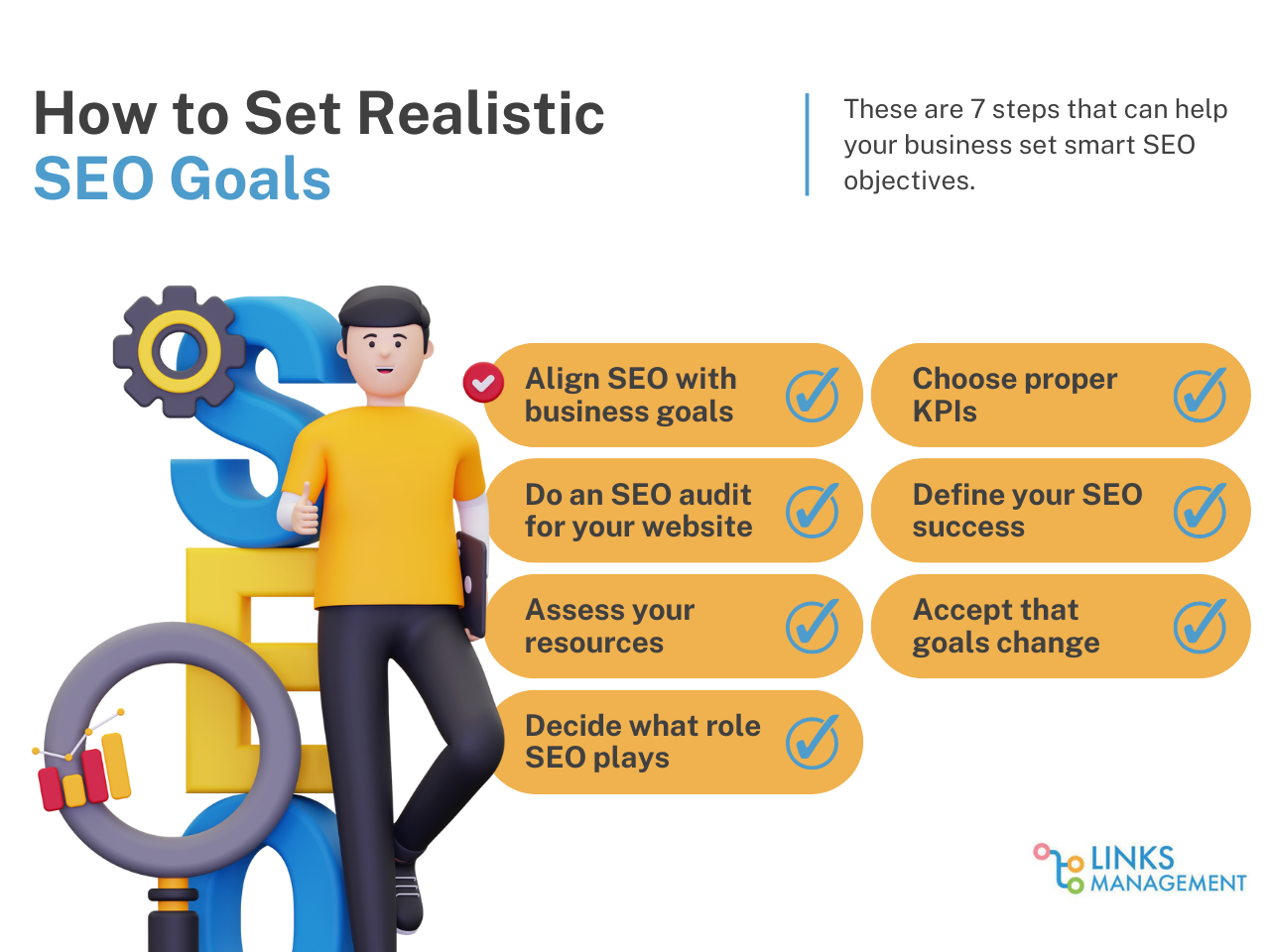
- How to set realistic SEO goals for your business in 7 steps
- Step 1: Align your SEO with business objectives
- Step 2: Do an audit
- Step 3: Assess your resources (realistically)
- Step 4: Decide what role SEO plays in the bigger picture
- Step 5: Choose proper key performance indicators
- Step 6: Define what SEO success looks like when things go wrong
- Step 7: Accept that SEO goals change and plan for that
What are SEO goals?
Let’s address the elephant in the room first. What are these?
Search engine optimization (SEO) goals are specific results you want to achieve by using SEO.
Technically, anything that can be accomplished with optimization tactics can count as a goal. But it’s not that simple in real life, as you may have already understood from what we’ve said above.
Let’s take a look at two SEO goals:
- A way too broad goal: “Increase website traffic.”
- A smart SEO goal: “Increase organic traffic to product comparison pages by 30% in 6 months.”
- See the difference? It’s huge! Also, the second goal is clearly a result of one of the business objectives, like, for example, “getting more qualified leads.”
But wait, what is the main goal of SEO?
Good question. You’ve probably heard SEO is all about search rankings. It is, but… that’s only part of the story.
The main goal of search engine optimization is to connect the right users with the right content at the right time. So, there should be many “rights” simultaneously.
It could be described in stages:
- Your target audience looks for information in search engines.
- If your page matches what they’re looking for, search engines push your content higher in search engine results pages.
- Then, more website traffic flows to you.
- If the users who come from that traffic are interested in what you offer, congrats! They convert into sign-ups, leads, customers, or sales.
So, saying that SEO is simply about attracting more people to your website wouldn’t tell the whole story. Because it actually means getting the right people to your website and encouraging them to take the actions that align with your business goals.
Common optimization objectives
Of course, your optimization goals will differ, depending on your case. But let’s take a look at some of the most common SEO objectives that make sense for many businesses.
Increase organic traffic
This is the classic SEO goal, and most companies pursue it. After all, it makes total sense, getting discovered by more people is one of the most obvious business objectives.
However, it is important to understand that traffic alone is meaningless unless it’s relevant and driven by intent. And it goes without saying that it has to be aligned with what your company actually sells.
A blog post that brings 50,000 visitors a month sounds fantastic. But… if it never converts or doesn’t generate more revenue, what’s the point? Hitting some random website KPIs that only look good in your spreadsheets?
Well, what should this objective really sound like, then?
Increase organic traffic to pages that matter (product, service, comparison, etc., pages). But of course, people don’t convert right away, no matter how much traffic you have. That’s why all marketers talk about funnels.
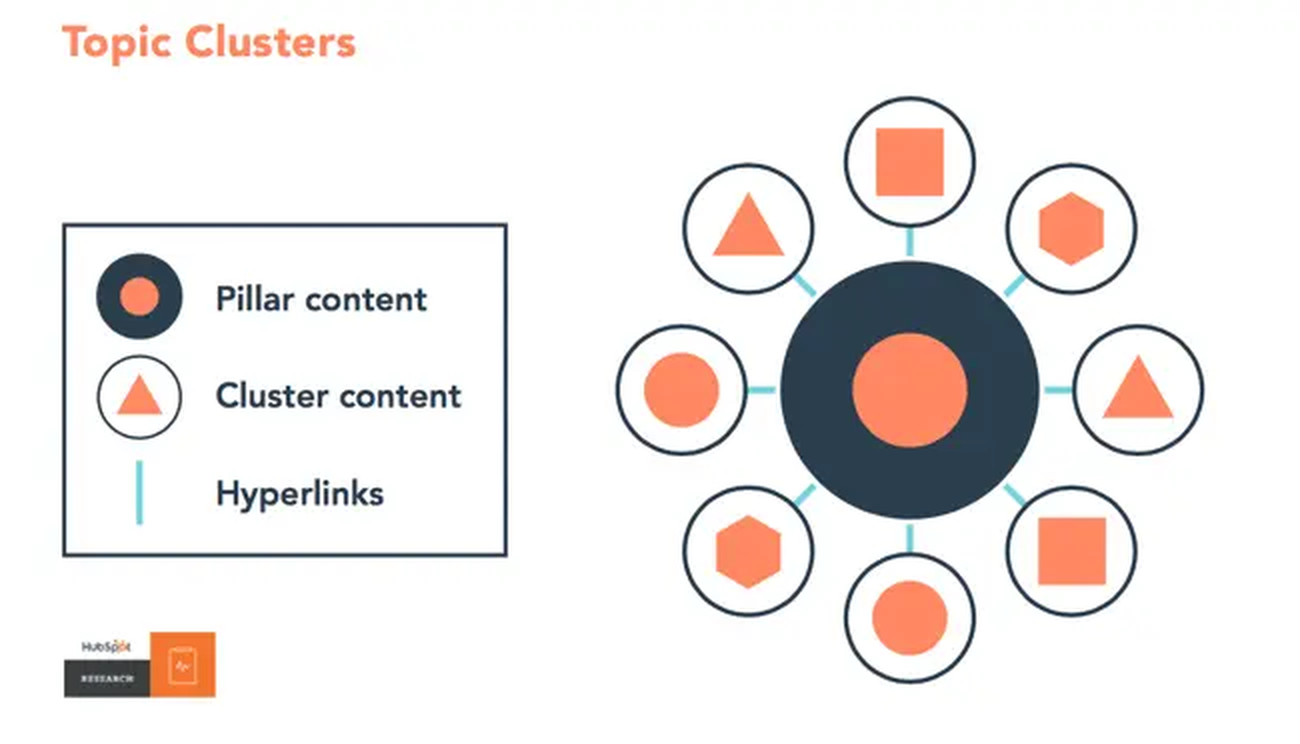
So, how can you increase traffic to your important pages effectively? One of the best ways to do that is by using topic clusters.
Source: HubSpot
Essentially, it means creating one main (pillar) page that is very broad and then linking it with other connected blog posts (cluster content) that explain smaller elements in detail.
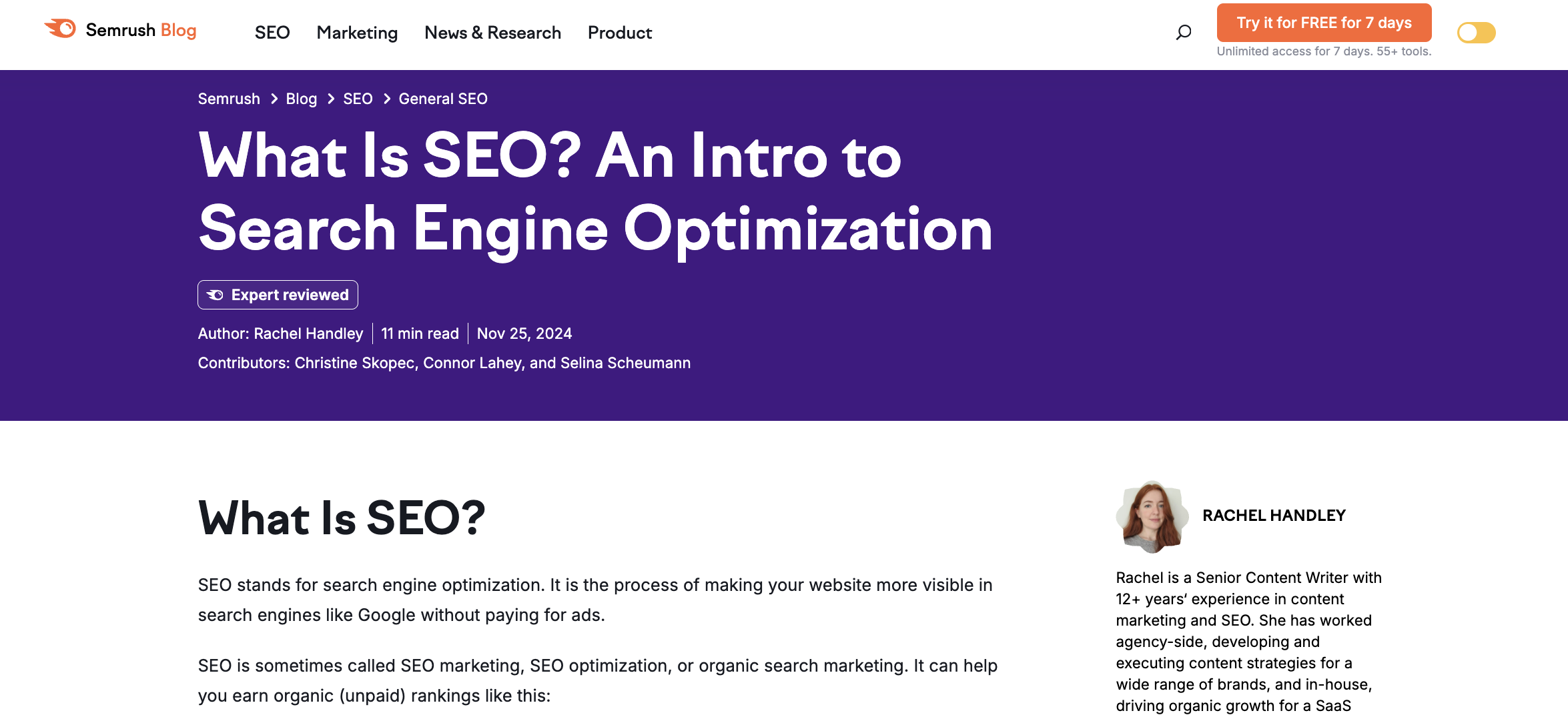
For example, here is a blog post by Semrush titled What is SEO? This topic is extremely broad, so it makes sense to turn it into a pillar page.
Source: Semrush
From it, they link to multiple narrower topics, like:
- On-page optimization,
- Keywords,
- Title tag,
- Meta description,
- H1 tag, and dozens of others.
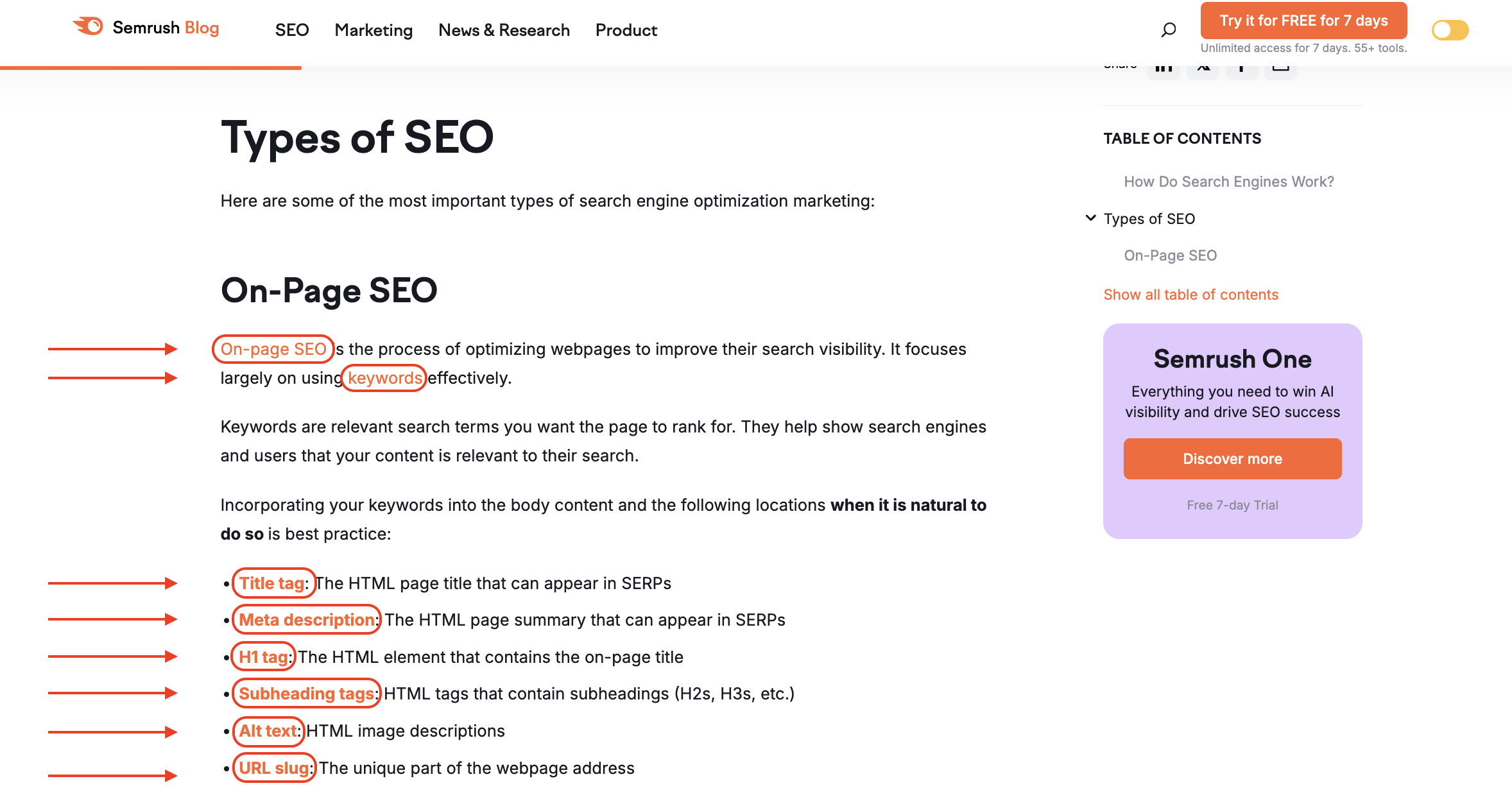
Source: Semrush
Thanks to this, Semrush achieves a couple of things:
- They produce a lot of educational content, which is a must for B2B and SaaS.
- They cover the top- and middle-of-the-funnel.
- They reinforce their expertise in the SEO space.
- And they also convert part of that targeted traffic thanks to little widgets like this:

Source: Semrush
And that’s not just Semrush, pretty much all the other brands you know do something similar.
Here is, for example, another way of converting/building a connection with your website visitors from organic traffic. HubSpot offers to download its industry report. This is called a lead magnet, and it’s a great way to move your visitors down the funnel.
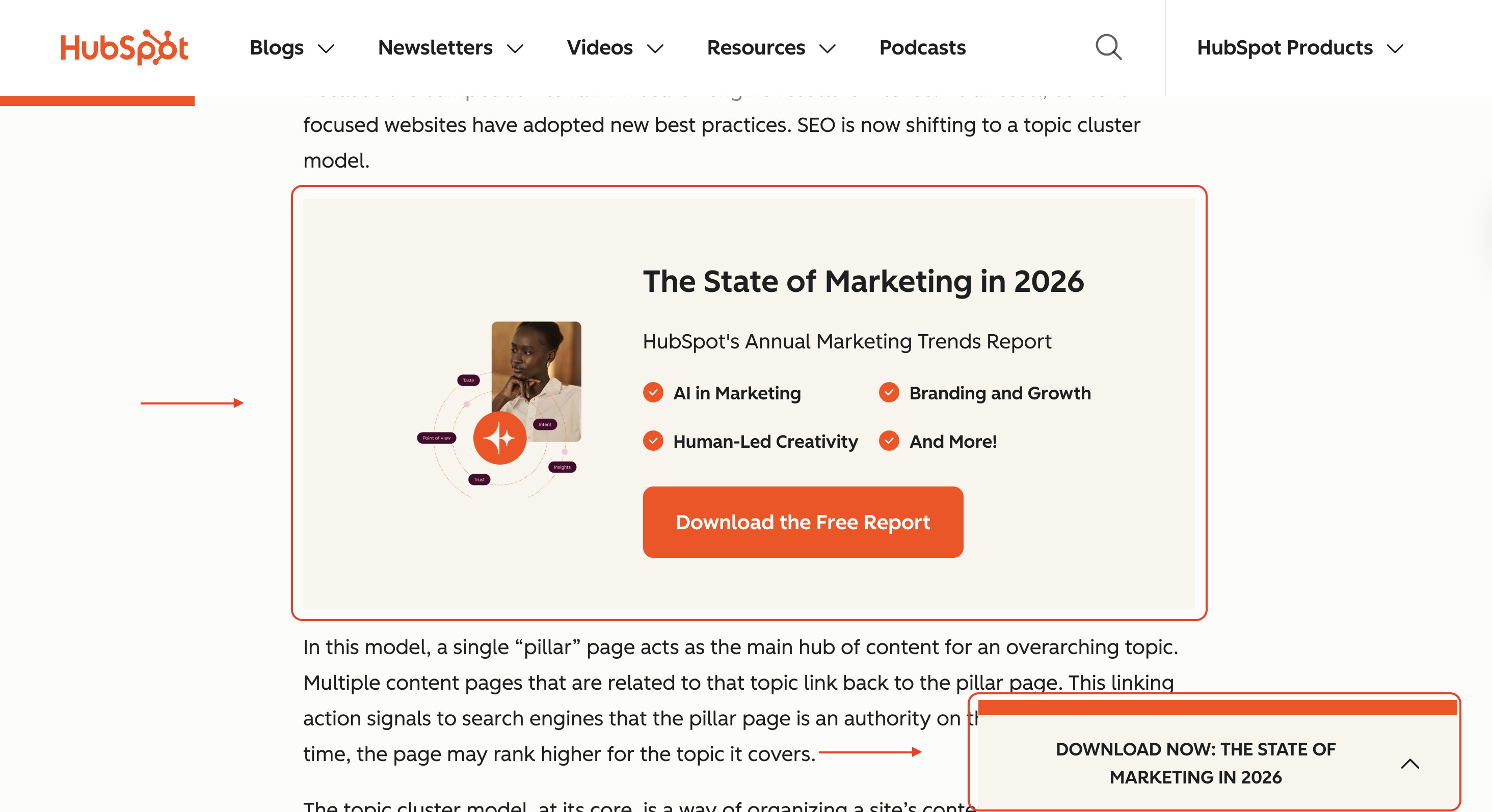
Source: HubSpot
So, yes, just wanting to achieve organic traffic growth is okay. But what’s better is thinking about how you can convert that organic traffic from the very start.
Generate more qualified leads from organic search
Now, this is a real SEO goal because it definitely aligns with your overall business objectives.
SEO is one of the few channels that can deliver qualified traffic without paying for every click. But it only works if:
- Search intent is understood,
- Landing pages are built for conversion,
- Content matches where users are in the buying journey.
For example, Ahrefs uses SEO not just to rank, but to convert users into trials and paid subscribers. Their blog content supports product education and shows real use cases.
Here, for instance, they explain how you can track AI Overviews and natively integrate their product to showcase how it can serve for this purpose. And this is still educational content. It isn’t a demo or anything like that.
That’s how they generate qualified leads through SEO. Because someone who wants to track AIOs will most likely be interested in a tool that can help with that.
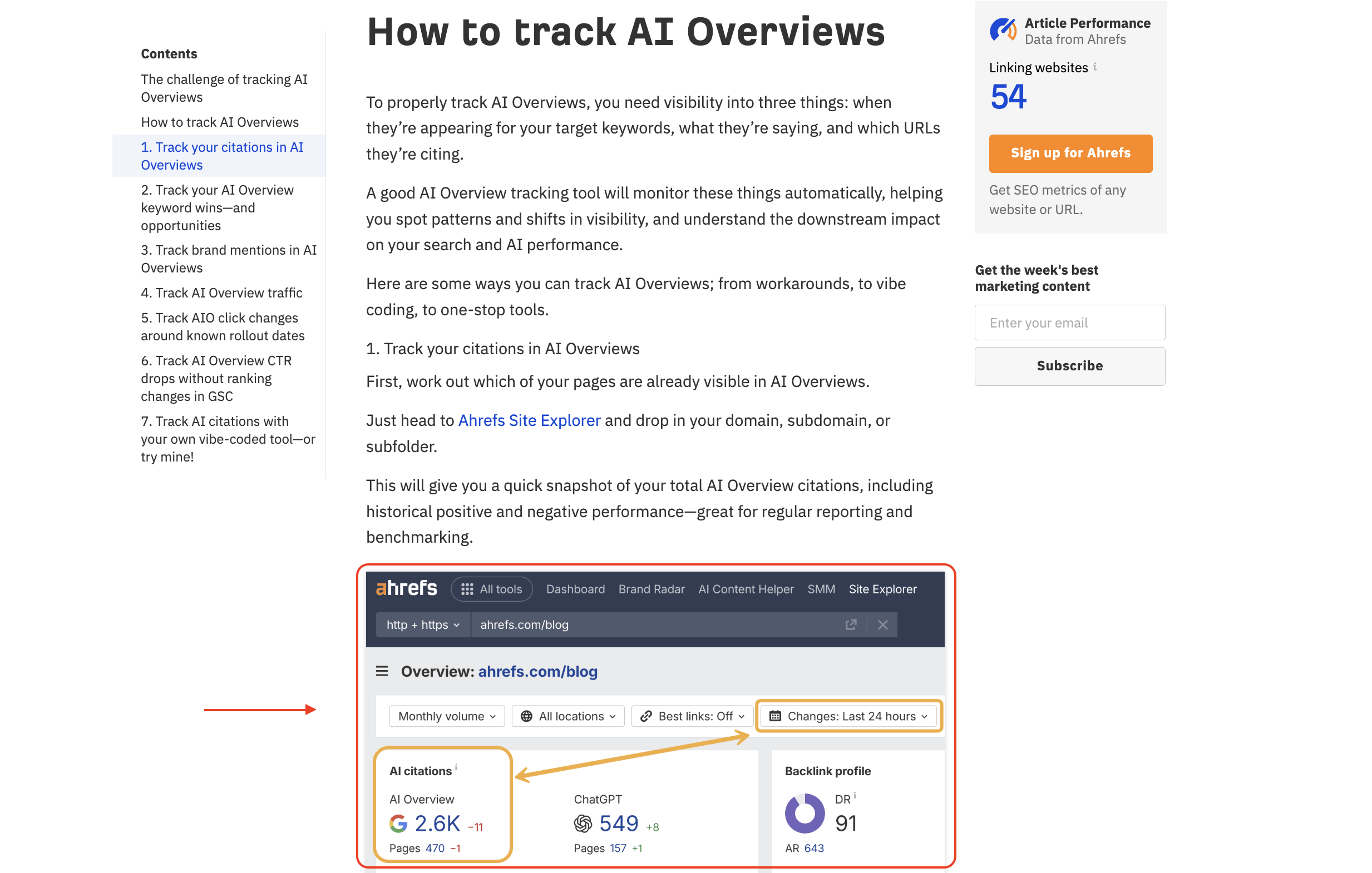
Source: Ahrefs
They really don’t care about vanity traffic (that’s why they don’t create content like “How to create viral content on social media”). Instead, they focus on:
- Conversion rate from organic traffic,
- Search-driven signups,
- Keyword performance tied to revenue.
Improve keyword rankings for revenue-driving landing pages
You can only focus on informational keywords, but if there is zero buying intent… Well, it’s not going to work for a business.
So, you have to rank for high-intent keywords that convert. Because let’s be honest, a page like this will convert much better…

Source: SurferSEO
…than a page like this:
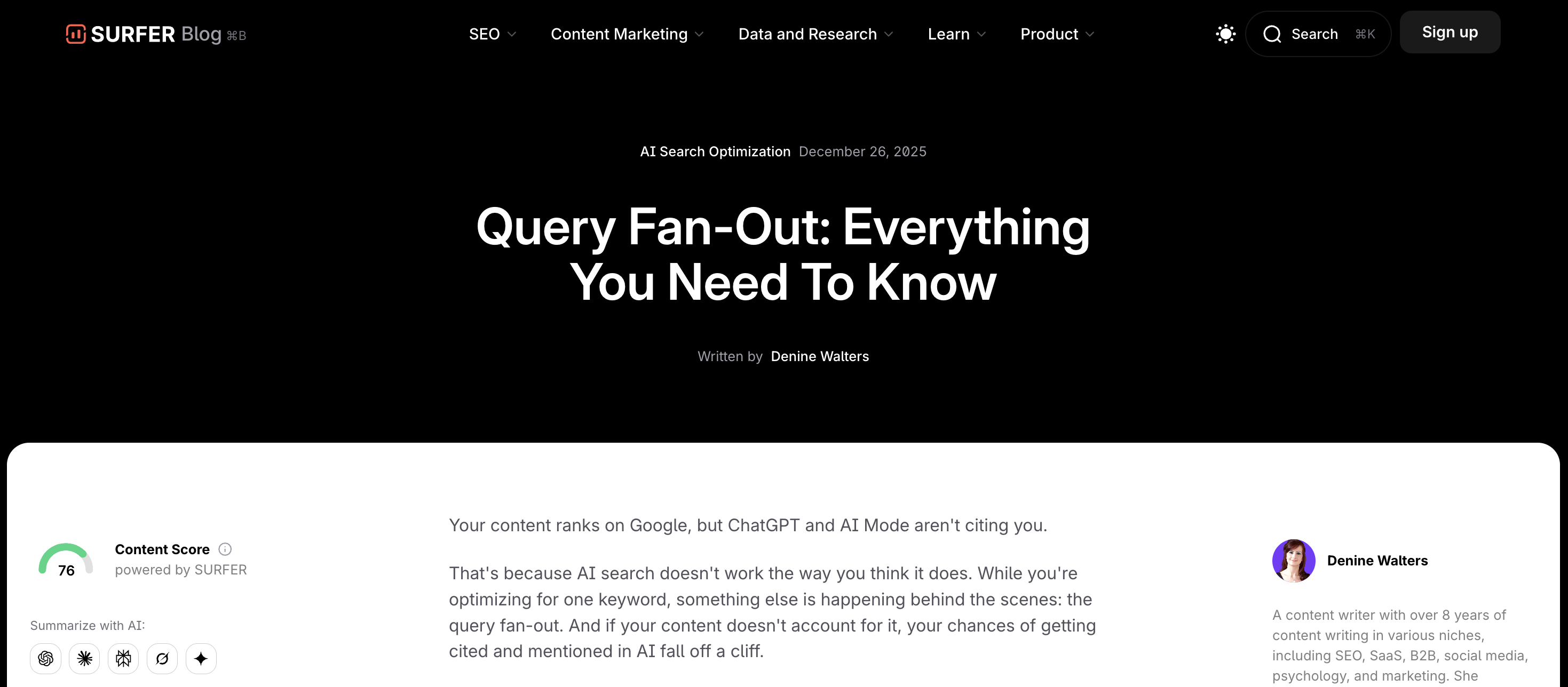
Source: SurferSEO
What can you do to improve the rankings of these pages?
Pretty much everything you’d do to rank any other page (including an informational one). So, first, it’s more about priorities. And next, you’d:
- Do keyword research that makes sense in terms of keyword difficulty and search volume,
- Create landing pages with high-converting copy,
- Do quality link building to help your landing page improve its rankings in search results, etc.
Build brand visibility and long-term search authority
You can’t build actual brand visibility through SEO by simply trying to rank your homepage. There’s much more work and more showing up to do. You need a consistent presence in the search results in your niche.
Essentially, no matter how, when, or where users search, your brand needs to keep appearing.
This way, your business will become more familiar and trustworthy And people would just keep recognizing you. Of course, it has to go hand in hand with the quality of your services/products, but that’s not an SEO topic as such.
And familiarity will ultimately result in more clicks, engagement, and conversions, even when your rankings are similar to what your competitors have.
Let’s run a simple experiment.
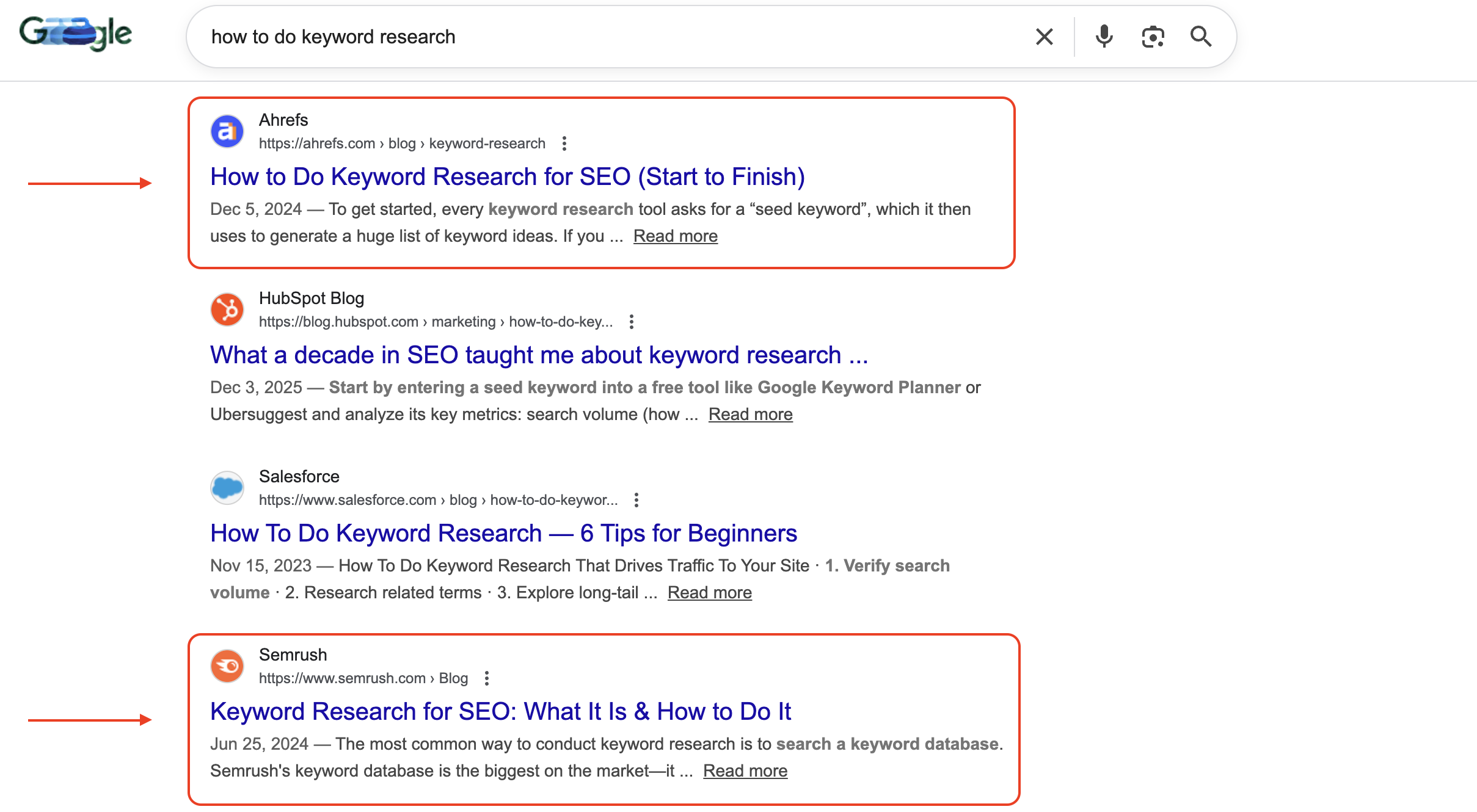
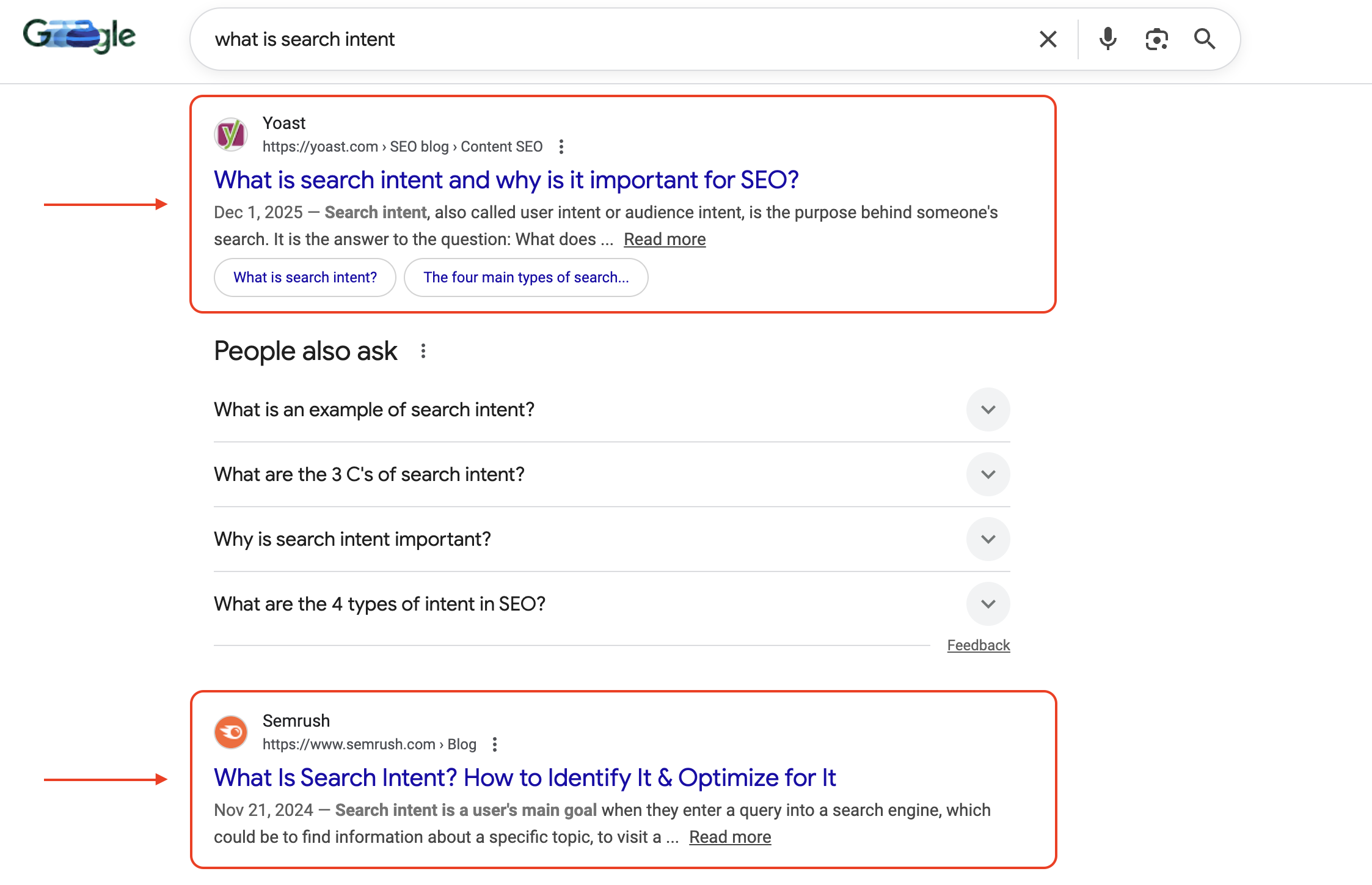
We all know that Ahrefs, Semrush, Search Engine Journal, Yoast, etc., are some of the biggest brands in the SEO space. So, let’s try to Google a couple of terms in this industry and check what pops up on the first page of search results.
Number one:
Number two:
Number three:
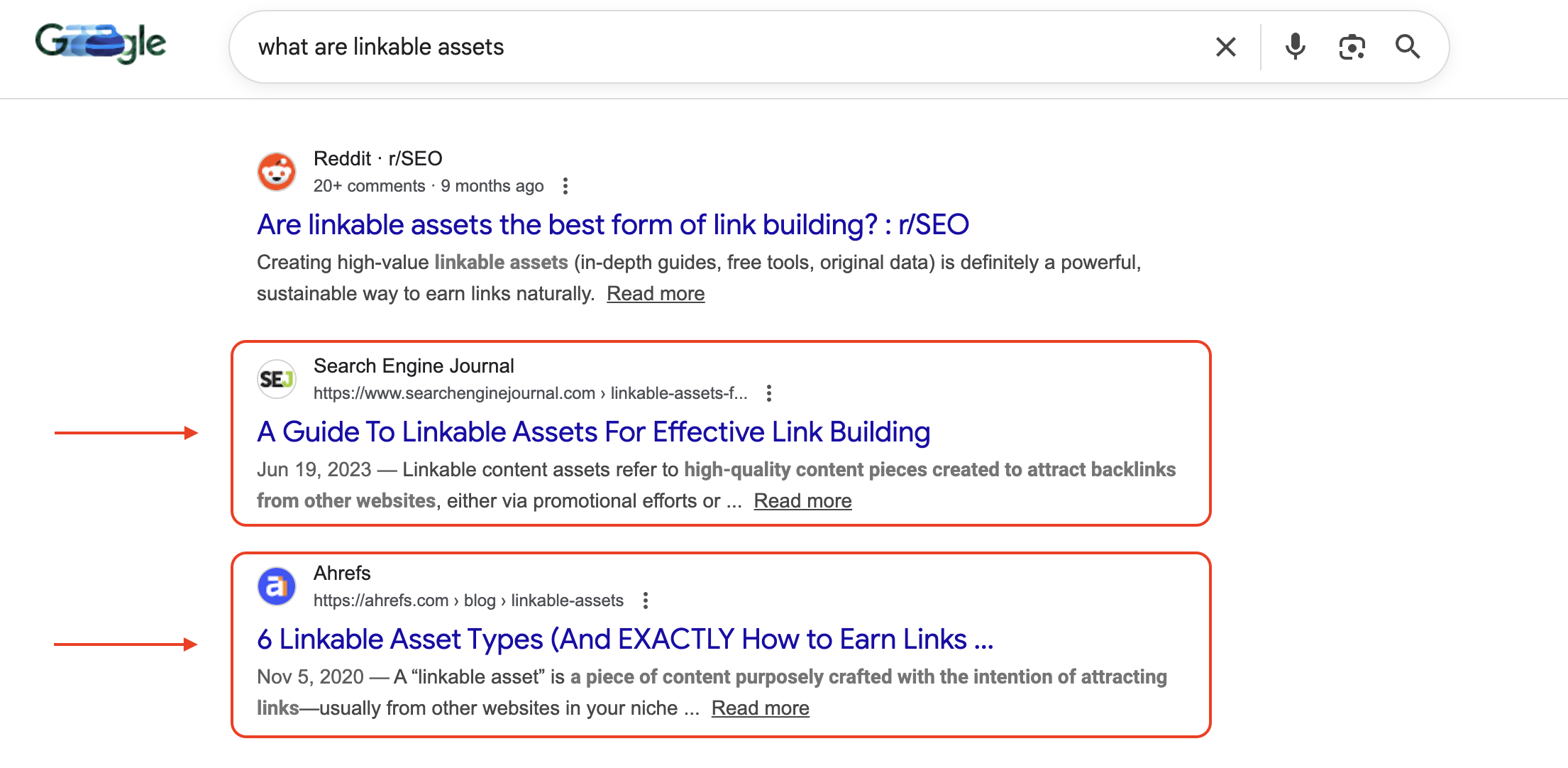
Not that surprising, isn’t it? That’s a clear example of how you can build true brand visibility through search engine optimization.
In terms of the actual objectives for your SEO strategy, you could focus on:
- More impressions across a wide keyword set in your niche,
- A growing number of branded searches,
- Better click-through rates from search results, etc.
Increase market share by capturing demand earlier
No matter what niche you work in, we all have competition. So, capturing the demand as early as possible is often one of the best strategies to get more conversions later on.
When it comes to the customer journey, it has several stages:
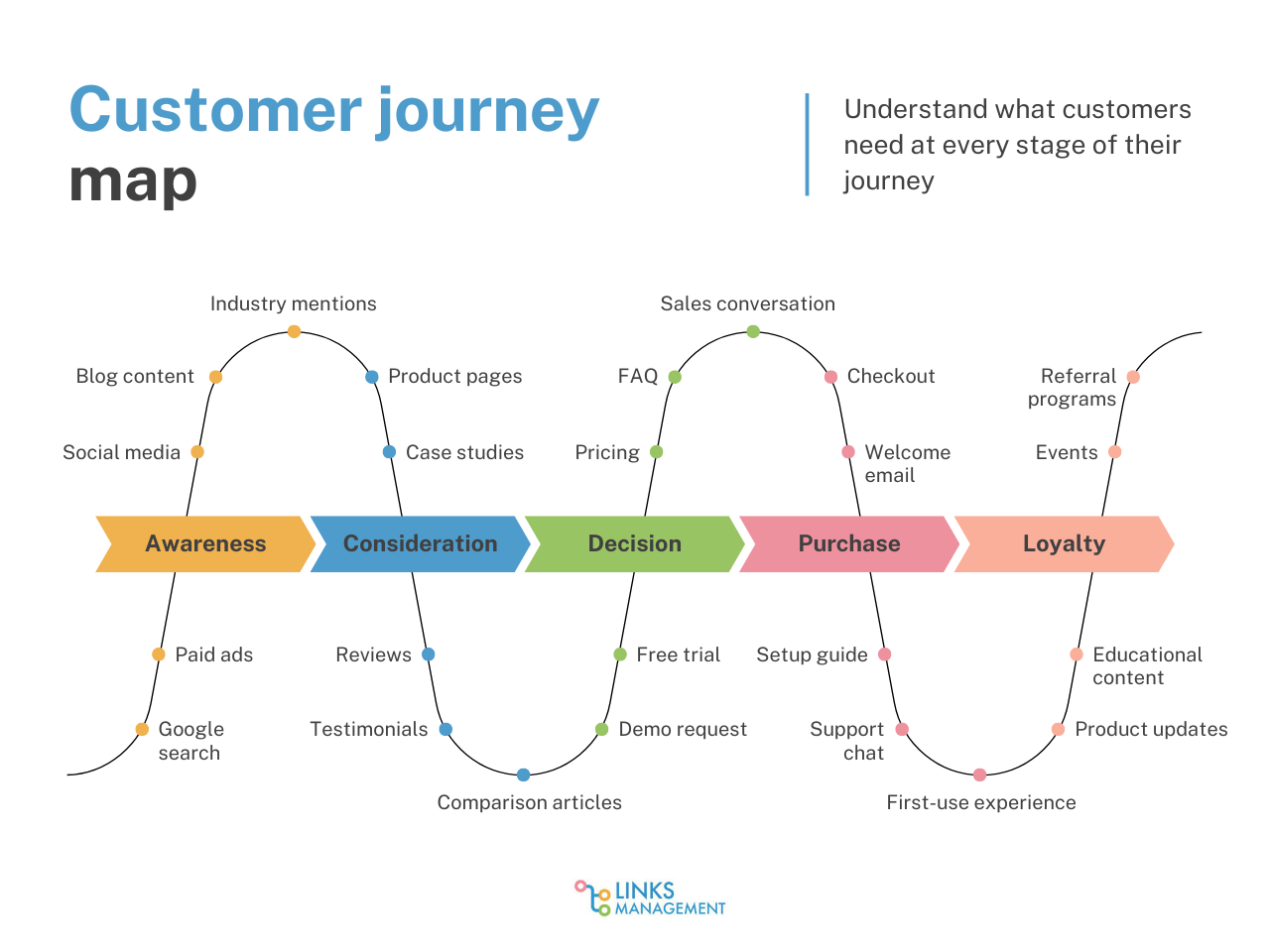
What happens, though, is that many businesses focus too much on these stages:
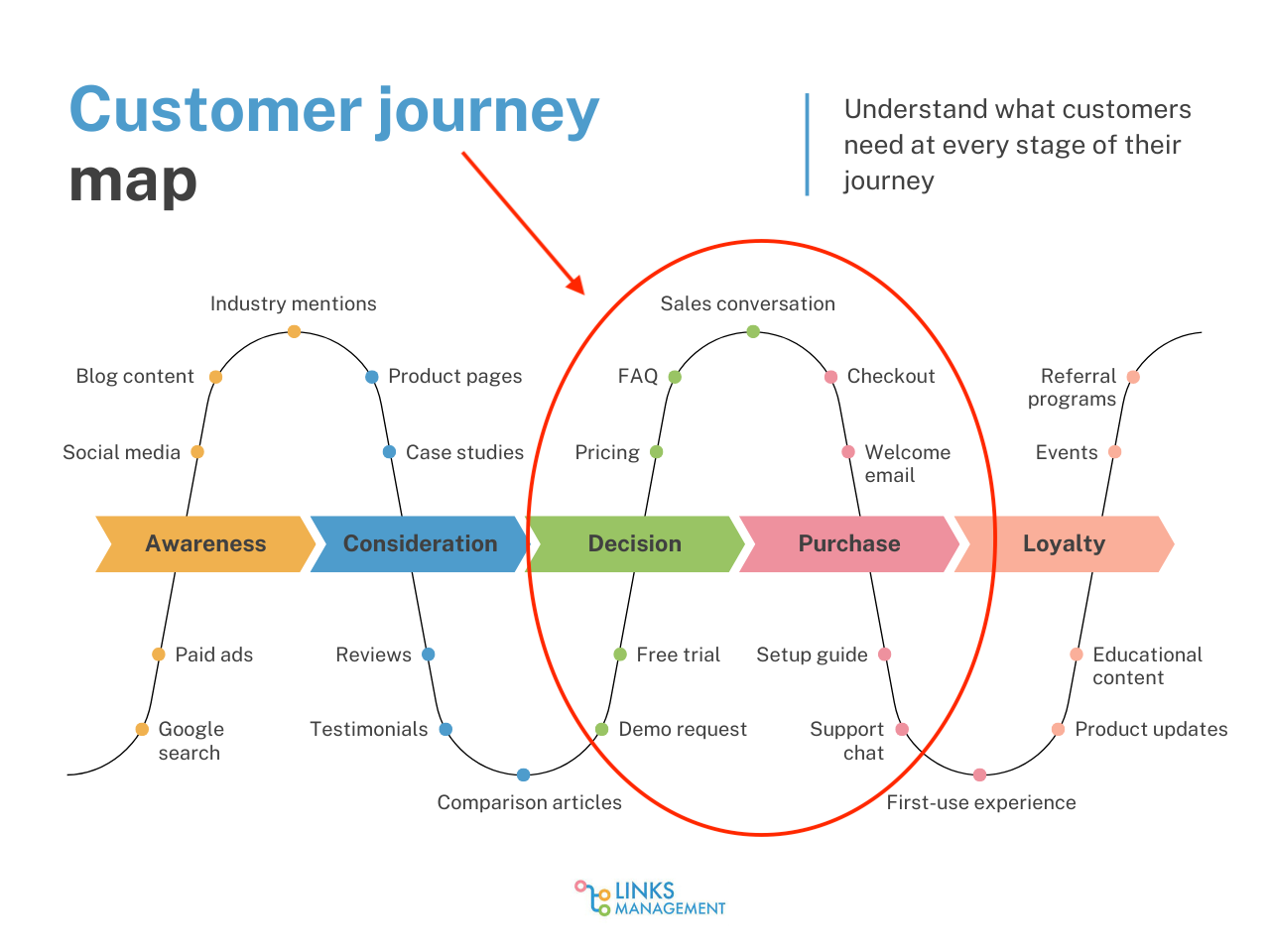
It makes sense: these are people who already know what they need. But the issue is that, by the time most of them get there, they are already inclined towards a particular brand.
And to become that brand, you need to focus more on the Awareness stage:
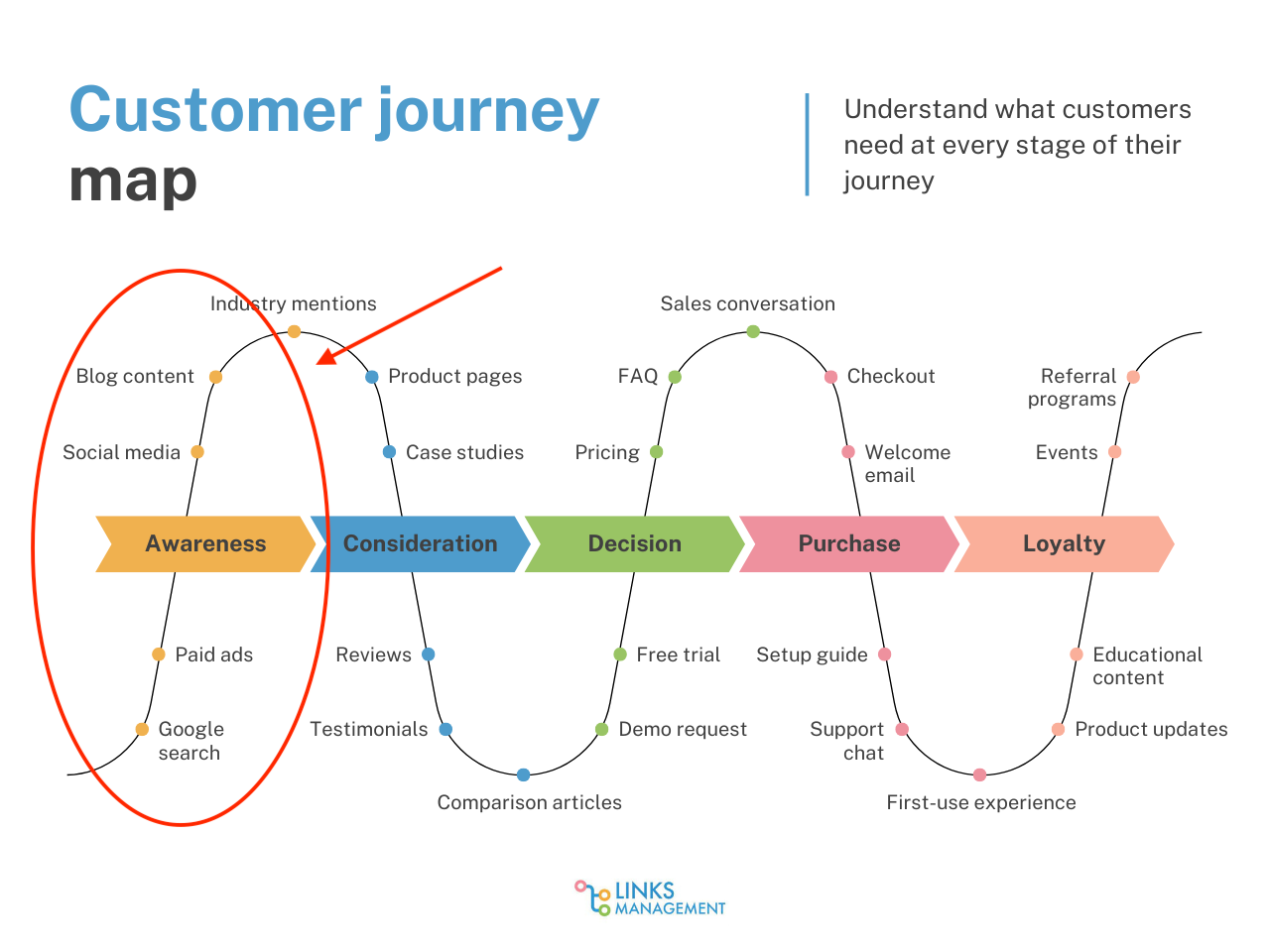
For example, you’re not only targeting “best X software” or “X pricing.” You go for:
- “How to solve [problem],”
- “What to do when [use case],”
- “Best way to [goal],” etc.
This helps you educate users early and frame the common problem in your own terms. Besides, that’s a good chance to position yourself as a natural solution.
That’s what we’ve seen in all the examples above, whether it’s Semrush, Ahrefs, HubSpot, or any other business that covers all stages of the funnel successfully.
If you are thinking that this is slower than conversion-focused SEO, you are right. But if you’re in this for the long run, you can’t ignore earlier parts of the customer journey.
Improve local SEO or geo-specific growth
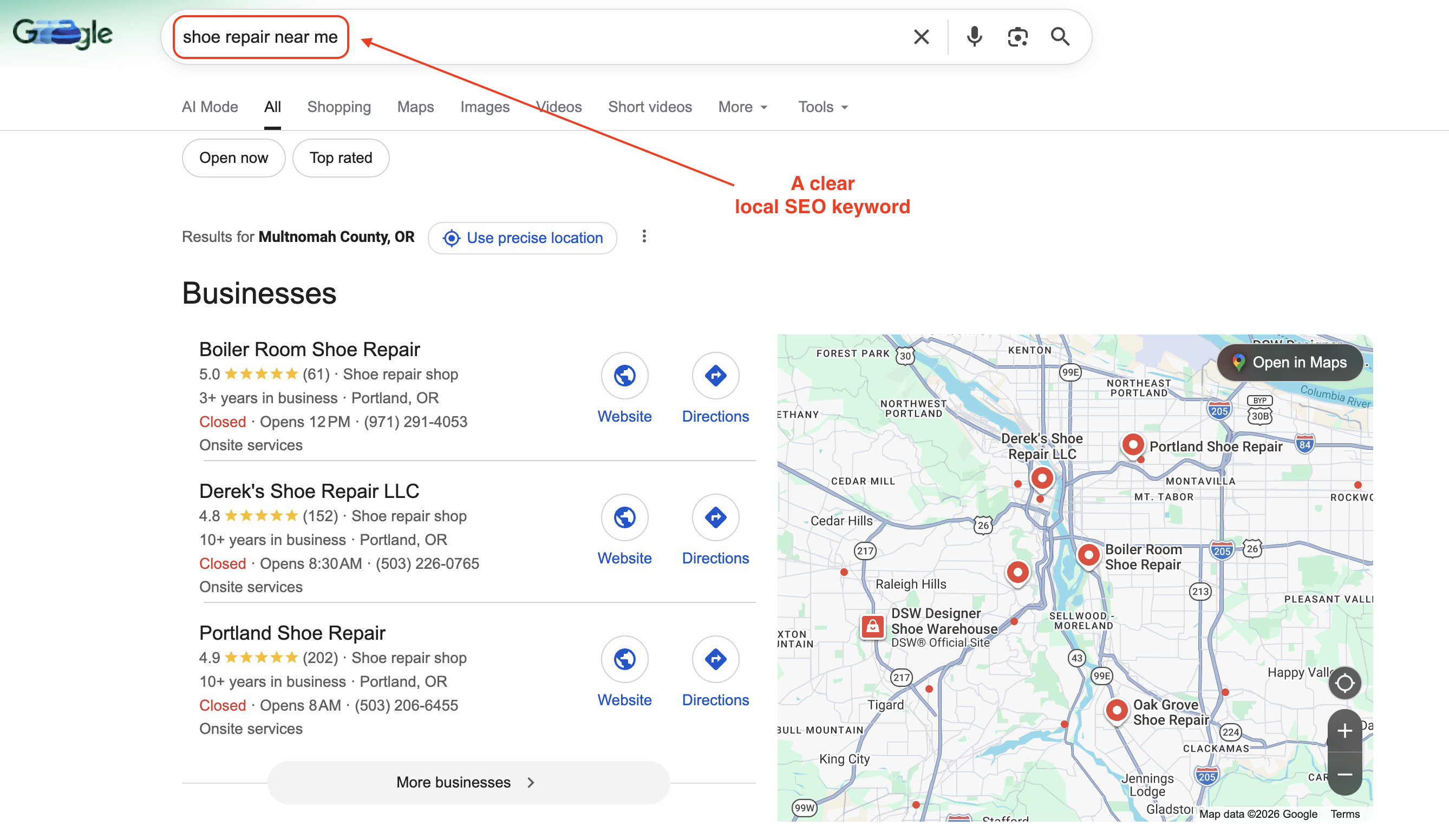
For local and multi-location businesses, SEO objectives are… quite specific. SEO efforts here have to focus on being visible at the exact moment of intent, often when users are ready to act immediately.
If you’re after local SEO goals, you probably want to target local keywords that include phrases like “near me,” “best in the city,” “closest,” “your city/area,” etc.
How to set realistic SEO goals for your business in 7 steps
More often than not, teams start to set SEO objectives after optimization work has already started. But that’s not how it should work ideally. Still, better late than never.
So, how can you set smart goals that can actually bring results for your digital marketing strategy? We offer to do that in 7 steps:
Step 1: Align your SEO with business objectives
SEO often lives in isolation, disconnected from how the business makes money. We all know that marketing wants traffic, sales want leads, leadership wants growth, and so on. And what about SEO? It sits in the middle of all these things.
Well, that doesn’t really work.
Before you talk about high-quality content, backlinks, SEO campaigns, targeting keywords, or tracking progress, you need to figure out one thing: What does success look like for our business this year?
Yes, “this year”. Maybe an even shorter period of time, depending on your industry. Trends and business reality change the market all the time. So, while it’s okay to have long-term plans, a strong SEO strategy has to include something more actionable, like “a plan for this year.”
But before you get there, make sure you understand your business objectives. These could be things like:
- Increase revenue from a specific product line,
- Enter a new market or region,
- Reduce customer acquisition cost,
- Strengthen brand authority in a competitive space, etc.
Only after you figure this out will your SEO goals actually start to be meaningful. For example, if the business goal is: “Expand the B2B pipeline among mid-market companies,” then your SEO objective should be:
- Get more organic traffic to solution pages,
- Improve visibility for mid-funnel and bottom-funnel keywords,
- Generate more qualified leads from organic search.
But not just “Increase blog traffic” or “Rank for more keywords”.
After all, SEO exists to support broader business objectives. And if you aren’t relying on them, you’ll be aiming for something shallow.
Step 2: Do an audit
SEO audit mainly helps you answer one question: What is realistically possible, given where our website is today?
It is sort of like analyzing your current “form” and becoming aware of that. A good audit usually starts with a technical SEO check. You need to know the following things:
- Is the site crawlable and indexable?
- Are there major performance or speed issues?
- Is the site architecture clear?
- Are any important pages blocked?
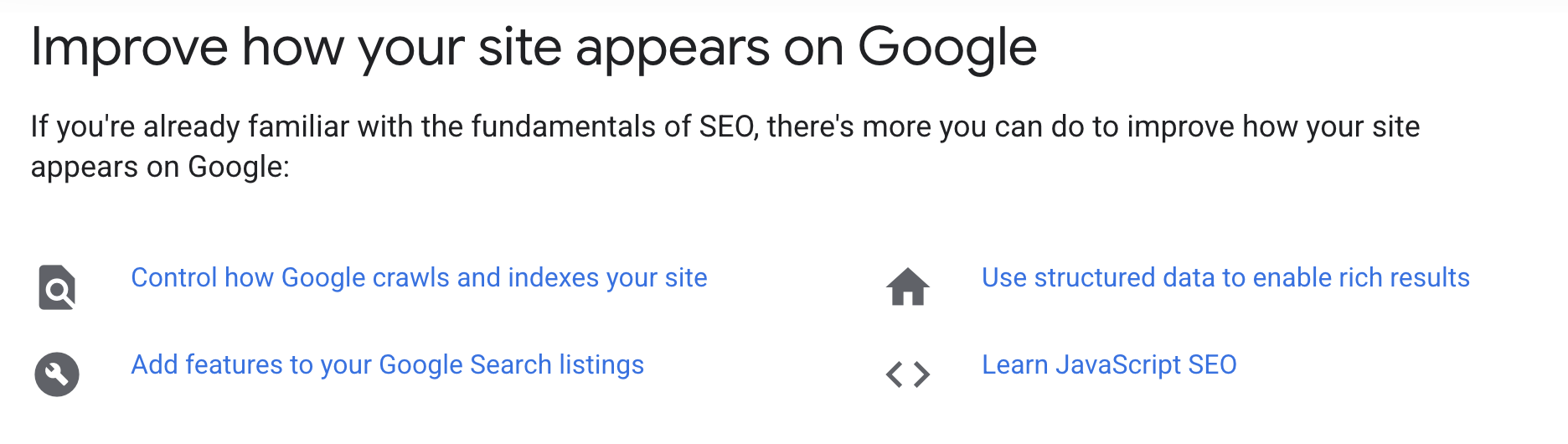
If technical SEO is broken, aggressive growth goals are just a fantasy. You won’t get far.
A site that is struggling with slow load time or indexation issues will not rank well. Even if you are writing content of the “New Yorker” level.
Source: Google
After that, evaluate your content as a whole:
- What have you already published?
- What actually ranks?
- What converts?
- What’s thin, outdated, redundant, or doesn’t really support your business goals?
Many companies have a lot of content, but not that much useful content. So, you have to understand where you actually stand.
Next, there are at least two more things to review:
- Your authority and backlinks. Because if your site has low domain authority or few high-quality backlinks, it is not good for you. Besides, if there are no mentions from relevant websites, then ranking for competitive keywords is really unlikely.
- Conversions. Look at how the traffic to your website converts. Because if it doesn’t, what’s the point? You can have the fullest SEO strategy ever, but if it doesn’t bring more qualified traffic, it’s quite useless.
Step 3: Assess your resources (realistically)
Before setting any ambitious SEO goals, you have to look at your business the way it actually operates.
Start with your budget, because everything else flows from there.
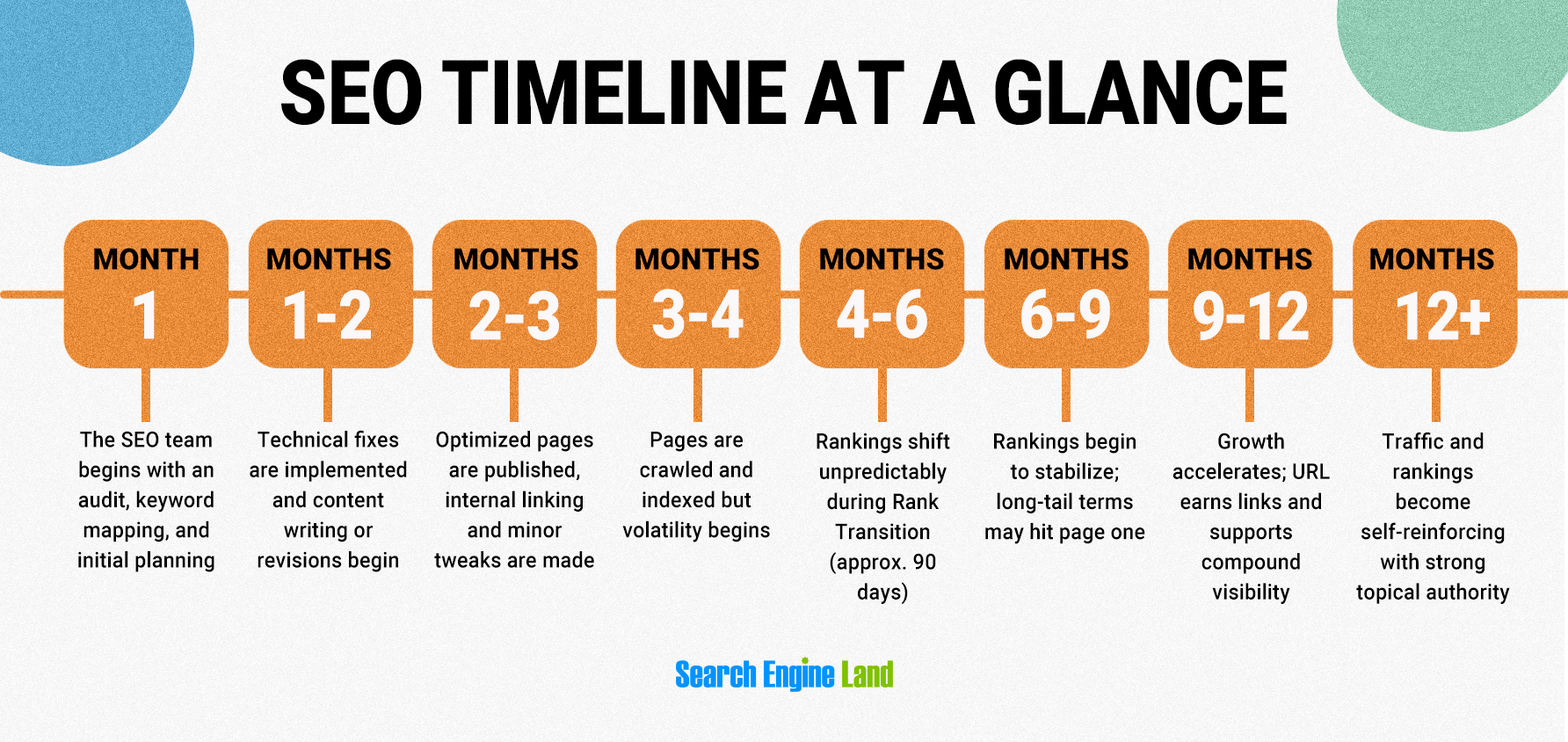
SEO is a long-term system. It compounds, but only if it’s fed consistently. If the business can only afford a short burst (three months, maybe six), then your objectives can’t be too ambitious either. Because SEO performance is slow:
- Content needs time to age,
- Links need time to accumulate,
- And of course, search engines will need time to trust you.
There’s no shortcut here. And a realistic SEO timeline might not make you happy.
Source: Search Engine Land
If you can’t commit to a budget for roughly a year, your expectations need to be restrained. SEO should then focus on fixing structural issues and mainly improving key pages.
Step 4: Decide what role SEO plays in the bigger picture
Every business already has a digital marketing system in place. There are paid ads, email marketing, sales outreach, partnerships, etc. SEO might support that system or compete with it.
Your SEO goals will change a lot depending on the role search engine optimization is expected to play.
For example:
- For some businesses, SEO exists to reduce dependency on paid traffic. Ads are expensive, and organic search becomes a way to lower acquisition costs over time. In this case, goals should focus on high-intent pages and conversion rates.
- But also, SEO can function more like a brand channel. If the company wants authority and long-term trust, SEO content should be educational. And it doesn’t necessarily have to convert immediately.
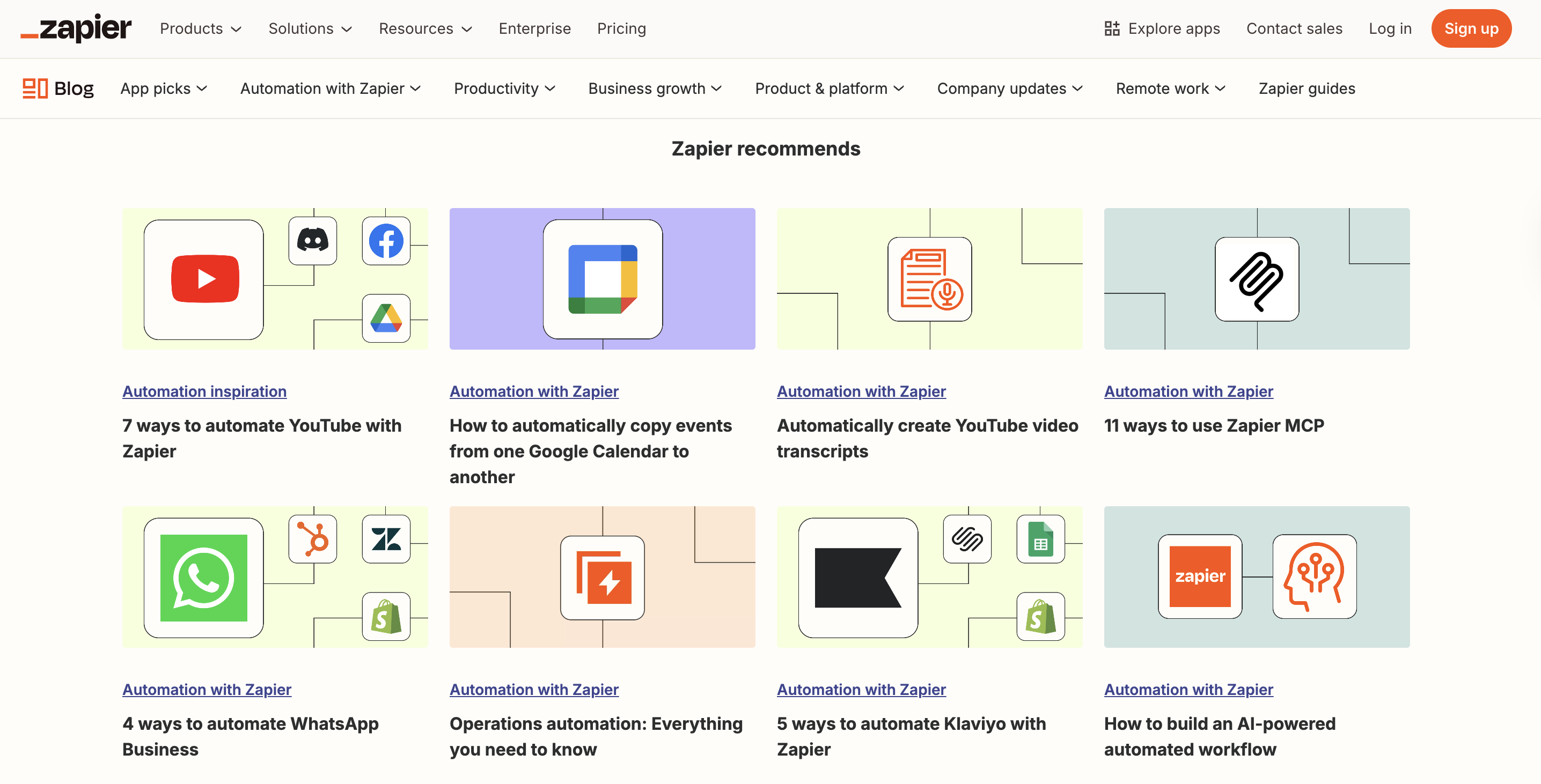
For instance, Zapier’s SEO content is heavily problem-focused. They rank for automation use cases, tool comparisons, workflow explanations, etc. SEO’s role here is to pre-educate users so that by the time they reach the product, they already understand why they need it.
Source: Zapier
Step 5: Choose proper key performance indicators
And by “proper,” we mean that they must reflect reality.
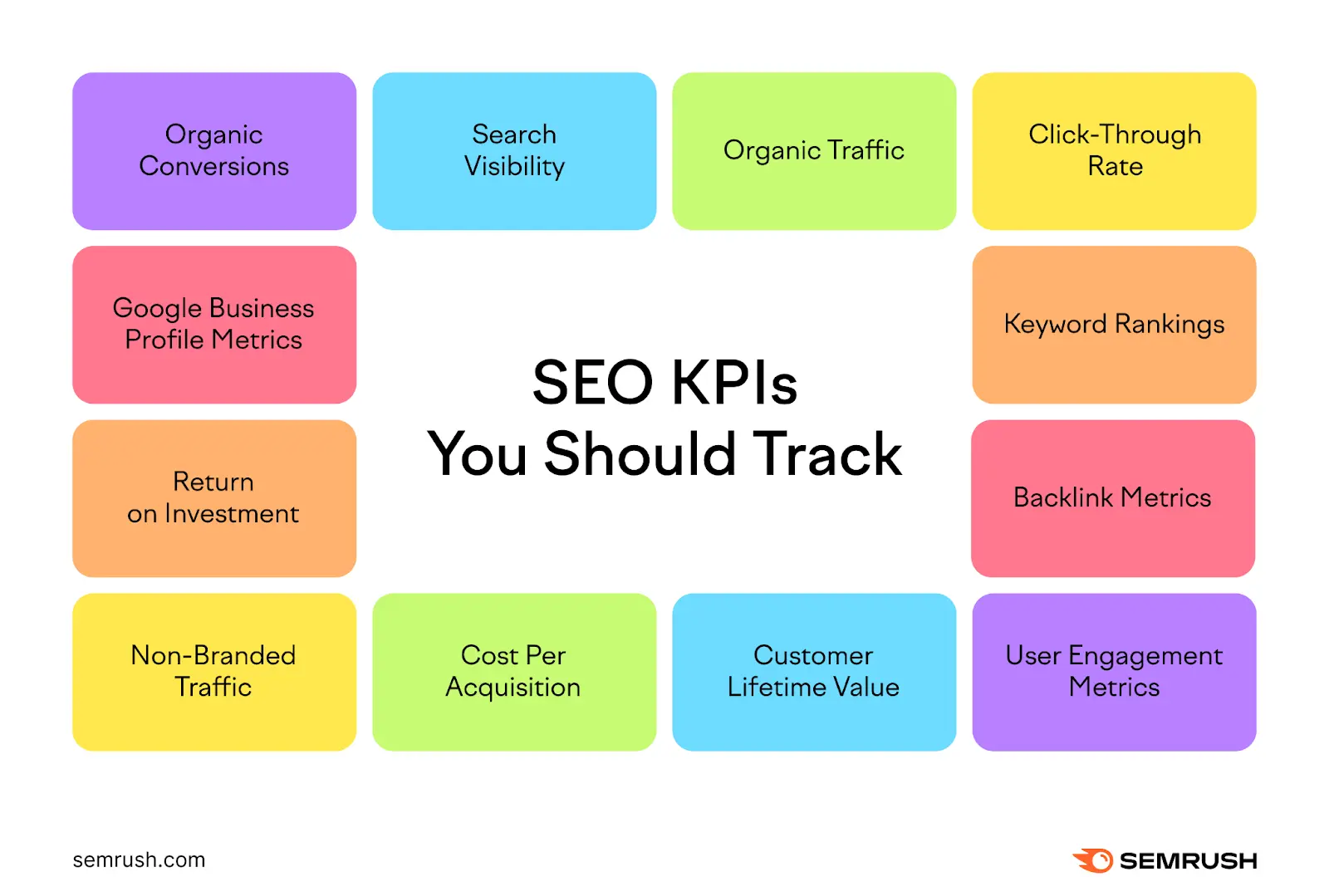
Businesses love numbers that go up, and SEO tools provide plenty of them. But numbers are not goals. They are more like signals.
The mistake you can make is tracking SEO metrics in isolation. However, they have to be connected to your desired outcomes:
- If your goal is revenue growth, then traffic only matters if it converts.
- If your goal is lead generation, then impressions don’t matter without users signing up for something.
- If your goal is industry leadership, then rankings without increasing your overall visibility don’t make much sense.
See the pattern?
Source: Semrush
Step 6: Define what SEO success looks like when things go wrong
Don’t assume ideal conditions:
Traffic is unlikely to be very predictable.
- You can’t know what your competitors are up to.
- And we can also only wonder about where LLMs will take us.
That’s why realistic SEO objectives ask one question: What does “acceptable progress” look like if things don’t go perfectly?
Look, even if rankings fluctuate and competitors outrank you temporarily, SEO is still doing its job. Maybe not the way you envisioned it. But it does.
Now, imagine when SEO teams promise their leadership something like “40% organic growth this year.” What happens if growth stalls at 10%?
Well, usually, all the SEO efforts are labeled as a failure.
But traffic quality may have improved, and conversion rates may have increased. So, is it really a failure?
The point we want to make here is that SEO success can’t be that black and white. There are many variables that might be moving, and they are also worth attention:
- If rankings don’t improve, but organic conversion rate increases, that’s still progress.
- If traffic stays flat, but you get more qualified leads from organic traffic, yes, SEO is working.
You can see many examples like that, but as long as you concentrate only on the main goal, you won’t see the rest.
Step 7: Accept that SEO goals change and plan for that
Everything changes in businesses all the time:
- Priorities and products shift.
- The market itself changes.
- AI has changed everything, including SEO.
That’s why you can’t be static for a long time. Your SEO goals, at some point, will be different, and you will have to audit them and change some of them.
One of the examples here is Canva.
Canva’s early SEO focused on templates and design education, and you probably used it only for these things. As the product expanded, its SEO focus changed as well. Now, they also position themselves as:
- A tool for collaboration (hi, remote work environment),
- AI-driven features (hey there, AI revolution),
- Software for creators (hello, creator economy), etc.
But in the case of Canva, the goals changed because the business changed, and they adapted their SEO, too. This is normal. Healthy, even.
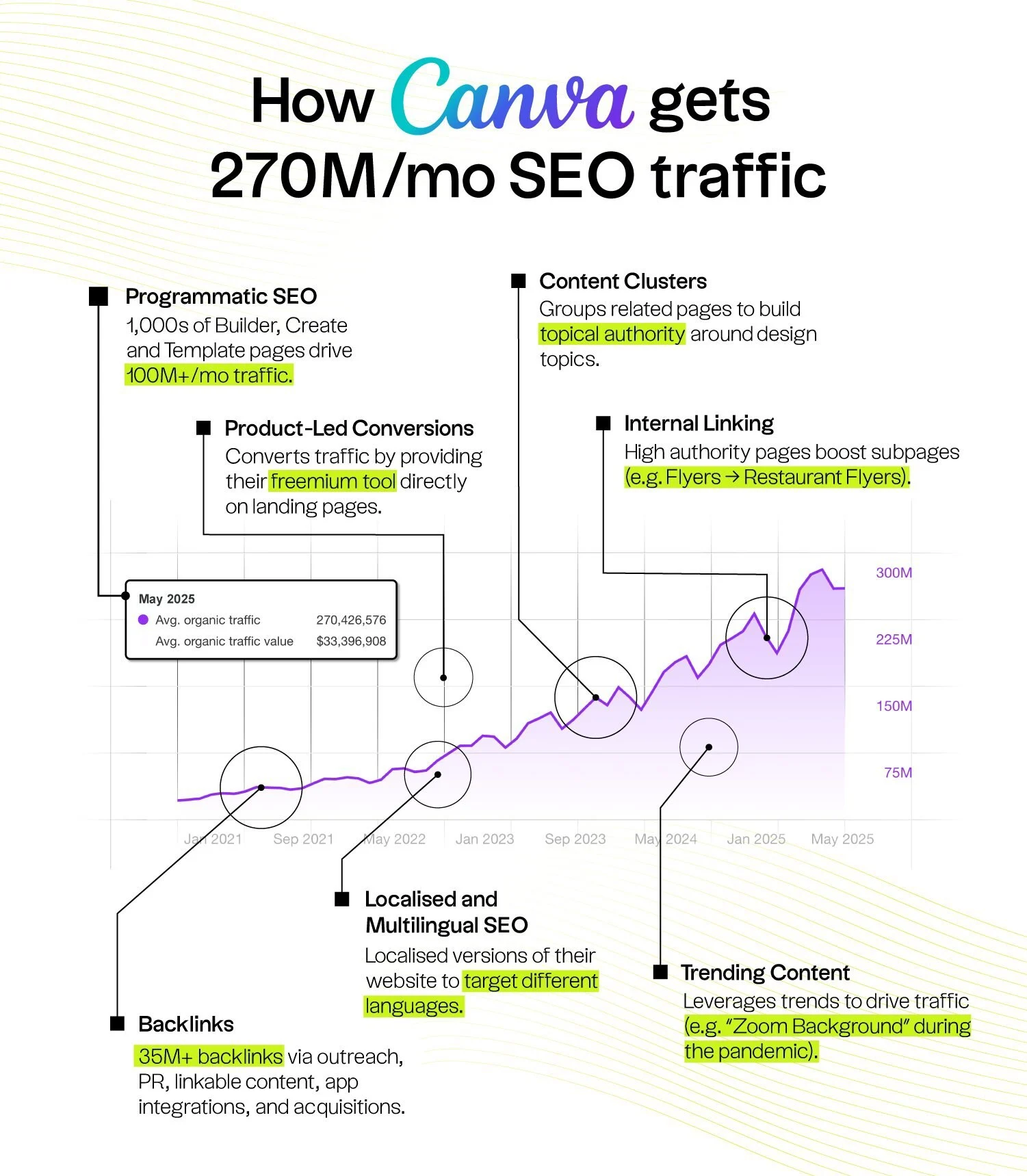
Source: Torro Media
SEO goals should never be treated like “contracts with Google.” Instead, treat them as hypotheses about how search can support the business right now.
When priorities change, optimization objectives must change with them.
Conclusion
SEO is a long game. You already know that. It rarely shows quick results, and that’s one of the reasons why you have to be careful when setting your objectives. Because if you go after the wrong ones, it might just hurt your business and drain your budget.
Set realistic SEO goals and tie them to real business needs. Measure what actually matters, and most importantly, commit for long enough to let the work do its job. And you’ll get there (wherever that is).
Related Posts
Published Sep 23, 2025

Last updated Mar 26, 2024 | Published Oct 3, 2023

Published Dec 9, 2025
Published Apr 1, 2025
Last updated Jul 17, 2025 | Published Jul 8, 2025

Published Jan 6, 2026
Sign up now and start a managed content placement campaign.