White Label Content Writing: How Agencies Scale Without Expanding In-House Teams
The content writing market is highly dynamic and densely saturated with propositions. One of the most practical opportunities within this market is white-label content writing.
If you’ve never tried this type of service or never heard of this concept, you are not alone. Hundreds of digital agencies operate without this knowledge, but they lose in the efficiency and profit department.
This post will explain how an agency can leverage white-label content services to scale their operations without expanding costly in-house teams. Read on to discover how you can unlock growth while keeping your team lean.
Contents
- What Is White Label Content Writing?
- Why Agencies Struggle to Scale Content In-House
- Key Benefits for Digital, SEO, and Marketing Agencies
- What Types of Content Can Be White-Labelled?
- White Label Content vs. In-House Writing Teams
- How to Choose the Right White Label Content Partner
- Industry experience and specialization
- Editorial and SEO expertise
- Transparency and the communication process
- Common Misconceptions About White Label Content
What Is White Label Content Writing?
White label content writing is a practice of hiring a private service, freelancer, or another agency to write content without claiming any copyrights. In other words, the author doesn’t leave their name, brand name, or logo on the created content, and the agency that hired such service enjoys the freedom to label such content as their own.
The term “white label” literally means carte blanche, i.e., an empty label where you can put your own label. Many use this term interchangeably with the term “ghostwriting,” but the latter is more commonly used when describing private services offered by individuals to individuals.
Whereas white-label content writing is used in connection to agencies that don’t want (or cannot) grow their in-house teams, and they choose to order such services instead.
Why Agencies Struggle to Scale Content In-House
In most cases, hiring external copywriting services is a burning need, as modern agencies face all sorts of problems and obstacles impeding their ability to scale content in-house:
Here’s what readers subconsciously check within seconds:
- Limited internal capacity — not enough internal writers and lean business approaches.
- Recruitment, onboarding, and training overhead — onboarding and training are expensive and take lots of time.
- Inconsistent output during growth spikes — overloaded internal teams cannot ensure consistent and predictable performance increase.
- Burnout and quality drop risks — those teams that can take a higher load in the short run may face burnout and quality drop issues later.
At best, rapid corporate content scaling attempts produce quite the opposite effect — content proliferation. It’s when content quantity wins over quality, and that’s not what a diligent content agency should strive for.
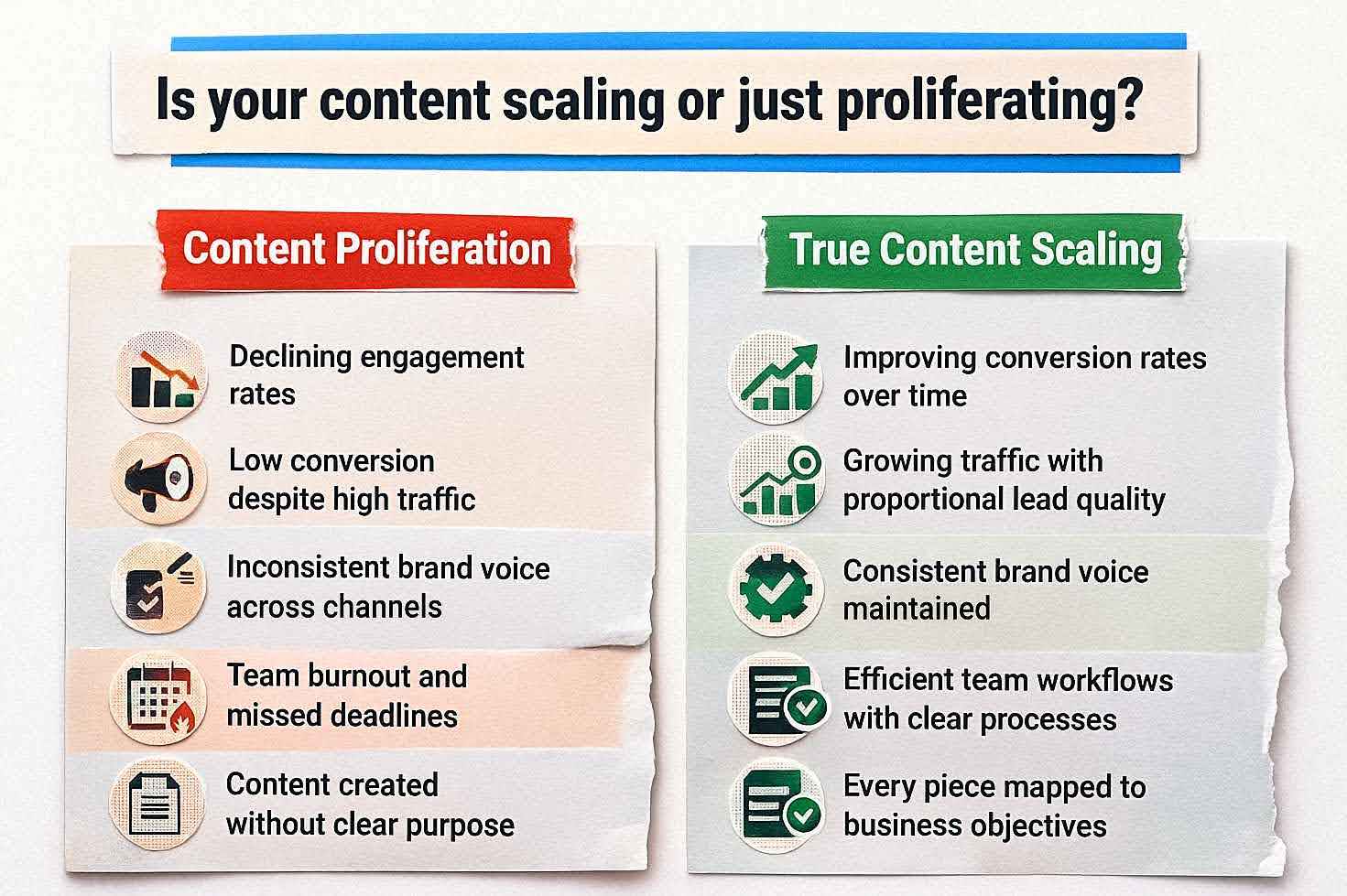
Source: Searchengineland
Key Benefits for Digital, SEO, and Marketing Agencies
While enabling effective avoidance of the problems mentioned above, white label content presents numerous benefits to agencies, including but not limited to:
- Faster client onboarding — agencies can order on-demand and ad-hoc content services and serve new clients faster.
- Higher profit margins per retainer — ghostwriting costs agencies less than the similar work done by in-house specialists, while they still charge their clients full retainer prices.
- Reduced operational complexity — less internal work means less complexity associated with content creation, proofreading, and approval.
- Expanding content capacity without hiring — at any moment, an agency can quickly scale its content creation by leveraging an extensive network of external writers.
- Supports multiple clients simultaneously — thanks to white label content writing, agencies can not only do more but also serve more clients and make higher profits.
- Keeps internal teams focused on strategy — external content creation and copywriting frees up time for internal teams, allowing them to focus on strategic and truly important things.
What Types of Content Can Be White-Labelled?
There are no restrictions on the quantity and type that can be white-labeled. An agency can order and put its brand name on the following content types:
- SEO blog articles and pillar pages.
- Landing pages and service pages.
- Product descriptions for e-commerce.
- Email campaigns and nurture sequences.
- Knowledge base and help-center content.
This list is not exhaustive, and you can order any content type you can think of and put your name or product name on it when you deliver it to your clients.
For the past decade, one of the most popular white-label content types ordered was SEO copywriting. It helps brands increase organic visibility by aligning content structure, keywords, and user intent.
White Label Content vs. In-House Writing Teams
Not all content creation needs can be covered by the white-label content services; some can be better accomplished by the in-house writing teams. To understand when to rely on your internal content teams, we offer you to consider the following scenarios.
Scenario 1: Highly specialized expertise is required
Some market niches and industries rely on highly specialized knowledge, extensive experience, and a profound understanding of the subject. Hiring an external writing service can work, but not always. They may lack hands-on expertise and miss some important details.
Examples of industries with such exquisite requirements include:
- Healthcare, legal, finance, or regulated sectors.
- Complex technical or product-driven content (e.g., novel, graphite-based semiconductor industry).
- Hobbies and sports with specific terminology (e.g., feeder fishing, parachute jumping).
- Content requiring compliance awareness.
If you operate in one of these niches, your in-house teams would possess the required institutional knowledge and speak the highly specialized language (slang terms, abbreviations, etc.).
Scenario 2: Brand voice is pivotal for market success
There are instances when brand voice plays a central role in market positioning. Unless you give the white label content writing teams exhaustive and accurate instructions on your brand voice and tone (and they possess the necessary writing expertise), they might not deliver the product on par with your high expectations.
Typical cases when a specific brand voice is required include:
- Strong founder or executive voice.
- Thought leadership and opinion pieces.
- Case studies with in-house feedback and quotes.
- Brand storytelling and narrative-driven content.
You can always heavily edit what the external writers deliver, but then, given the time and financial investments, the question becomes, was it worth it?
Scenario 3: Frequent real-time collaboration is required
Some content requires frequent collaboration and ongoing input. It’s doubtful you can achieve the required level of cooperation when working with an external content team.
Examples of relevant situations include:
- Strategic content planning and guidance (e.g., editorial roadmaps, cross-channel messaging alignment).
- New product launches, where success depends on instant cross-functional collaboration to make changes in communication campaigns.
- Internal documentation (e.g., project mandates, charters, governance procedures, etc.).
- Reputation management and relevant risk mitigation.
In most other cases, white-label model wins over the in-house model. In particular, this is true for such a time-consuming and costly process as hiring a writing talent:

Source: Evendigit
How to Choose the Right White Label Content Partner
Just because white-label content creation offers a range of known benefits, it doesn’t mean one should rush to contract the first content partner they can find online. The choice you make will largely define your marketing and business success, and squandering it on a random service provider (even if it claims to possess the necessary expertise) is too risky.
The best approach is to thoroughly evaluate your potential partner by key criteria.
Industry experience and specialization
Writing skills are great, but in many instances, they are not enough. Operating within your specific industry and niche for many years, your needs in content writing will always be synonyms to using industry vocabulary.
Not surprisingly, a writing partner who doesn’t bring specific industry experience and is not familiar with the highly specialized terms will not deliver the services that you expect.
On the contrary, a partner with proven experience in your target niches can:
- Adapt content to industry terminology and standards.
- Align messaging with your specific audience awareness levels.
- Anticipate compliance, trust, or credibility requirements.
- Save you lots of time on coordination and revision.
Be aware that in some areas, e.g., medicine, chemistry, or military equipment, finding the right white-label content partner can be especially tough. The reason is that it takes decades of ongoing practice to understand and get comfortable with all the specialized vocabulary.
And then there is the issue of staff turnover, when the best copywriters can go, and their place may be taken by the less experienced counterparts.
Editorial and SEO expertise
Writing today is less about style and eloquence and increasingly more about meeting certain editorial and SEO standards.
A good example is guest posting outreach. You partner with publications whose editors often demand adherence to their strict guidelines and rules. One or two steps sideways, or not meeting their demands on graphics and wordcount will automatically result in a rejection.
You’ve spent time, and your writers may have done a great job of diving into the topic, but these resources and efforts were wasted. A familiar situation, isn’t it?
SEO expertise, on the other hand, defines the success of your brand’s visibility online. Knowing how to rank high in SERPs and how to regularly appear in AI answers (e.g., ChatGPT, Perplexity, Gemini, or in Google AI Overviews) is a must-have skill.
A qualified partner should be able to:
- Align content with a specific search intent and funnel stage.
- Apply on-page SEO and ensure technical SEO fit.
- Optimize content for the best user experience (UX).
- Keep the content visible long-term for both conventional search engines and AI answer engines.
Additionally, you should evaluate your potential content writing partner on the following:
- Their ability to integrate the best SEO and GEO practices in the content writing process.
- Whether the content they deliver can be easily reused by AI search engines.
- The ability to follow client-specific GEO and SEO guidelines.
Transparency and the communication process
To effectively scale and remain confident in your writing partner at all times, you cannot do without transparent communication. This is something that can only exist when mutually supported, but the initiative should always be on your partner’s side.
Content providers must be open with the contracting agencies from the very beginning, i.e., from the initial kick-off meeting where you set goals for your collaboration and develop a roadmap.
A kick-off meeting and the first few weeks of cooperation are the ideal time to evaluate whether a provider:
- Uses defined points of contact and response timelines.
- Provides clear briefing and feedback mechanisms, ideally through live dashboards or direct communication via phone or messaging.
- Flags potential issues before they grow into full-fledged problems and start to affect results.
- Remains transparent and open as your partnership passes the onboarding stage and starts to encounter first issues (they are inevitable).
White label content writing stipulates the absence of legal or copyright complications, and you should be able to assess content ownership, copyright transfer, and legal responsibility across all deliverables.
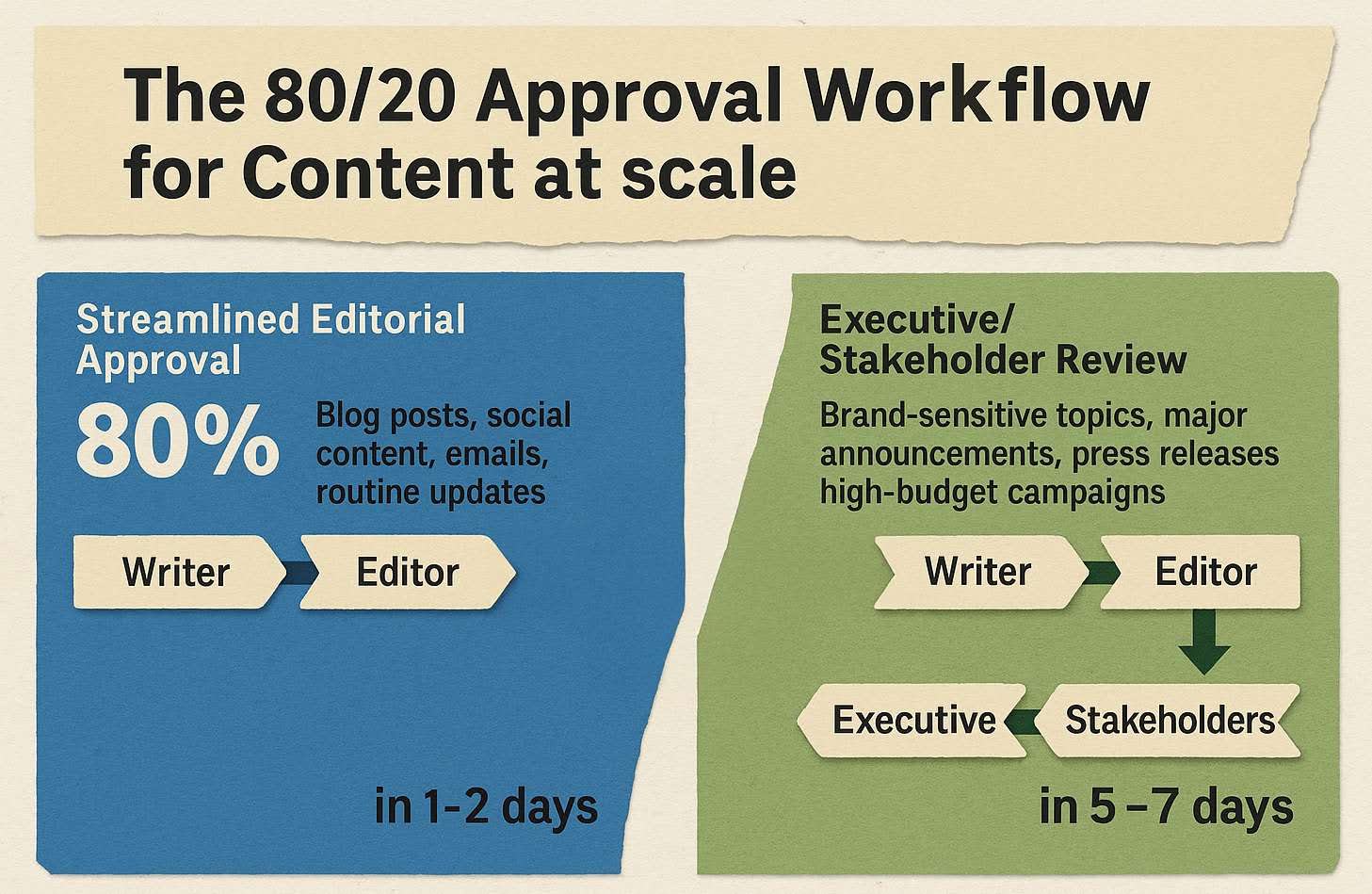
Source: Searchengineland
Common Misconceptions About White Label Content
As with any popular service, the vibe and demand create lots of misconceptions. This happens because of the huge number of participants, each of whom enters this field with their biases and prejudices, bringing different experience levels, and the desire to understand the service.
Below, we review some of the most common misconceptions that block agencies from utilizing the full white label content writing potential.
“These services are low quality by default”
One may think that if a writer is willing to submit their work without claiming ownership, this automatically shows their skill level.
In most cases, this is not true. A good writer may build their reputation first before entering the white label content market, as the latter offers much more lucrative opportunities (compared to the market where the creators’ copyrights are observed), giving access to more and bigger clients.
“It can’t match brand voice”
A common fear and a known misconception is that a content writing partner would never meet the client’s brand voice standard expectations.
While this is partially true, the biggest share of the success of meeting one’s brand voice requirements is based on the ability of the client to communicate their brand style effectively. With enough samples of exemplary brand voice and clear instructions, an experienced content partner should be able to replicate and even exceed the brand voice best practices.
“Clients will notice outsourcing”
Some agencies are reluctant to use white-label content writing services because of the fear that their clients will notice that the content was made by someone else. This is understandable, as we all tend to overestimate our abilities to create content, while underestimating those of others.
The truth is, an experienced white label copywriter can deliver work on par with or even of a higher quality than what the agency normally delivers. And collaborating with such a copywriter long-term will guarantee that the agency’s clients will get used to the third-party writing style and will never suspect any outsourcing.
So, the key is building long-term strategic relationships with white-label content providers, and the clients will never notice or suspect any outsourcing.
Conclusion
In the overly-saturated content market, where supply often exceeds demand, relying only on internal content writing staff and not using external, white label content writing services is like fasting before a harsh winter, when everyone else is eating like there is no tomorrow. It’s choosing to stay handicapped on one’s own free will.
White-label content writers allow agencies to effectively scale their operations, swiftly responding to clients’ increased demand, while staying lean internally and being more competitive.
Ensuring a high output quality demands discipline, though. Here, the most important aspect is choosing the best content provider based on industry knowledge, editorial and SEO expertise, experience, and diligent and open communications.
Establishing lasting cooperation with a few white-label content service providers will guarantee that your clients will not notice outsourcing, your partner will become familiar with their brand voice and style, and the quality of content delivered will improve over time as processes, feedback, and collaboration mature.
Related Posts
Published Sep 30, 2025

Published Dec 9, 2025

Last updated May 14, 2025 | Published Jul 16, 2024

Last updated May 9, 2025 | Published Feb 4, 2025
Published Jun 4, 2024

Last updated May 8, 2025 | Published Apr 9, 2025
Sign up now and start a managed content placement campaign.