Facebook SEO: 10 Practical Tips to Improve Your Page Visibility
Did you know? Social networks have quietly evolved from being communication tools into something much bigger. For many, they now substitute search engines and marketplaces, as people increasingly search for information and goods on social networks.
Isn’t it convenient to use a single platform to communicate, learn, and buy things? Humans are lazy creatures; they prefer the convenience that modern social networks like Facebook provide.
Under these circumstances, the visibility of one’s Facebook page becomes critically important. It increasingly depends on algorithmic ranking systems similar to those used in Google and Yahoo. In simple terms, Facebook functions as a search engine of its own kind, and that’s why many of the traditional search engine optimization techniques perfectly apply to Facebook. But there are also important differences worth exploring.
You can learn about these distinctions, as well as how to improve your page’s visibility on Facebook, by following our quick guide packed with 10 practical Facebook SEO tips.
Contents
- Why SEO for Facebook Requires a Different Optimization Approach
- 10 Practical SEO Tips to Improve Your Page Visibility on Facebook
- 1. Optimize Your Facebook Page Name with Relevant Keywords
- 2. Customize Your Facebook Page URL
- 3. Write a Keyword-rich “About” Section
- 4. Add Location Details for Local Discovery
- 5. Use Hashtags Strategically
- 6. Optimize Image Alt Text and Descriptions
- 7. Encourage Engagement on Posts
- 8. Post Consistently to Maintain Activity Signals
- 9. Build Backlinks to Your Facebook Page
- 10. Cross-promote Your Facebook Page Across Platforms
- Conclusion
Why SEO for Facebook Requires a Different Optimization Approach
Similarity between Facebook search engine optimization and traditional search engine SEO is apparent. Both of them rely on keywords, authority signals, backlinks, and meta content optimization. However, the devil is in the details, as you know.
These details differentiate a successful SEO approach on Facebook from other, less successful ones. The key distinction is that Facebook, unlike traditional search engines, prioritizes conversations between people and relevant engagement signals that accompany each conversation (interaction).
Facebook is a digital place where people socialize. When they search for information, they most often expect to find:
- Other people and communities;
- Relevant discussions;
- Social proof and recommendations;
- Authority confirmation signals;
- Local businesses;
- And other social entities and signals.
As a result, Facebook’s algorithms prioritize content that reflects all the above, as well as real human interactions. That understanding is the key to a successful Facebook SEO.
For example, one car repair shop in Portland wants to attract more local customers. If they title their page “Portland’s trusted car service”, get all the initial content right, but do nothing else, they will get some traffic to their page, but not enough to matter and win in the competition.
A far better social SEO approach would be to stay socially active, i.e., to consistently publish new posts about their services and on the topic of car repairs, to reference known experts in car maintenance and care, and to regularly make lists with hot tips and recommendations. This will ignite people’s activity on their pages, including comments, shares, likes, and discussions.
To sum up, the following activities typically define how successful (popular, visible) your Facebook page is:
- Accurate and complete profile information, including clear contact details.
- Strategic use of hashtags, location tags, and keywords applied sparingly in titles and inside texts.v
- Consistent publications of thematic posts that trigger engagement signals (mainly comments, likes, and shares).
- External authority signals, such as backlinks.
Individuals and businesses that practice these SEO activities on Facebook consistently enjoy higher visibility and get more traffic compared to their rivals. And Facebook is the most widely used social media network with 3.07 billion monthly users worldwide.
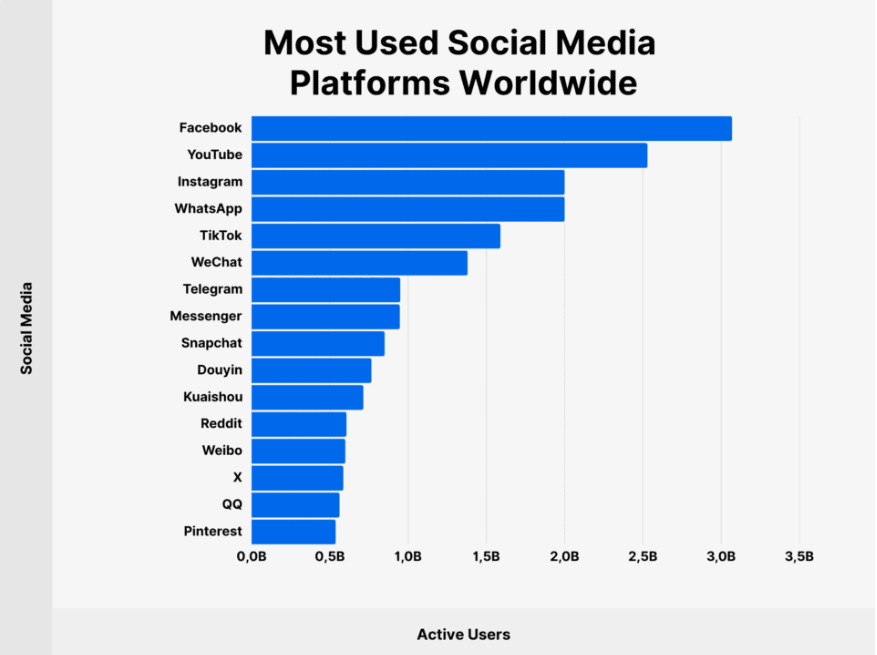
Source: Backlinko
10 Practical SEO Tips to Improve Your Page Visibility on Facebook
Without further ado, let’s explore some of the most practical Facebook SEO tips to boost your visibility and drive more traffic to your page.
1. Optimize Your Facebook Page Name with Relevant Keywords
Your Facebook page name represents one of the strongest signals and the first place that Facebook’s algorithms check to find a match between what users want to find and what you can offer.
Because of that, your primary task is to give your page a proper name that clearly reflects your brand’s identity and what expertise, experience, or services and products you offer. Give your page a too vague name and algorithms will struggle to associate it with relevant queries, even if the latter and your true identity perfectly match.
This is where keywords play an utmost role. Use them strategically and sparingly in your brand name, but first do a thorough research (using top SEO tools like Ahrefs and SEMrush) and then test your keyword choice with these Facebook tools:
- Competitor Page Analysis — analyze the top-performing keywords used by your direct competitors.
- Facebook Ad Library — compare your choice with the wording used by the top Facebook brands.
- Facebook Groups search — check out how local groups phrase their trending discussions.
- Facebook Search Autocomplete — use Facebook search to start typing your chosen keywords and find all possible alternatives.
When your page contains at least one clear and descriptive keyword, the search algorithm quickly connects your page with relevant search queries, meaning your brand becomes more visible and acquires more high-value traffic.
2. Customize Your Facebook Page URL
Next, what you can do after page name optimization is craft a proper page URL. By default, Facebook assigns generic and very confusing URL addresses to all newly created pages. They may look like facebook.com/pages/781520991220.
Do you want your page address to look like that? Even for users, this doesn’t look attractive and provides zero information about you and what you do. Search algorithms will also struggle to make sense of your page.
Therefore, the second SEO step that you should take after your page name is to give a clear and descriptive URL address that reflects your brand identity.
For instance, you run a bakery specializing in sweet baked products for kids. After giving your page a name, for example, Sweet Haven, you should customize its URL to be something like facebook.com/sweethavenbakery.
Such a short and descriptive name will immediately communicate to bots and users what your brand does.
To recap, here is an example of a good URL:
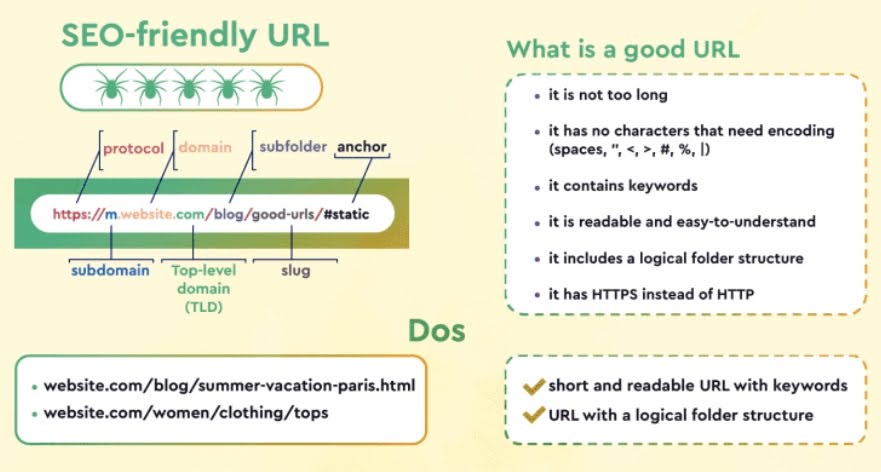
Source: Seranking
And an example of a bad URL address:
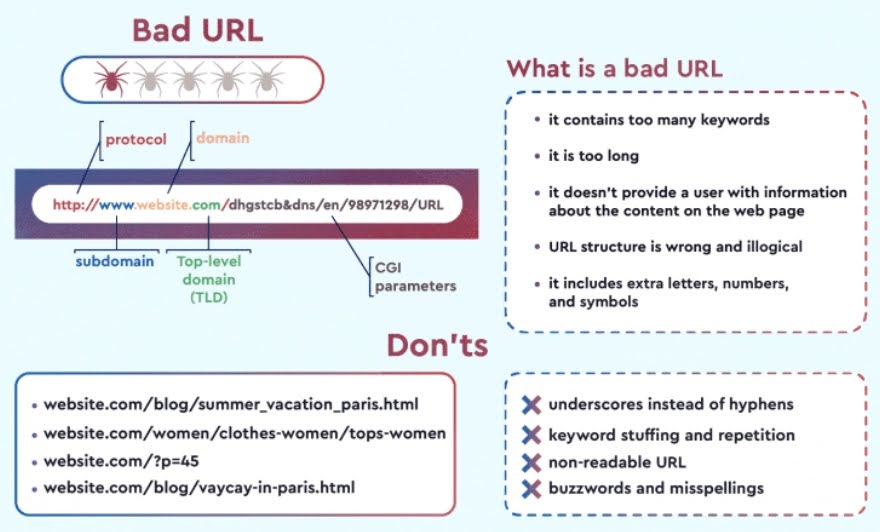
Source: Seranking
3. Write a Keyword-rich “About” Section
Facebook’s “About” section is an often underestimated visibility driver that helps accounts get discovered by people and search crawlers. Not many people check this section, that’s true, but those who do expect it to be informative and concise.
We have seen insanely long About sections, as well as too short and vague. Both are extremes and are equally bad for Facebook SEO. The golden middle is the best option where users provide just enough information for users to quickly understand what this person/brand has to offer.
Pro tip: Don’t forget about the power of the so-called “white space” — breaks between your paragraphs and sentences. They help highlight the main thoughts and focus viewers’ attention on the text.
4. Add Location Details for Local Discovery
Regardless of how popular your brand is and how many existing customers you have, there will always be new ones who have never heard of you. For them, not knowing your location is quite normal.
Many top brands neglect to indicate their location details. As a result, their local discovery by new customers suffers badly. Basically, there is nothing more to add here, other than strong advice to maintain the following SEO Facebook geographic information on your page:
- Full business address in the page settings.
- City, town, or service area in the About section.
- Mention your location naturally in posts.
- Use location tags (whenever relevant) when publishing content.
One additional piece of advice: ensure your business category matches your true area of expertise. This sounds hilarious, but often businesses indicate everything but this important aspect, noticeably undermining their Facebook discoverability.
5. Use Hashtags Strategically
Usually, we think about hashtags when we use X or Instagram. However, hashtags have also proved to be an effective discovery tool on Facebook.
Whenever someone searches for a relevant hashtag or sees one and clicks on it, they are shown a list of all relevant Facebook pages where such a hashtag appears.
The same goes for posts. When your post contains relevant hashtags, it becomes a part of this searchable stream and increases the likelihood that it will be discovered by people who search for relevant information.
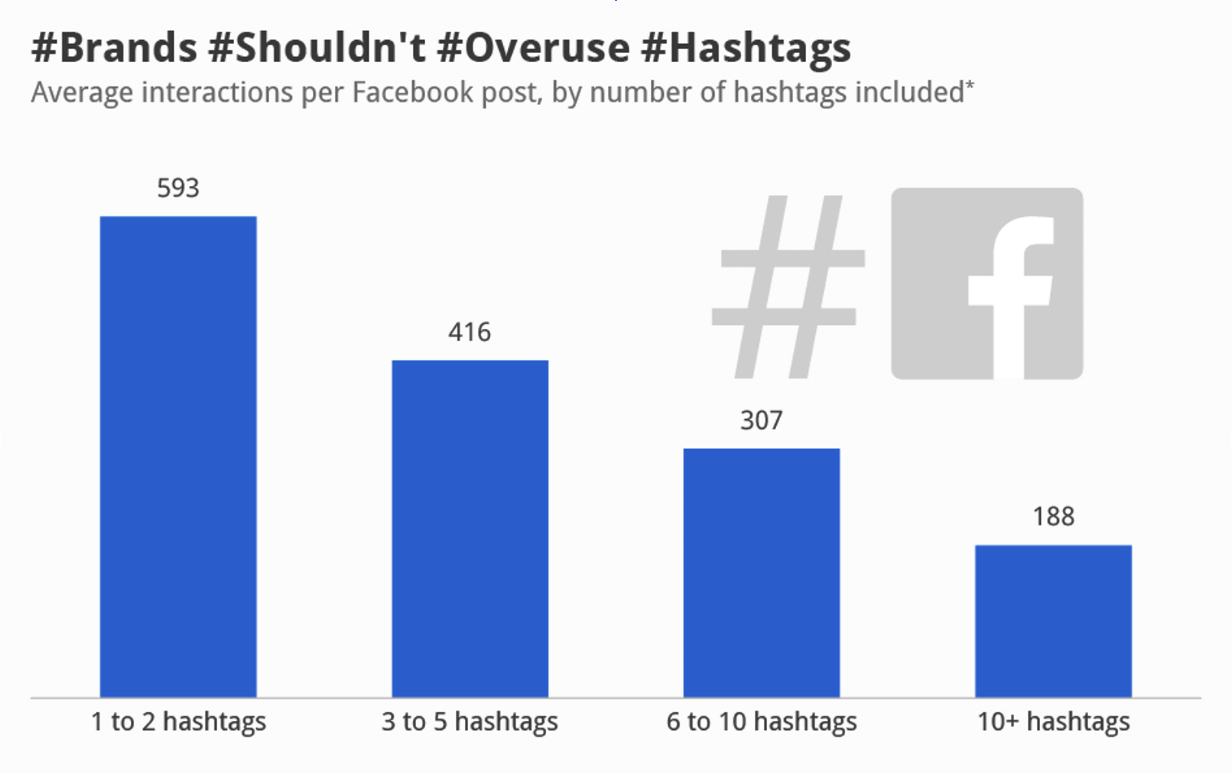
However, hashtags on Facebook have met the same fate as keywords in traditional SEO — at one point in time, when hashtags’ popularity boomed, people began using them too often. This has led to content often looking too spammy with too many hashtags, and SEOs started to use the term “hashtag stuffing” (similar to keyword stuffing).
Your goal is to use hashtags strategically by following a few simple rules:
- Use hashtags sparingly and ensure relevancy to the topic of your post.
- Mix niche hashtags with broader ones for increased reach.
- Avoid overly generic or unrelated tags.
- Position hashtags within the caption.
As you can see, the hashtag strategy on Facebook doesn’t need to be complex and is actually rather simple. The rule of thumb is not to overdo it, as relevancy beats hashtag stuffing all the time.
Source: MTU
6. Optimize Image Alt Text and Descriptions
Images and visual information, as such, play an increasingly more important role on Facebook. As users’ attention span drops and now constitutes just a few seconds, we prefer visual information to textual information.
And here comes the overlooked aspect — so far, algorithms struggle to interpret visual information, but this can be fixed by adding alt text and relevant descriptions to the images posted on Facebook.
Alt text and descriptions is now a big part of Facebook SEO. When written clearly and descriptively, this information helps the local discovery engine to understand your images and associate it with relevant user searches. Your gain is a huge discovery boost.
How does it work in practice?
Imagine a local café publishing a photo of a new dessert. If the image contains no description, Facebook receives very little contextual information. However, an alt text like “homemade chocolate cake served in a Beaverton café with fresh berries” clearly communicates what the image depicts and sends a powerful location signal for nearby (potential) customers.
7. Encourage Engagement on Posts
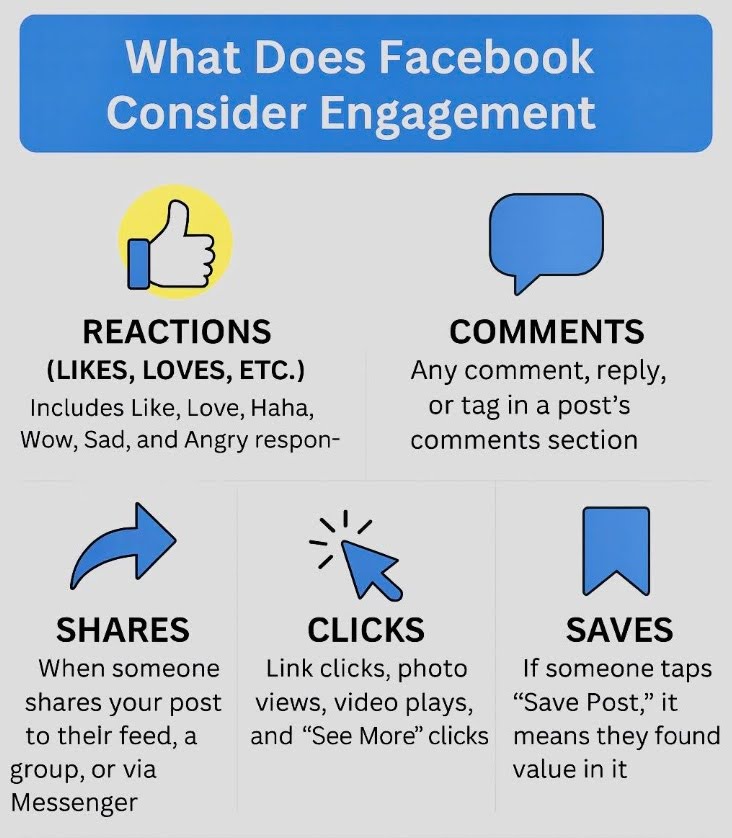
Engagement signals play a vital role in Facebook visibility. However, unlike traditional search engines that prioritize authority signals and backlinks, Facebook is a place where people socialize; hence, its proprietary algorithms value the engagement signals that revolve around human interactions. These typically include:
- Likes;
- Shares;
- Views;
- Comments;
- Reviews.
Here is proof from Facebook itself:
Source: Facebook
Authors who encourage these engagement signals enjoy higher visibility. The mechanism is simple: Facebook’s algorithms pick human reactions and regard relevant content as interesting, increasingly showing and promoting it to other users and local communities.
Here are a few recommendations on how you can proactively encourage these engagement signals:
- Ask open-ended questions that stimulate discussion.
- Share original facts, insights, and tips that inspire reactions.
- Conduct surveys to encourage users to share their opinions.
- Present the results of those surveys to promote shares.
- Monitor comments and respond to the ones promising further discussions.
- Encourage followers to share their own experiences.
8. Post Consistently to Maintain Activity Signals
Now comes the surprise moment — all the things mentioned so far will go to waste unless you do one thing and one thing thoroughly — consistently publish new posts.
Facebook, as a search engine, values activity. The more active your account is, the more visible it becomes. And when you add all the above-mentioned optimization tips to your continuous activity, you get a winning mix that guarantees you discoverability and popularity among your followers and prospects.
Publish at least one post per week, but better per two-three days, and your activity signals will saturate Facebook’s algorithms, leaving it no other choice but to actively recommend your content to millions of users.
9. Build Backlinks to Your Facebook Page
Backlinks have traditionally been among the strongest visibility and authority-building drivers in SEO. They help acquire traffic and bring new visitors and customers to websites and online stores.
Facebook SEO is not an exception. Although existing and acting from outside Facebook’s ecosystem, they help people find your Facebook page (or post) and often inspire them to join this social media platform.
Building backlinks is best done through guest posting and targeted outreach — literally, reaching out to authoritative publications with offers to publish your content, including backlinks to Facebook pages or inserting links to your pages into the existing content.
Below, you can see other opportunities for acquiring backlinks:
- Adding your Facebook Page link to your website’s contact page.
- Including it in company profiles (e.g., in Google Business Profile) or author bios.
- Listing it on review platforms and on relevant business directories.
- Adding it to email signatures and newsletter disseminations.
Positioned on authoritative websites and directories, backlinks act like direct and silent pathways to your Facebook page. Combined with your proper Facebook SEO strategy and regular activity on your account, backlinks give you a strong competitive advantage and a sustainable visibility boost that can soften the quiet periods when, for some reason, you cannot publish another scheduled post.
10. Cross-promote Your Facebook Page Across Platforms
As of the end of 2025, all major social media platforms (Facebook, X, Instagram, and YouTube) combined had a global audience of 5.7 billion users. What does it mean for our Facebook SEO?
It means a huge potential to acquire new users by cross-promoting your page across other platforms.
Let’s be honest, in the modern world, users seldom have only one account on a particular platform. Usually, multiple accounts exist across YouTube, Facebook, X, Instagram, and other platforms, including specialized commercial ones like Etsy and Amazon, or content and business platforms like Pinterest, Reddit, and LinkedIn.
Cross-promoting your Facebook page is easier than it seems. Just include links to your pages whenever you publish something on your other social media accounts, and list your Facebook account in their About sections.
The key to success here is attention to detail and consistency. Mentioning your Facebook page every time regularly will bring you exponentially more visitors than when you do it just once (e.g., after reading this tip).
Conclusion
Facebook SEO is simply about optimizing your page and content for higher discoverability. It takes into account the focus of Facebook’s internal algorithms on interactions between people and their reliance on social engagement signals.
However, over the decades, Facebook has grown into something bigger than a social platform for communication. Today, people increasingly use it to find information on products and services, seeking social proof, as well as new knowledge. Taking this into account while planning your SEO strategy stipulates adapting traditional SEO principles to the unique dynamics of social platforms.
Last but not least, even the best tips will only take you so far if you apply them once and then forget about them. Consistency in publishing new content, active promotion, and encouragement of user responses are the must-have factors of your success. That’s the essence of visibility on any social network, including Facebook.
Related Posts

Published Oct 15, 2025

Published Sep 16, 2025

Last updated Aug 24, 2022 | Published May 3, 2022
Published Sep 23, 2025

Last updated May 13, 2025 | Published Oct 29, 2024

Published May 21, 2024
Enter URL & See What We Can Do Submit the form to get a detailed report, based on the comprehensive seo analysis.