Copywriting Skills Explained: What Separates Average Copy from Persuasive Copy
Copywriters may not be the most influential decision-makers in an organization or business. Still, their talents make them a valuable asset and indispensable to any marketing team.
However, not all copywriters enjoy the same level of demand. The reason is that some can make truly persuasive copy that converts and turns prospects into paying customers, whereas others cannot.
What separates truly talented copywriters from the rest is their unique copywriting skills. What those are, and how they impact SEO and customers moving through the marketing funnel — these are the things (among many others) that we’ll look into without bias in this post.
Contents
- Why copywriting skills matter more than ever in an AI-driven web
- What is persuasive copywriting, and which skills separate it from average copy
- 1. Moving readers from passive reading to active decision-making
- 2. Turning clarity into momentum instead of information overload
- 3. Aligning message, context, and timing into one narrative
- 4. Framing value before explaining features
- 5. Anticipating objections before the reader voices them
- 6. Using specificity to replace vague persuasion
- 7. Guiding attention with deliberate structure and emphasis
- 8. Creating emotional contrast that makes the message stick
- The psychology behind effective writing skills
- How strong copywriting improves SEO
- Which copywriting skills matter most at each stage of the funnel
- Common copywriting mistakes that keep content average
- How to develop copywriting skills that compound over time
Why copywriting skills matter more than ever in an AI-driven web
Copywriting has been here serving businesses, organizations, and individuals for decades. It’s not a new competence, however, its role in the modern, AI-driven web has started to change. And not to the direction most people think (downgrading, diminishing value), but to the opposite — greater value, more impact, and a hard-to-find the right kind of skill set.
How AI changes how users scan, judge, and trust content
AI didn’t replace human writing. It augmented it, supercharged it, and made it easier. Users have seen what mass-produced content looks like, and they remember it. Users now move through content with speed and purpose, looking for signals worth stopping for.
When AI summaries, snippets, and previews sit between users and full pages, judgment happens early, and the meaning becomes clear. Knowledge, tone, and relevance are assessed by scanning through the first two to three paragraphs. If the message feels generic, the reader mentally moves on.
And they have good reasons to. Thanks to the AI and cognitive abundance it brings, the choice of content is huge; other options may be better.
Trust is formed differently now. People know machines can generate endless text, so they look for signs of human thinking instead of polished phrasing.
Here’s what readers subconsciously check within seconds:
- Does the opening answer something real, or just warm up?
- Does the author have a clear point, or only wants to sound impressive?
- Does the voice sound confident?
- Do examples feel real or fake?
AI made writing faster and content easier to produce, which made discernment the real filter. Humans reacted naturally, reading faster and judging more strictly. Readers don’t want more text. They want better decisions baked into the text.
If your content adapts to that reality, it gains an advantage machines can’t fake. And that advantage compounds with every page you publish.
Why generic copy is now easier to spot and easier to ignore
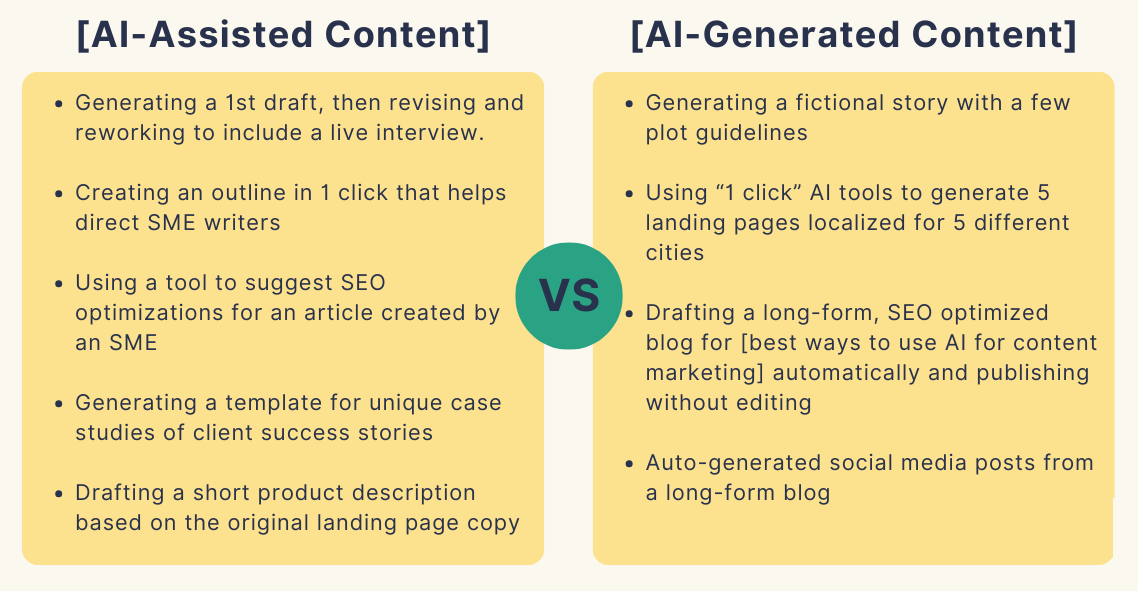
In the early days of ChatGPT, generic copy used to pass as “professional” because it was new and felt special. Now it reads like a placeholder that forgot to leave. Users recognize it because they’ve seen it everywhere.
The problem isn’t that the generic copy is wrong. It’s that it’s predictable. AI tools normalized a certain rhythm: clean, balanced, and emotionally flat. Readers already know where it’s going (often, nowhere), so they stop following.
Typical warning signs include:
- Overly balanced arguments, not too sharp, not too provocative.
- Soft claims without concrete examples.
- Familiar phrasing in new packaging (but more often, just clichés).
- Sections that exist because of the structure rules.
- Conclusions that don’t punch, don’t leave you with something to think about.
Source: Clearscope
Modern readers don’t reward smoothness anymore. They reward helpfulness, crispness, and direction. They want the writer to take a stance, even a small one.
This is where real copywriter skills separate themselves. They make texts sound human, original, and above all, emotional.
Generic copy avoids commitment. Persuasive copy makes decisions for the reader easier by making decisions itself. That’s why people ignore safe content faster than bad content. At least bad content feels human.
If your copy doesn’t give readers a reason to stop, they won’t. And they won’t feel bad about it either.
What are the areas where human intelligence still outperforms machine text
Modern generative engines (e.g., ChatGPT, Gemini), which we use to produce content and write texts, are super powerful generalizers. Sometimes, their creators don’t understand how exactly they produce the output we see on our screens, but that product is nothing more than the sum of the essence of what was once written and produced by humans and put online.
This is the weakness of the modern AI, and it’s exactly what makes human writers special. Each writer carries a unique set of memories, experiences, failures, successes, and lessons learnt. The best of the best can eloquently express those in the form of a convincing copy, full of emotions and energy.
No machine intelligence can give you that. And because that copy is read by other humans who can relate to similar emotions (via empathy), they can easily distinguish a “cold”, machine-made text from a “warm”, human-made one.
Oftentimes, human-made copy contains mistakes, imperfections, and highly disputable arguments and claims. But that’s exactly where humans shine! So far, we are better at persuading other humans to do things (in marketing terms — to convert).
Human writers have developed and perfected their copywriting skills over decades and even ages. They give them the power and confidence to make, almost hand-made, a persuasive copy. While AI mass-produces copies, it manufactures them in volumes unimaginable before.
So far, the balance is in favor of skilled human creators, who deliver quality, while machines excel at quantities. But it’s not for granted that this situation will not change, and it may do so very soon, indeed.
What is persuasive copywriting, and which skills separate it from average copy
That is a rhetorical question, and the answer is already in the title itself — a unique combination of skills enables some copywriters to make truly persuasive copies, which others cannot replicate (including machines). Below is a thorough review of such skills with relevant examples.
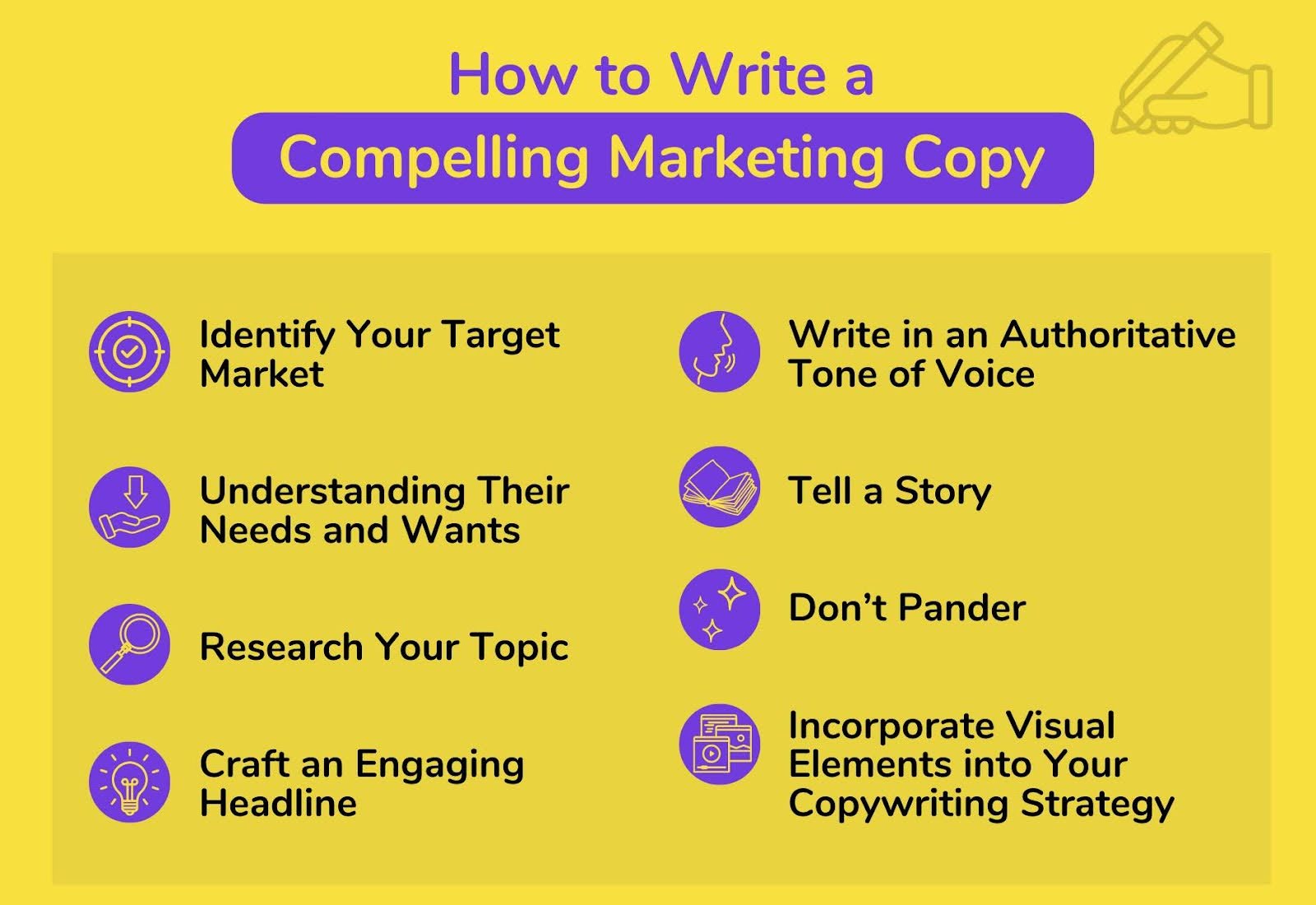
1. Moving readers from passive reading to active decision-making
Readers arrive with attention, not commitment. If the copy doesn’t give them a reason to move, they’ll stay passive and leave unchanged. That’s not a failure of interest — it’s a failure of direction.
A writer may know how to present facts, research things, and arrive at novel ideas, but if they cannot persuade others to make a decision, all the above is essentially useless from a business perspective.
Persuasive copy does something remarkable. It introduces friction in the right places. Not confusion — relevance. A reason to stop scrolling and mentally lean in.
That shift doesn’t come from louder language. It comes from intention. Real copywriting skills show up when the writer knows what decision the reader is circling, even if the reader doesn’t.
The text starts to feel directional. Not commercial, just purposeful. Like it’s going somewhere specific. Taking a reader’s hand and leading them towards the right marketing door.
Once that happens, passivity breaks. The reader isn’t just reading anymore — they’re weighing, comparing, and edging toward action without being explicitly told to.
Source: Brandwell
2. Turning clarity into momentum instead of information overload
Clear writing is easy to admire. Momentum is harder to create. The skill is knowing that readers don’t want all the clarity — they want just enough to keep moving.
This means breaking information into decisions, not paragraphs. Each section should answer one question and quietly set up the next. When that chain holds, the reader stays engaged.
This skill is about knowing where and when to make a pause, a break, insert a CTA, and where to stop. In the world oversaturated with information, attention is fragile, and some readers may not stay on your copy even for ten seconds.
Overexplaining breaks momentum. It makes the reader stop and manage information instead of following the message. That pause is often where attention slips.
Strong persuasive copy trims clarity to its functional core. It leaves room for the reader to connect the dots without feeling lost.
When momentum is working, the text almost pulls the reader along. They don’t notice how much they’ve read until they’re near the end.
3. Aligning message, context, and timing into one narrative
The average copy delivers messages in isolation. Persuasive copy connects them to the moment the reader is in. That connection is a learned skill, not a coincidence.
The right message, the right timing, and the right context can do marketing miracles when working in sync. That’s because context tells you how much the reader already knows. Timing tells you how much they’re ready to accept. The narrative is what stitches those signals together.
This is where copy skills separate instinct from habit. The writer chooses not just the words, but the order and weight they carry.
👉 For example: a pricing page that opens with guarantees works late in the funnel, but feels premature on a blog post. Same message, wrong moment.
In ecommerce, when a product messaging alignment is right, the buyer doesn’t feel sold to. They feel accompanied. And that feeling makes persuasion effortless.
4. Framing value before explaining features
Most average copies start with features because they’re easy to list. Persuasive copy starts with value because that’s what readers are actually looking for. This skill is about reversing the instinct to explain too soon.
Value framing means answering “why this matters” before “how this works.” When readers understand the payoff, they become curious instead of skeptical. Features then feel supportive, not overwhelming.
This takes discipline. You have to resist proving competence right away and focus on relevance first.
👉 For example: Instead of “Our tool has real-time analytics and automated reports,” say “Know what’s working before you waste another week guessing — with real-time analytics and automated reports.”
When value leads, features finally have a job to do. And readers are far more willing to listen. It’s like turning a “cold” audience into a “warm” one, heating it up with the value.
5. Anticipating objections before the reader voices them
Most objections are emotional before they’re logical. We react internally, and only a few of us move on to some explicit actions (like dislikes or comments).
Readers worry about wasting time, making mistakes, or choosing wrong. Anticipating those fears is a core persuasive skill.
Good copy surfaces reassurance exactly when uncertainty starts forming. Not earlier. Not later. This requires judgment. You have to know which objections matter and which ones don’t deserve airtime.
That’s the essence of this skill. It takes solid experience and maturity to anticipate the right moment and act with the right words.
👉 For example:
“Sounds powerful, but probably hard to use.”
Followed by: “It takes less than ten minutes to set up, even without technical experience.”
Handled this way, objections lose their edge. The reader is given enough data/substance to digest, instead of rejecting the empty phrases.
6. Using specificity to replace vague persuasion
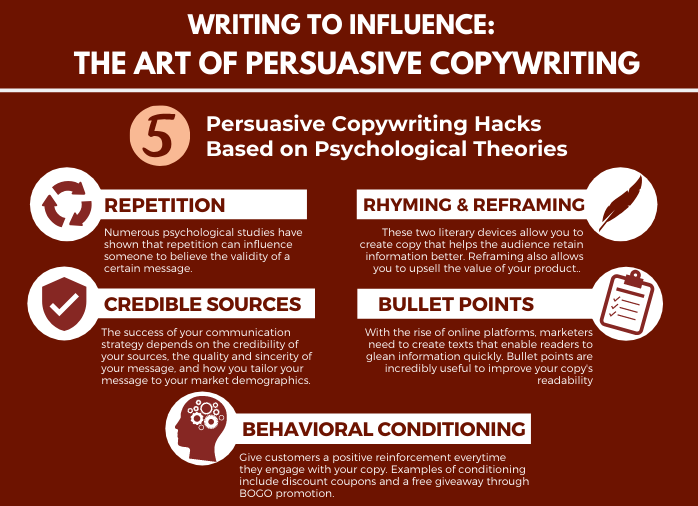
Using strong adjectives is a known technique to keep, or revive, the attention. However, these are not enough. Powerful words and phrases need to be supplemented with something else — evidence, specific examples, and cases.
This skill is about choosing proof over praise. You let details carry the message instead of hype.
Readers don’t argue with specifics. They either accept them or move on — and acceptance happens more often than you’d expect.
Source: Script
Specifics also slow the reader down — in a good way. They pause to process because the detail feels meaningful. Using statistics and numbers for that token makes readers think, process information, and relate to it. They stay longer on your text, and grow more emotionally attached to it.
👉 Example:
Vague: “Helps you save time.”
Specific: “Saves at least 15 minutes of your time daily, by automating follow-ups so you don’t chase replies at the end of the day.”
That specific time-saving claim and the level of detail/clarification that follows does more work than a paragraph of promises.
7. Guiding attention with deliberate structure and emphasis
Most readers don’t get lost because the idea is complex. They get lost because nothing tells them where to look next. Guiding attention is the skill of removing that uncertainty.
This copywriting skill comes from experience. Usually, the more experienced a copywriter is, the more they are likely to alternate different structural elements at the right time. For example, using a table where a summary is needed, or inserting a bulleted list where paragraphs tend to get too long.
Persuasive copy doesn’t leave structure to chance. It decides what deserves focus and makes that decision visible. Emphasis becomes a form of guidance.
This skill shows up in choices like:
- Which idea appears first (prioritization), not just what’s included.
- What gets repeated and what appears only once.
- Which phrases deserve visual weight (e.g., a bold font, different font color, etc.).
- Where silence is more useful than explanation.
When attention is guided well, readers follow. Oftentimes, this stipulates not the right structure or the right text, but an intelligent use of the white space — empty space between paragraphs and sentences that works like a coffee break in a busy and crowded office meeting.
8. Creating emotional contrast that makes the message stick
People remember change more than information. Emotional contrast creates that change inside the reader.
This skill requires sensitivity. You don’t exaggerate emotions — you surface the ones already present and then redirect them.
👉 Example:
“Launching ads without clear attribution is stressful. You spend money and hope for the best. Seeing exactly which campaign drives revenue with our tool turns that stress into confidence.”
That emotional pivot and an economic gain (seeing which campaign drives revenue) create meaning. It also creates recall. It is small, but it’s enough. When readers remember the shift, they remember the message.
The psychology behind effective writing skills
Effective writing takes something more than experience and skills. It requires the knowledge of human psychology, namely cognitive bias, emotional reactions, and even some basic instincts, and how they shape readers’ choices.
How cognitive bias shapes attention and choice
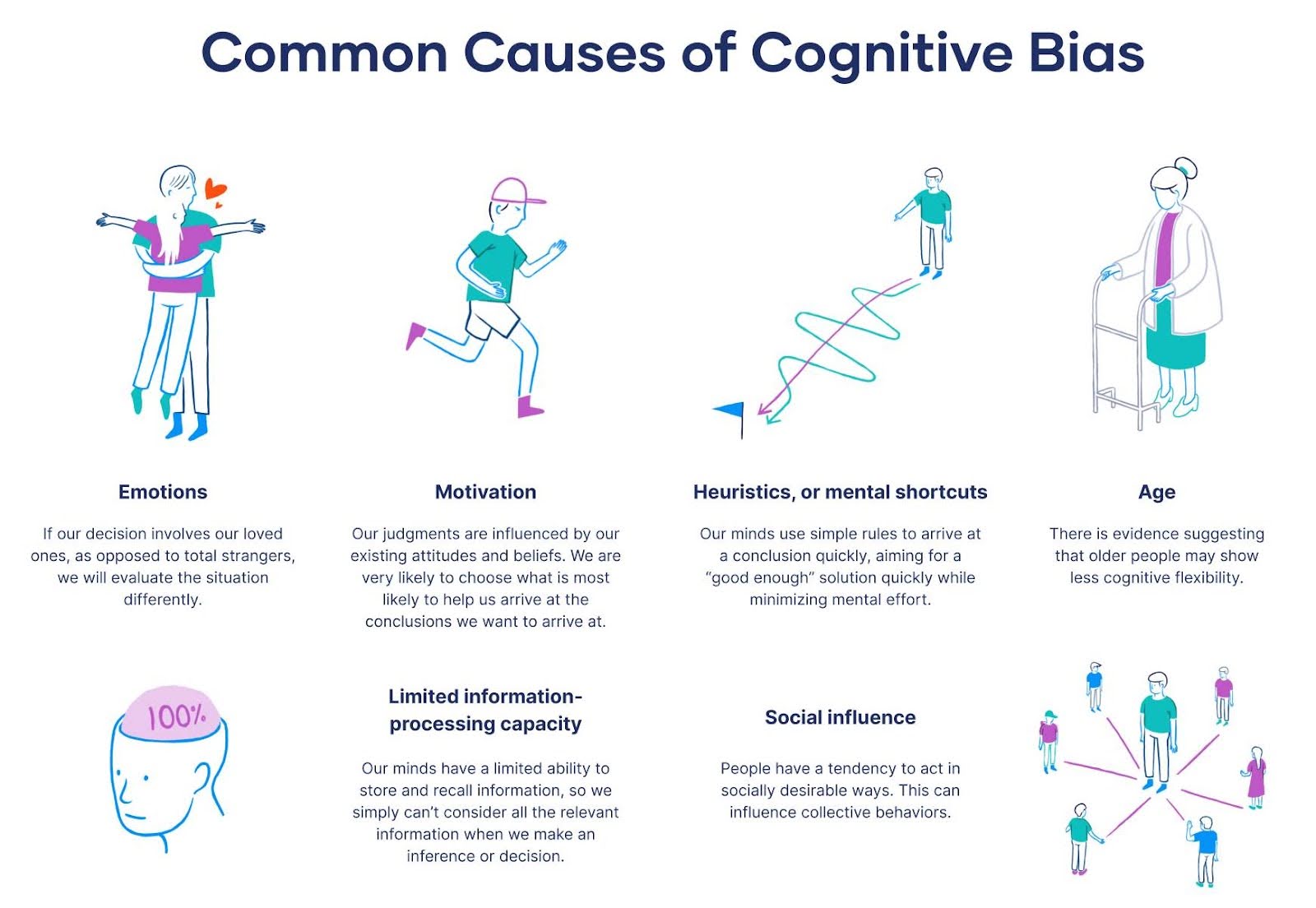
Most readers don’t approach text with an open mind. They approach it with a protective one. That’s called cognitive bias. It’s the combination of experiences dragged through the individual psychological model.
Cognitive bias helps us conserve brain energy and avoid mistakes. In essence, it’s a protective mechanism.
Source: Scribbr
It’s because of the cognitive bias that some messages land instantly, while others never get a chance. Some messages fit our cognitive model of the world, while most don’t.
Good writing doesn’t argue with that psychological trait. It accepts it. The real skill is knowing which mental shortcuts the reader is already using and leaning into them instead of fighting for attention.
Some of those shortcuts show up as:
- Trusting the first idea that sounds reasonable.
- Preferring what feels familiar over what’s new.
- Reacting more strongly to potential loss than to gain.
- Letting emotion lead and logic follow.
- Choosing (and trusting) simplicity when attention is low.
When copy works with these biases, it feels easy to read. When it ignores them, even smart ideas feel heavy.
In summary, readers don’t reject content because it’s wrong. They reject it because their brain decided it wasn’t worth the effort.
Writing for emotional logic
Logic explains. Emotion decides. Writing for emotional logic is about knowing which one the reader is ready for. It’s the shortcut to actions, as most people act first and think second. Why not exploit this trait?
For that same reason, most readers don’t reject ideas because they’re wrong. They reject them because something feels off. Emotional logic is the layer that makes reasoning acceptable.
A skilled copywriter knows when emotional readiness matters more than factual completeness. Timing and perfect placement beat thoroughness here.
Emotional logic often guides choices through:
- Relief from uncertainty.
- Desire for control.
- Avoidance of regret.
- Trust in familiarity.
People are intuitively afraid of the things they don’t know or cannot relate to. Similarly, they tend to trust the things they are familiar with. Knowing and feeling that need is what distinguishes a great writer from a good one.
When writing works at this level, readers don’t stop to analyze. They continue naturally. And by the time logic catches up, the decision already feels right.
The role of primal instincts in how readers perceive messages
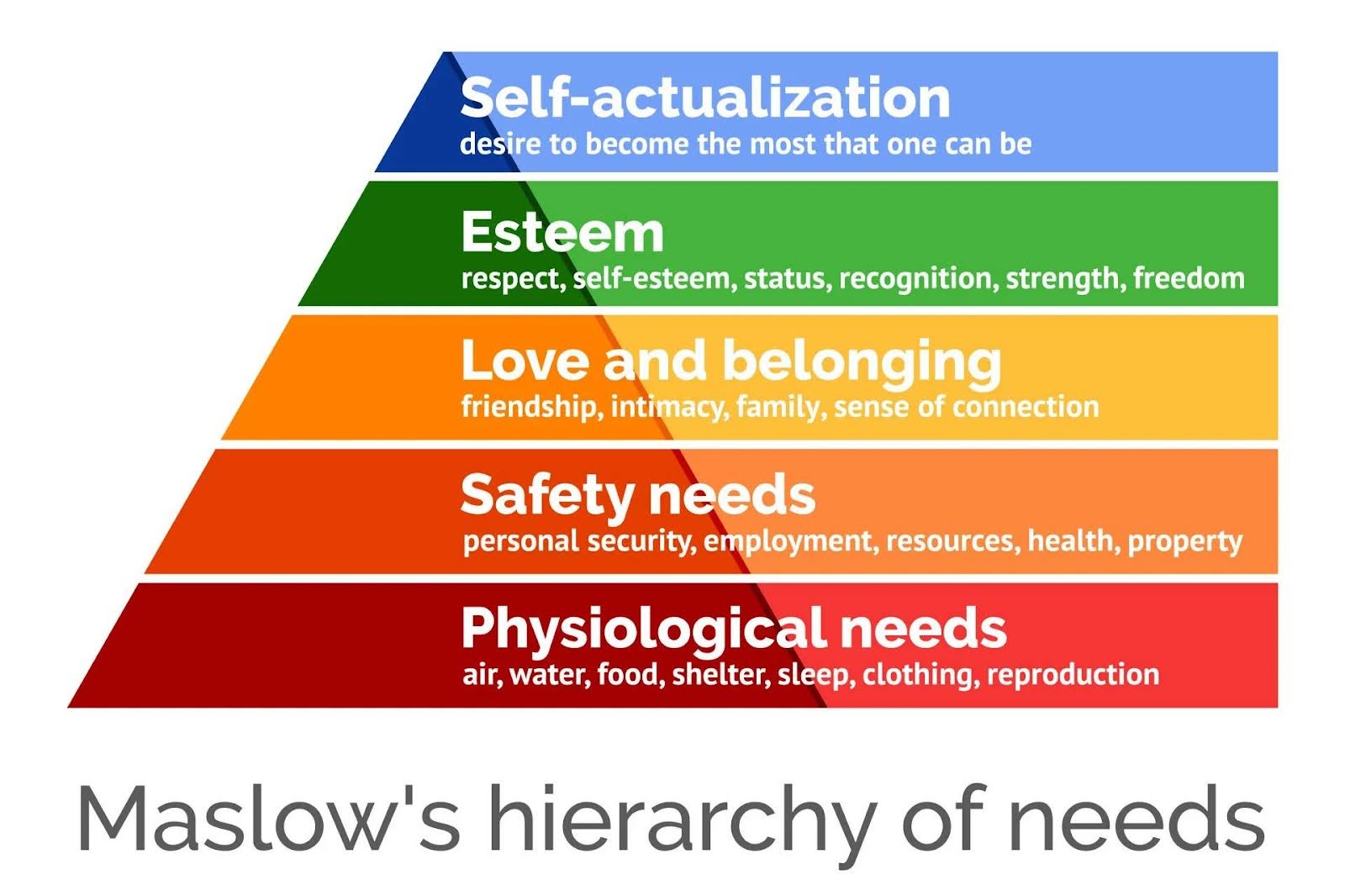
Modern people don’t realize how much their behavior is guided by the fundamental, basic instincts like the need for reproduction (sex), the need for security, and to have food and shelter. The famous Maslow’s Pyramid of Needs says that only when these basic instincts are satisfied do we strive for something more exquisite and sophisticated, like creativity and self-realization.
Source: Simplypsychology
A great copywriter knows that. But not only that. They also know about the other basic instinct that impacts readers’ behavior — aggression.
The theory of psychology says that even the basic smile was initially an act of aggression (a demonstration of big, healthy teeth that can bite is still widely used among Chimpanzees), and now exists as a way to channel aggression into a different direction. In other words, a smile is just a ritualized form of aggression, the one we use instinctively.
Aggression defines how readers react to texts, their initial objection, and then writing comments as a way to show their dominance over the author’s opinion or someone else’s comments.
For that reason, giving readers the option to leave comments is a smart solution to give way to their natural aggression, after which they’ll be more inclined to accept the ideas in the blog/article. A good copywriter knows that and uses this and many other tricks to leverage readers’ instinctive behaviors to their (writer’s) advantage.
How strong copywriting improves SEO
The most noticeable effect of strong copywriting can be felt on SEO. It’s an immediate effect and the shortest, most obvious connection, as writing in the age of search engines without optimizing for them is a waste of talent and budgets. Let’s take a closer look now at how strong copywriting improves SEO, in particular, writing with a search intent in mind, earning links via high-quality content, and leveraging the reader-first principle.
Writing for search intent instead of keyword density
Keyword density is easy to measure. Search intent isn’t. That’s why many pages still get it wrong.
Writing for intent requires stepping into the reader’s context. What do they already know? What decision are they close to making? What would make this page “enough”?
Pages that answer those questions perform better, even with fewer keywords. Because relevance beats repetition. That’s one of the key copywriting skills, a must-have for modern bloggers and commercial writers.
A good intent-driven writing must focus on:
- Solving one clear problem per page (or per screen).
- Matching depth to the reader’s readiness (e.g., knowledgeable readers would prefer more details).
- Answering the most likely follow-up questions naturally inside the main text.
- Using language that readers already think in
- Avoiding filler/fluff meant only for bots, and which bots usually make themselves.
The bottom line: When intent is satisfied, engagement improves. And user engagement is what search engines actually reward now.
Creating content that earns links
Links are a byproduct of trust. You don’t convince people to link — you remove reasons not to. Unfortunately, most content out there asks for links, but only some content truly deserves them. And the difference lies in intent.
Link-earning content is written with contribution in mind, not promotion. It adds something to the conversation instead of echoing what’s already been said. It brings novelty, updates, facts, and anything similar that matches the audience’s intent.
Strong copywriting skills show up in understanding this intricate relationship. Not salesy, not neutral — useful and matching the intent.
This usually happens when the content:
- Answers difficult, but topical questions others avoid.
- Makes complex ideas easier to comprehend and to quote.
- Offers frameworks, paradigms (as a way to solve problems) instead of lists with features.
- Takes a clear stance and, by doing so, stands out in the crowded info world.
- Holds up outside its original context.
When people link to content, they’re borrowing credibility. They only do that when it feels worthy, when they can enhance their own credibility and improve visibility (echoing the psychological traits we reviewed earlier).
Making structured content feel natural and human
Structure is supposed to help, but readers notice it the moment it starts leading the conversation. When content feels too arranged, people stop trusting it. That’s a perfect illustration of why AI-made content often feels (and in fact, it is) artificial — it has too much order in it, too much perfection.
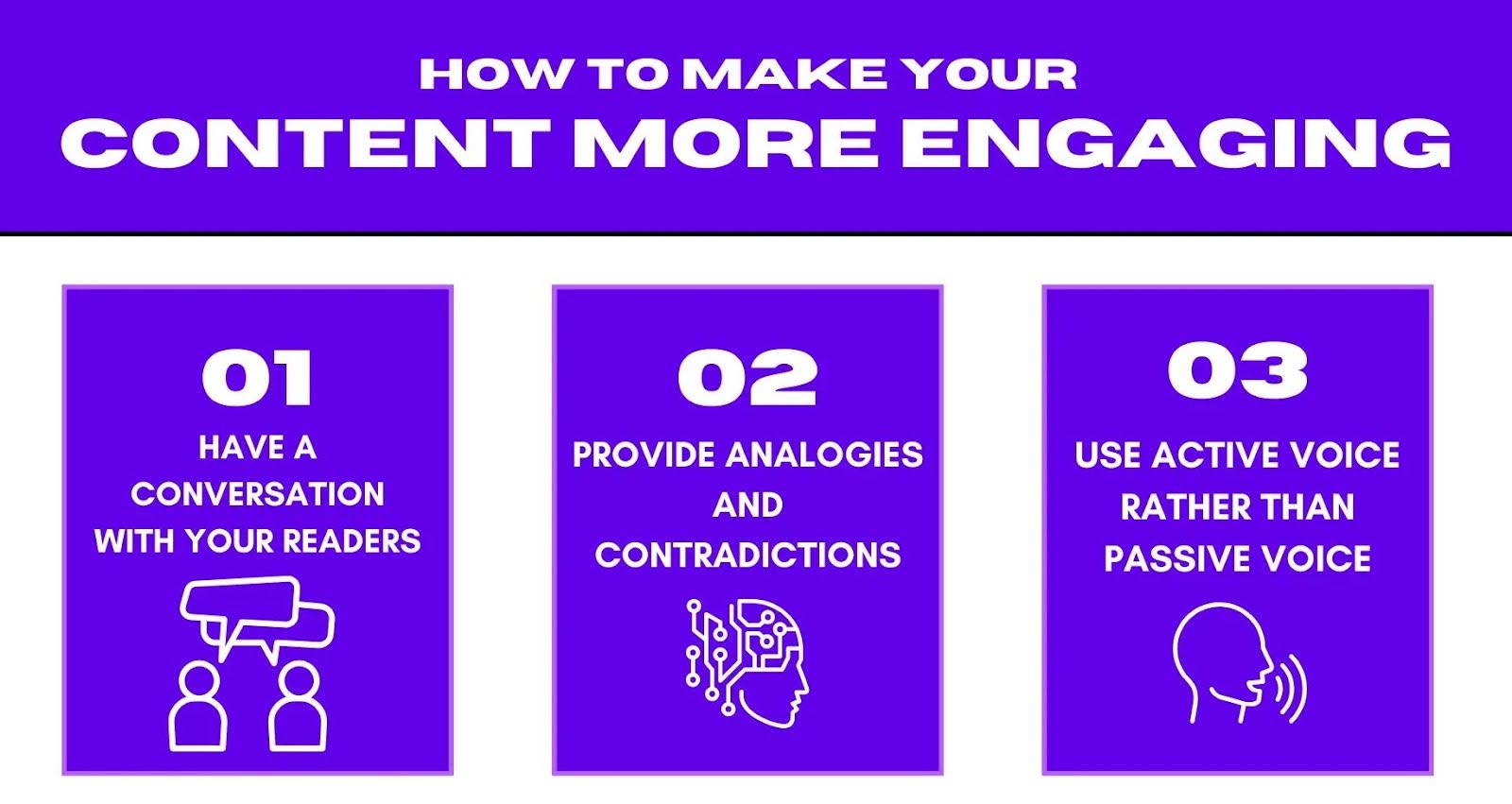
The skill here isn’t adding structure. It’s knowing when to let it fade into the background. The reader should feel that the text is written by another human. Minor imperfections, high variability in sentence length and paragraph structures, and even grammar mistakes add up to that perception.
You can usually tell when structure is getting in the way because:
- Every paragraph feels the same length.
- Every section ends too cleanly.
- Transitions explain themselves.
- Headings repeat what the paragraph already says.
- The rhythm never changes.
Human writing isn’t symmetrical. It speeds up, slows down, and occasionally lingers. Good structure allows for that instead of correcting it.
When structure supports thinking instead of managing it, readers stay. They stop noticing the page and start following the idea.
Source: Longshotai
Helping search engines by helping readers first
Search engines have one reliable proxy for quality: what readers do next. Do they stay, or do they leave?
Helping readers first means respecting their time. You don’t warm them up forever. You don’t hide the answer behind structure.
Reader-first is a known principle in web design, and it echoes in search engine optimization alike. If the design, content, and navigation help the reader feel at home and easily find their way around a website, search engines reward that kind of copywriting performance by giving more weight to such pages and ranking them higher in SERPs.
Content that helps readers tends to:
- Get to the point faster.
- Use structure to guide, not impress.
- Avoid filler and ambiguity disguised as context.
- Match depth to the actual query.
When readers feel comfortable, they complete a certain action (e.g., press subscribe, download, share, or pay) and search engines see that success. The page did its job.
The bottom line: SEO doesn’t need to be forced when usefulness is obvious.
Which copywriting skills matter most at each stage of the funnel
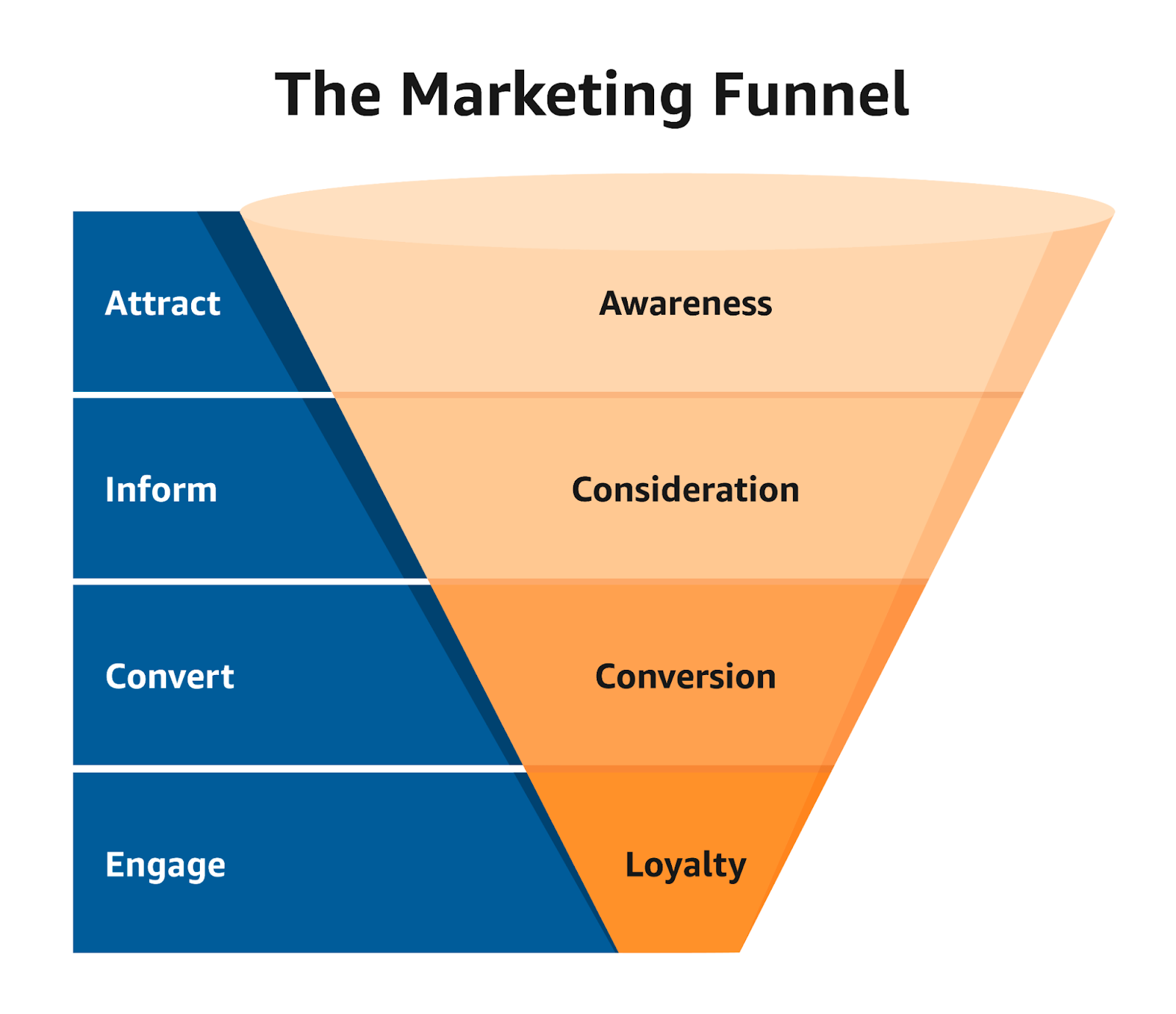
What skills do you need to be a good ecommerce copywriter? Here, we explore the necessary skills required to make a customer move through the sales funnel. It means we’ll go from the awareness stage to consideration and, finally, the conversion.
Awareness-stage copy that earns attention without pushing
Readers at the awareness stage are defensive by default. They didn’t come to buy — they came to browse, learn, or kill time. That’s when skepticism and critical thinking are high, and the job of a talented copywriter is to get through those defenses.
For that same reason, awareness copy works when it lowers that defense, when it feels informative, not transactional.
The skill is about feeling the best transition moment from problem to solution. It’s best to let the reader sit with the problem first.
Therefore, a strong awareness copy often:
- Explains the problem using everyday terms.
- Respects the reader’s uncertainty by not claiming anything outright.
- Doesn’t rush toward outcomes too soon.
A high-performing awareness text also makes the topic feel worth attention, like it’s a really hot one, with loud debates and polarized opinions flying around the web.
If the reader feels comfortable, they’ll keep going. If they feel targeted, they’ll disengage.
Consideration-stage copy that builds confidence and clarity
Consideration-stage readers are cautious by nature. They’re interested, but not committed. They need one simple thing to claim, but hard to realize — reassurance. A copy that respects that mindset performs far better than a copy that rushes it.
This is the stage where clarity becomes the strongest factor of reassurance. The reader wants to know what they’re getting into — and what they’re not. In other words, they want proof that their choice will be the right one and will make them feel comfortable.
Strong copy writer skills are visible in how calmly the above-mentioned reassurance is communicated.
That’s exactly why a consideration-stage copy usually works best when it:
- Highlights what matters most in the first few paragraphs.
- Acknowledges limitations honestly.
- Provides proof (cites authoritative sources, gives reassuring statistics, provides user opinions, reviews, etc.).
- Avoids unnecessary comparisons or the introduction of new concepts/items.
- Makes the next step feel reasonable and obvious.
When readers feel oriented, confidence comes naturally. They stop second-guessing and start leaning in. But such writing requires a deep knowledge of the topic, as readers might sense incompetence, and all reassurance would lose its power.
Source: Singlegrain
Conversion-stage copy that removes last-moment doubt
Most conversions fail at the last second, not because of missing information, but because of hesitation. The reader pauses and asks, “What if this doesn’t work for me?” or “What if there is a better option out there?”
At this stage, the reader is almost ready. Interest is there. Logic is there. What remains then is a small pocket of doubt that can still derail the decision.
This is not the moment to introduce new ideas. It’s the moment to steady the ground under the reader’s feet. Conversion-stage copy exists to eliminate doubts and to create a sense of urgency to take the right decision.
This is where tone matters most. Confidence without pressure keeps the reader from pulling back.
Therefore, a strong conversion copy often reassures by:
- Restating the core value succinctly.
- Removing ambiguity around effort or risk.
- Clarifying what happens after the click.
- Making the decision feel reversible.
When doubt fades, action feels safe. And safety is what unlocks commitment. The reader doesn’t feel pushed. They feel ready.
Common copywriting mistakes that keep content average
Common copywriting mistakes that keep content average
Sometimes, the best results are achieved not by meticulously following the guidelines and tips, but by avoiding the deadliest mistakes. Knowing what those are in copywriting and how to steer away from them in due time is a rare but valuable writing quality. It helps to unlock the full potential of one’s writing style and to consistently achieve great results.
So, what are those mistakes? Here, we break everything down for you.
1. Saying too much and meaning too little. That mistake is about wordiness. AI writing assistants can produce meaningless, low-value content, which, nevertheless, looks impressive from a volume and structure perspective at first glance.
2. How do you avoid it? Frequently read and re-read your drafts. That helps to condense content, get rid of the junk words and phrases, and eliminate duplicate thoughts and points.
Sounding impressive instead of being useful. Some introductions capture attention easily; they “hook” the reader, but then they fail to keep up. Nothing helpful follows, and the reader is forced to abandon the text.
How do you avoid it? Stay close to your opening claims and true to your word. If you claim something, be so kind as to prove that in the main body of the article/post. Use facts and original research to back up your claims and make your text useful to the reader.
3. Using vague claims without proof, examples, or context. This mistake is closely associated with the previous one. The claim/hypothesis might be worthy, but if no proof and examples follow, the point remains unaddressed. And what was the point of formulating one in the first place?
How do you avoid it? No fancy recommendations here; just make sure you use concrete and lived-in examples, facts, and evidence to back up your claims. Too many examples and facts might sound suspicious, so stay vigilant and use only authoritative links to back up your claims.
4. Writing for brands instead of real people. Oftentimes, writers get too carried away by their passion to promote a brand or a product they write about. They use the brand name too often and sound one-sided/biased towards their brand as compared to other brands in the market.
How do you avoid it? When writing, try to put your reader’s hat on. See the world/your text with their eyes, and you’ll understand that readers appreciate unbiased opinions and all-around, balanced perspectives.
5. Focusing on features while ignoring real user outcomes. This mistake is about praising the object/subject of your text, instead of presenting what it means and what it gives to real users.
How do you avoid it? Think about the value of the topic of your text for the reader. What’s in it for the reader? How will it help to solve the users’ problems and address their needs? It also helps to run a quick survey among a few readers to ask what they’d appreciate knowing.
6. Burying the main point instead of leading with it. Sometimes, the intro is great, the main text is perfectly aligned with the intro, but the author’s main point is vague or nonexistent. The writer failed to formulate the core idea/hypothesis in the opening paragraphs and then dedicate the text to proving or disproving it.
How do you avoid it? The best approach is to learn from simple essay writing. Yes, the good old school or college essay has taught us how to clearly make the main point in the introductory section and how to address it.
The core principle is to formulate the point in a single sentence and to make it sound achievable, verifiable, and disputable. If the argument is not disputable, there is little value in dedicating a whole article/post to it.
7. Writing as if attention is unlimited (it isn’t). Writing long texts may have been a copywriter’s best skill a few decades ago, but today, that’s no longer the case. The average reader’s attention span has been going down year over year for the past decade or so. On social media, for instance, people cannot stay on one screen for more than a few seconds.
How do you avoid it? Be aware of the shortening attention span, especially for the younger generations. Try to make your claim in the first two paragraphs, and then begin addressing it immediately in the opening sentences of the main body.
It doesn’t mean you have to fully cover the whole point by the time the user scrolls to the second screen; it just means you need to stay focused on your core idea and introduce it granularly.
Which copywriting skills matter most at each stage of the funnel
Some really push the envelope to learn how to write well and produce a good piece of writing in the end. However, the best writing is consistent writing, and it needs reinforcement. That can come from continuous practice and lifelong learning. From our own successes and failures, from the mistakes and achievements of others, and from the feedback we get from readers, customers, friends, and foes.
Learning from performance data
Most writers overvalue feedback and undervalue behavior. Maybe, because it’s easier to track feedback than analyze behavior? Anyway, only quality performance data can show behavior without interpretation and distortion.
Learning from it is about asking better questions, not pulling bigger reports. For example, why did readers stop here? Why didn’t they reach that section? Or, why does this case drive engagement, while three others (seemingly better) did not?
This skill grows when you stop defending the text and start observing it. Intuitively, it’s hard, as we all grow attached to our creations and often respond protectively to data that somehow undermines our genius.
The most telling signals often come from:
- Scroll depth mismatches.
- Sections with high exposure but low engagement.
- Pages that attract traffic but fail to convert.
- Content that performs well briefly, then fades.
- Unexpected drop-off points.
Data doesn’t replace intuition. It sharpens it. The key is to stay open to whatever new discoveries it brings, and to be able to make an unbiased conclusion based on those findings.
Once your intuition is calibrated by reality, improvement stops being random and starts compounding.
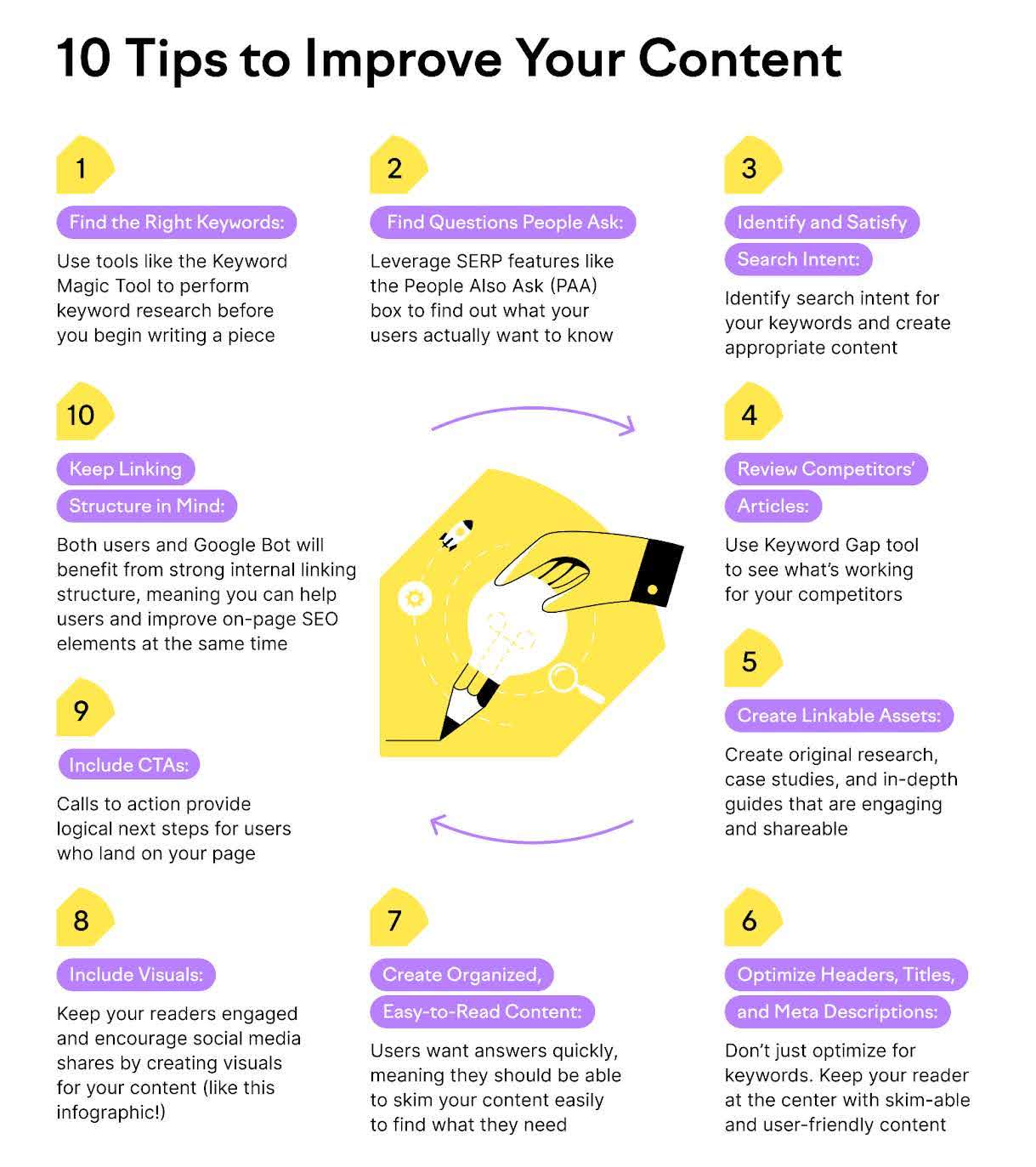
Source: SEMrush
Studying high-performing pages across industries
High-performing pages outside your industry are useful precisely because they don’t share your assumptions. They solve similar problems without your habits.
Studying them is a skill of abstraction. You strip away surface details and focus on what’s doing the real work.
That process sharpens judgment quickly. You learn from the best practices out there, and from the mistakes of others (which is always better than learning from your own).
You usually learn the most by noticing:
- How fast trust is established, and which techniques are used for that.
- How little is said to make a clear argument (often, one sentence is enough).
- How momentum is preserved, so that readers don’t lose attention.
- How conversions are nurtured (e.g., which CTAs work and which don’t).
The more industries you study, the less rigid your writing becomes. Adjacent niches help you become a better specialist in your own field, while other, unrelated industries often bring fresh perspectives and something useful to borrow that no one else has ever done before.
Turning every published piece into a feedback loop
The fastest growth happens when writing stays connected to the response. Turning content into a feedback loop keeps that connection alive. Without feedback, you essentially stay blind and may easily fall prey to your misconceptions and biases.
Feedback is the breakfast of the champions, they say. It doesn’t require formal surveys or complex systems, though. It only requires attention and memory.
You learn most when you notice:
- What readers latch onto emotionally.
- What they challenge or resist.
- Which phrases do they repeat back to you.
- Where they remain silent (not asking any questions, giving written responses, or expressing likes/dislikes).
- What they ask for next, what they want more of.
Over time, these signals will help shape your judgment. You’ll begin anticipating reactions before they happen, and begin writing your texts accordingly. And when that happens, improvement stops feeling forced — it becomes inevitable.
Conclusion
Despite the active implementation of AI-based chatbots and writing assistants, good human copywriting skills remain in high demand. What changes is the focus on quality and the ability to persuade readers while keeping them actively engaged, as opposed to producing volumes of text.
Good copywriting skills don’t come by chance; they are learned and nurtured through years of practice and continuous feedback loops from readers, colleagues, and even foes. Studying your competitors, by the way, is a budget-efficient and risk-averse way of perfecting your writing skills.
Even if you don’t know where to begin, start by learning to avoid the most common copywriting mistakes, such as using empty claims without proof (examples and stats) or ignoring the diminishing attention spans and writing more than an average reader needs.
The main goals of a skilled copywriter are to earn attention without sounding pushy and to nudge the readers to make a conversion, while staying absolutely confident in their choice. It only comes once you master the basic copywriting skills and learn to apply them deliberately at every stage of the reader’s decision-making process.
Related Posts

Last updated May 13, 2025 | Published Nov 6, 2024

Published Aug 19, 2025

Last updated May 9, 2025 | Published Feb 4, 2025

Last updated May 12, 2025 | Published Jan 14, 2025

Published Oct 15, 2025
Published Sep 9, 2025
Enter URL & See What We Can Do Submit the form to get a detailed report, based on the comprehensive seo analysis.